
Your well-being doesn’t hinge on a busy social calendar, but on collecting small, positive ‘social snacks’ throughout your day.
- Brief, friendly encounters (like a chat with a cashier) trigger the release of serotonin, a key mood-stabilizing neurochemical.
- These micro-interactions are more accessible and less stressful than formal social events, especially for introverts.
Recommendation: Shift your focus from seeking deep friendships to simply being open to one or two brief, positive human interactions during your daily errands.
It’s a common piece of advice given to seniors feeling a pang of loneliness: « Join a club, » « Call your family, » or « Reconnect with old friends. » While well-intentioned, this advice often overlooks a crucial truth. For many, social circles have naturally shrunk over time, and the energy required to build new, deep friendships can feel overwhelming. We’ve been taught to measure our social health by the number of close confidants we have, leaving many feeling like they’re failing if their contact list isn’t full.
This approach misses the bigger picture of human connection. We tend to focus on the ‘main meals’ of deep relationships while ignoring the vital, nourishing ‘social snacks’ available to us every day. These are the brief, light, and seemingly insignificant moments of conviviality: a shared smile with a fellow dog walker, a 30-second chat with the baker, or a friendly nod from a neighbor. These interactions are not just pleasantries; they are potent doses of neurochemical nourishment that are essential for our mental and physical health.
But what if the key to feeling more connected wasn’t about adding more events to your calendar, but about changing how you move through your day? What if these small moments were just as important as long-standing friendships? This guide explores the powerful science behind these micro-connections and offers simple, low-effort strategies to help you cultivate them. It’s about learning to see the opportunities for connection that are already all around you, waiting to be noticed.
This article breaks down the science and strategy behind embracing these small but powerful moments. Below is a summary of the key areas we will explore to help you weave a stronger social fabric into your daily life.
Summary: The Power of Everyday Connections for Senior Well-being
- How a 30-Second Chat With a Cashier Boosts Your Serotonin?
- How to Find Your « Third Place » (Coffee Shop, Park) for Daily Contact?
- The « Head Down » Mistake That Blocks Spontaneous Connections
- Digital Likes vs Face-to-Face Smiles: Which Truly Feeds the Soul?
- How to Plan Your Errands to Maximize Social Overlap?
- How to Turn Small Talk Into Meaningful Connection Without Stress?
- Why Using GPS Everywhere Is Weakening Your Spatial Memory?
- How to Maintain an Active Social Life When You Are Naturally Introverted?
How a 30-Second Chat With a Cashier Boosts Your Serotonin?
That fleeting moment of connection when you exchange a few pleasant words with a cashier or postal worker is far more than just a social formality. It’s a biological event. Each time you engage in a positive, face-to-face interaction, no matter how brief, your brain gets a gentle nudge to produce serotonin. Often called the « feel-good » chemical, serotonin plays a critical role in regulating mood, promoting feelings of well-being, and fostering a sense of belonging.
Unlike the intense, short-lived rush of dopamine you might get from a winning a game, serotonin provides a calmer, more stable sense of contentment. It’s the neurochemical that helps us feel secure and positive in our social environments. In fact, research from neuroscience studies shows that higher serotonin levels promote more constructive social behaviors by reducing aggression and making us more open to connection. Think of it as a positive feedback loop: a small, friendly chat boosts serotonin, which in turn makes you more likely to initiate or be receptive to the next small chat.
These « social snacks » are powerful because they are cumulative. A single interaction might seem trivial, but a day sprinkled with them—a nod to a bus driver, a compliment to someone on their garden, a quick chat about the weather—adds up. It creates a steady stream of neurochemical nourishment that shores up your emotional resilience and quietly battles the feelings of invisibility that can accompany social isolation. It’s a powerful reminder that you don’t need a deep, hour-long conversation to affirm your place in the world; sometimes, a 30-second exchange is all it takes.
How to Find Your « Third Place » (Coffee Shop, Park) for Daily Contact?
Sociologists talk about « third places » as the anchors of community life. They are not your home (the first place) or your workplace (the second place), but the environments where you can relax, observe, and interact informally. For seniors, these spaces are invaluable arenas for the kind of low-stakes social interactions we’ve been discussing. A third place could be a coffee shop with comfortable chairs, a park bench with a good view, a local library, a community garden, or even a bustling town square.
The magic of a third place is that it provides opportunities for connection without the pressure of a formal social event. You can be a passive participant, simply enjoying the ambient energy of being around others, or an active one, striking up a conversation with a « regular. » These are places where you can build familiarity over time, turning strangers into familiar faces, and familiar faces into casual acquaintances. It’s this gentle, unforced rhythm of recurring contact that builds a sense of community and belonging.
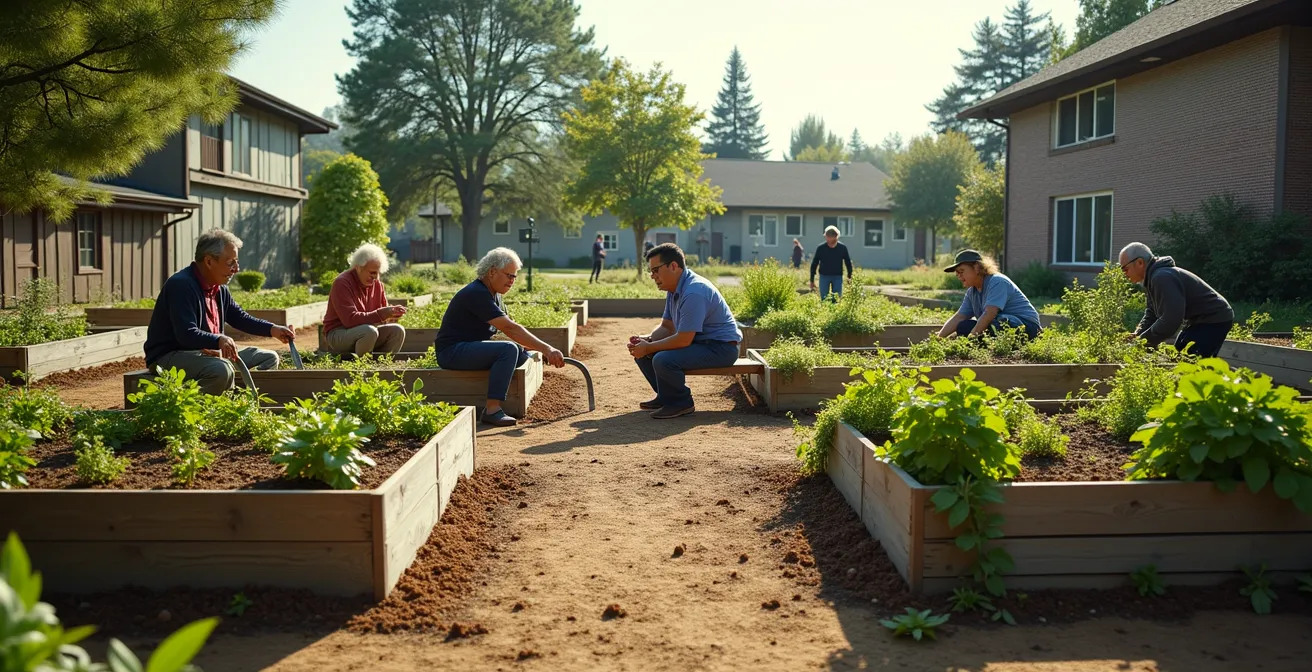
Finding the right third place is a personal journey. It needs to feel comfortable, safe, and, most importantly, accessible. Not every cafe or park is created equal, especially when considering mobility and comfort. Before you commit to a new spot, it’s wise to conduct a small personal audit to ensure it truly meets your needs and will encourage you to return.
Your Checklist for Finding the Perfect Third Place
- Physical Access: Look for practical features. Are there ramps or handrails? Are the doorways wide enough? Most importantly, are there clean and accessible restrooms available?
- Seating Comfort: Examine the seating options. A good third place offers sturdy chairs, ideally with armrests, and seating at various heights to make sitting and standing easier.
- Noise Levels: Pay attention to the acoustics. Can you comfortably hold a conversation without shouting, or is the background music or chatter overwhelming?
- Lighting Quality: Assess the light. The space should be well-lit to feel safe and welcoming, but without harsh glare that can cause discomfort or eye strain.
- Staff & Atmosphere: Observe the staff. Do they seem patient and unhurried with customers? A welcoming attitude from staff sets the tone for the entire establishment.
The « Head Down » Mistake That Blocks Spontaneous Connections
One of the biggest modern barriers to spontaneous connection is what can be called the « head down » phenomenon. We walk through public spaces—be it a grocery store aisle, a sidewalk, or a waiting room—with our gaze fixed on our smartphones or lost in our own thoughts. This posture, while often unintentional, sends a powerful non-verbal signal to those around us: « Do not disturb. » It creates an invisible wall, effectively shutting down the possibility of a shared smile, a brief comment, or a moment of eye contact that could spark a connection.
Breaking this habit is the first step toward opening yourself up to the world of social snacks. It requires a conscious shift from being insulated in your own bubble to being present in your shared environment. It means lifting your head, making brief eye contact with people you pass, and offering a simple, gentle smile or a nod. This small act doesn’t commit you to a conversation; it simply acknowledges another person’s presence and communicates a baseline level of openness and warmth. It turns a potential moment of « connection friction » into an opportunity.
Ironically, the very device that often creates this barrier can be turned into a tool for connection. Instead of using your phone as a shield, you can use it as a bridge to engage with the world and the people around you.
- Identify Starters: Use your phone’s camera or a plant identification app to learn about a flower in a public garden or a piece of architecture. This gives you a natural, interesting fact to share with someone nearby.
- Share Discoveries: Find an interesting local historical fact on your phone and use it as an opener: « I just learned this building used to be a theater! Isn’t that fascinating? »
- Ask for Help: A bit of vulnerability can be a great connector. Asking someone, « Excuse me, could you help me find this on the map? » can lead to a helpful and friendly interaction.
- Share Photos: If you’re talking with someone, showing a photo of a pet, a grandchild, or a recent vacation on your phone can quickly build a personal and meaningful connection.
By reframing your relationship with technology and your posture in public, you transform from a passive passerby into an active participant in the social landscape around you.
Digital Likes vs Face-to-Face Smiles: Which Truly Feeds the Soul?
In our increasingly digital world, it’s tempting to believe that a « like » on social media or a quick text message provides the same social nourishment as a real-life interaction. While technology is a valuable tool for maintaining contact with faraway family and friends, it doesn’t activate our brain’s social reward systems in the same way. The soul, it turns out, can tell the difference between a digital icon and a genuine, face-to-face smile.
The key difference lies in neurochemistry. Digital interactions, like seeing a notification on your phone, tend to trigger a quick, fleeting hit of dopamine—the brain’s reward chemical associated with anticipation and novelty. It’s satisfying for a moment, but it fades quickly and can even lead to a cycle of seeking more and more validation. A face-to-face interaction, however, engages a much richer cocktail of neurochemicals. A warm smile or a friendly conversation stimulates the release of oxytocin (the « bonding hormone ») and the more stable contentment of serotonin. In fact, groundbreaking neuroscience research reveals that dopamine levels are overall higher when people interact with another human as opposed to a computer, indicating a more complex and rewarding experience.
In-person contact provides a full-spectrum experience that a screen simply cannot replicate. We process micro-expressions, tone of voice, body language, and the subtle energy of another person. This rich stream of data is what builds genuine trust and connection. The following comparison, based on findings from recent social science studies, highlights the profound differences.
| Aspect | Digital Interaction | Face-to-Face |
|---|---|---|
| Neurochemical Response | Short dopamine hit | Sustained oxytocin release |
| Sensory Input | Low-resolution (text/images) | Full-spectrum (voice, micro-expressions, energy) |
| Social Capital Type | Bridging (weak ties) | Bonding & Bridging |
| Health Impact | Limited stress reduction | Reduced mortality risk |
| Accessibility | High for homebound | Requires physical presence |
This isn’t to say digital tools have no place. For those who are homebound, they are a lifeline. But for those who are able, prioritizing even brief in-person interactions provides a deeper, more lasting form of social and emotional nourishment.
How to Plan Your Errands to Maximize Social Overlap?
Our weekly errands—trips to the grocery store, post office, or pharmacy—are often seen as chores to be completed as efficiently as possible. We map the quickest route, go during off-peak hours, and try to get in and out. But what if we reframed these outings not as tasks, but as opportunities? By planning your errands with an eye for « social overlap, » you can transform a mundane routine into a reliable source of connection.
Social overlap is the simple idea of intentionally being in the same place at the same time as other people, increasing the chances for serendipitous encounters. It involves a slight shift in priorities, from pure geographic efficiency to social potential. Instead of rushing, you build in extra time. Instead of choosing the big-box store with self-checkout, you opt for the local bakery where the owner knows your name. This strategy doesn’t require adding new activities to your schedule; it repurposes what you already do.
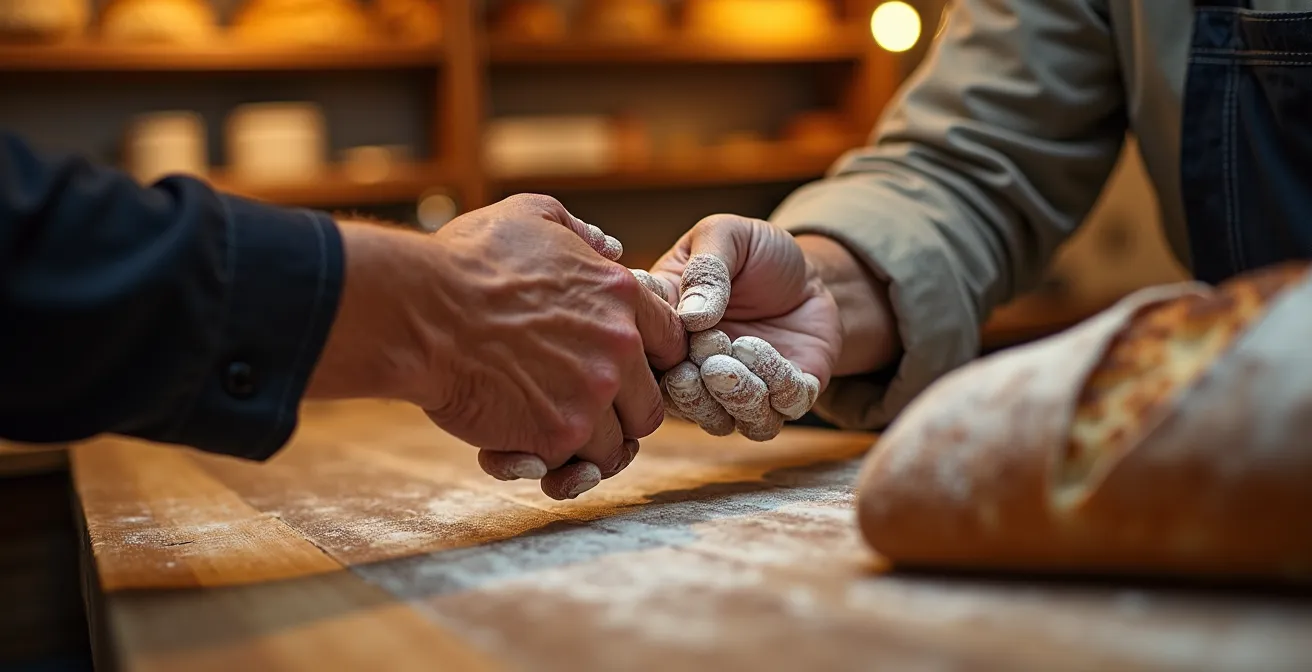
This approach is about creating a predictable rhythm that fosters familiarity. When you become a « regular » somewhere, the staff and other customers begin to recognize you. This recognition is the seed of connection. It lowers the barrier for a quick chat and builds a sense of belonging to your local community. Here’s how you can start « social stacking » your errands:
- Map for Social Potential: Instead of the shortest route, plan your stops based on which locations have the friendliest, most talkative staff. Often, this is the local post office or a small, independent shop.
- Become a Regular: Try to schedule your key errands for the same day and time each week. This dramatically increases your chances of encountering the same people, building a comfortable sense of familiarity.
- Choose the Right Time: Avoid the busiest rush hours. Mid-morning or mid-afternoon are often ideal times when staff are less hurried and more open to a brief chat.
- End at a Hub: Plan your last stop to be at a community hub like a library or senior center. Even if you just sit and read for 15 minutes, you’re soaking in the social atmosphere.
- Build in Buffer Time: The most crucial step is to allow an extra 5-10 minutes at each stop. This buffer removes the pressure of being in a hurry and gives you the mental space to engage if an opportunity arises.
By making these small adjustments, your weekly to-do list becomes a powerful tool for building and maintaining your social well-being.
How to Turn Small Talk Into Meaningful Connection Without Stress?
For many people, especially those who are more introverted or out of practice, the idea of « small talk » can be daunting. What do you say? How do you keep the conversation going? And most importantly, how do you end it without feeling awkward? The secret is to let go of the pressure to be brilliant or entertaining. The goal isn’t a deep, meaningful dialogue every time; it’s simply to create a small, positive moment of shared humanity.
The best conversation starters are often the most obvious ones because they are rooted in a shared context. Commenting on the weather, a long line, or a beautiful display in a shop window works because it’s something you are both experiencing in that moment. A simple, « This rain is something else, isn’t it? » is an open-ended invitation, not a demand. The other person can choose to respond with a simple « It sure is » or elaborate further. The key is to make an observation, not ask a personal question, which keeps the interaction light and low-stakes.
Equally important is knowing how to end the conversation gracefully. Having a few « exit lines » in your back pocket can remove the anxiety of feeling trapped in a conversation. It allows you to engage with confidence, knowing you have a smooth and polite way to move on. The tone should always be warm and positive, affirming that the chat was a pleasant experience. Here are a few simple phrases that work wonders:
- « Well, I’ll let you get back to your shopping. It was so nice chatting with you! »
- « I should get going, but this was lovely. Have a wonderful rest of your day! »
- « It was great to catch up for a moment. I’ll see you around the neighborhood! »
- « I need to head out, but I really enjoyed our conversation. Take care! »
Mastering the art of the brief, warm exchange—including the graceful exit—is a skill. It allows you to collect those valuable social snacks without draining your social energy, making connection a source of joy, not stress.
Why Using GPS Everywhere Is Weakening Your Spatial Memory?
At first glance, the topic of GPS navigation might seem unrelated to social connection. But our over-reliance on turn-by-turn directions has a subtle and profound side effect: it encourages a form of « mental head-down » living. When we outsource the task of navigation to a device, we stop paying close attention to our surroundings. We don’t learn the street names, notice the landmarks, or build a cognitive map of our own neighborhood. We simply follow the blue line, disengaged from the environment we’re moving through.
This lack of spatial awareness directly impacts our potential for social connection. When you aren’t actively observing your surroundings, you fail to notice the very « third places » that foster community—the new cafe with outdoor seating, the bustling community garden, the park where people gather. You also fail to notice the people within them. Serendipity, the engine of spontaneous connection, requires us to be present and aware. As a national report found that 1 in 4 adults over age 65 is socially isolated, any habit that disconnects us further from our physical community is a concern.
By occasionally turning off the GPS for familiar routes, you force your brain to engage. You start to look for street signs, to recognize buildings, and to create your own mental shortcuts. This active navigation process strengthens your spatial memory, but more importantly, it makes you an observer of your own community. You might spot a familiar face from the post office, notice a flyer for a local event, or simply feel more grounded and present in your own neighborhood. This heightened awareness is the fertile ground from which spontaneous social snacks can grow. It’s about trading the passive efficiency of GPS for the active, connection-rich experience of truly knowing your place in the world.
Key Takeaways
- True social well-being is built on the consistent accumulation of small, positive interactions, not just a few deep friendships.
- Brief, face-to-face encounters provide essential neurochemical nourishment (serotonin, oxytocin) that digital interactions cannot replicate.
- Building connection into your life is about modifying existing routines (like errands) and being present in your environment, not adding more to your schedule.
How to Maintain an Active Social Life When You Are Naturally Introverted?
For a natural introvert, the advice to « get out there more » can sound exhausting. Introversion isn’t shyness or social anxiety; it’s simply a matter of how one’s energy is spent. While extroverts gain energy from social interaction, introverts expend it. This makes the idea of a crowded party or joining multiple clubs feel draining rather than fulfilling. The key for an introvert is not to force themselves to be an extrovert, but to adopt a social strategy that honors their nature: quality over quantity.
Instead of aiming for a high volume of interactions, an introvert can thrive by focusing on a few, select social snacks that feel genuinely restorative. It’s about finding a sustainable rhythm that provides connection without leading to social burnout. This approach prioritizes control, comfort, and low-stakes engagement. The goal is to leave an interaction feeling pleasantly energized, not depleted. This is not only a more sustainable approach but also a deeply healthy one, as studies on social capital demonstrate that strong social connections significantly reduce the rate of cognitive decline.
An effective introvert’s strategy focuses on creating a predictable and comfortable social environment. Here are some principles to build upon:
- Set a « One Quality Moment » Goal: Aim for one small, meaningful interaction per day, not a dozen. This could be a brief but genuine chat with a librarian or a shared laugh with a neighbor.
- Start as an Observer: When you visit a third place, give yourself permission to just sit and observe at first. There’s no pressure to interact. Simply being around others can be a form of social nourishment.
- Build Comfort Through Repetition: Visit the same coffee shop or park regularly. As the environment and faces become familiar, the energy required to engage will decrease significantly.
- Honor Your Energy Levels: Schedule your social outings for the time of day when you naturally have the most energy. Crucially, give yourself permission to leave the moment you start to feel your social battery draining.
Your journey to a more connected life doesn’t require a grand plan or a personality change. It begins with the simple, powerful decision to look up, be present, and remain open to the small moments of conviviality that are waiting for you in your everyday life.