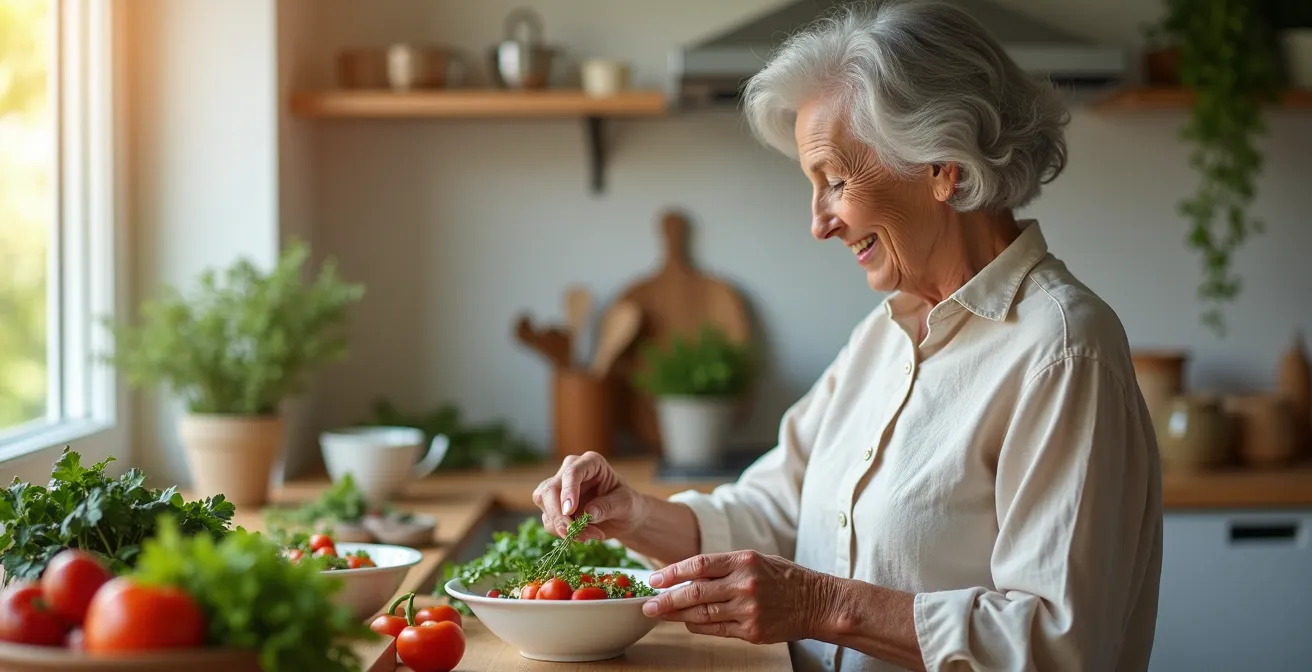
The key to resolving senior appetite loss isn’t forcing more food, but making every small bite nutritionally powerful through strategic fortification.
- Sensory decline after 70 is a physiological reality that makes food taste bland, requiring flavor enhancement beyond just salt.
- Protein needs increase with age, making common « tea and toast » habits a direct path to muscle loss and frailty.
- « Invisible » calories from healthy fats and powders can be added to familiar foods to boost nutrition without increasing portion sizes.
Recommendation: Shift your mindset from a volume-based (« eat more ») to a nutrient-density-based approach (« make every bite count ») to gently and effectively improve a senior’s health.
As a caregiver, one of the most distressing sights is watching a loved one push away a plate of food you’ve carefully prepared. You see the weight loss, the growing fatigue, and you worry. Well-meaning advice often circles around the same ideas: serve smaller meals, use their favorite plates, or add more seasoning. While these tips have some merit, they often fail because they don’t address the fundamental physiological and psychological shifts that come with aging.
The challenge isn’t just a simple loss of appetite; it’s a complex interplay of dulled senses, increased nutritional requirements, and the emotional weight of eating alone. Simply offering more of the same, even in smaller portions, is like trying to fill a leaky bucket. The real issue is that the body’s ability to extract and use nutrients is becoming less efficient, and food itself has lost its appeal on a biological level. This is where the standard advice falls short.
But what if the solution wasn’t about volume, but about density? What if the true key lies in a strategy of nutritional fortification—transforming every small, manageable bite into a powerhouse of calories, protein, and essential micronutrients? This approach respects a senior’s diminished appetite while ensuring their body gets the fuel it critically needs. It’s a shift from a battle of wills over a full plate to a collaborative effort in making each spoonful count.
This guide will walk you through the science behind why appetite fades and provide you with the precise, compassionate strategies of a geriatric dietitian. We will explore how to make food delicious again, construct nutritionally complete micro-meals, and navigate dietary monitoring without causing conflict, empowering you to make a meaningful difference in your loved one’s health and well-being.
Table of Contents: A Comprehensive Guide to Restoring Senior Appetite and Nutrition
- Why Food Tastes Bland After 70 and How It Impacts Nutritional Intake?
- How to Blend Nutrient-Packed Smoothies That Don’t Spike Blood Sugar?
- Ensure vs Homemade Shakes: Which Offers Better Nutrition for the Price?
- The « Tea and Toast » Error That Leads to Rapid Muscle Loss
- How to Add 300 Healthy Calories to a Senior’s Diet Without Increasing Portion Size?
- Synthetic Multivitamins vs Whole Foods: Which Truly Spikes Senior Energy Levels?
- Why Loneliness Weakens the Immune System in Seniors Over 80?
- How to Monitor Senior Diets for Salt and Sugar Without Causing Conflict?
Why Food Tastes Bland After 70 and How It Impacts Nutritional Intake?
It’s not just their imagination; food genuinely tastes different and less appealing as we age. This isn’t a sign of being « picky, » but a physiological reality. After age 70, the number of taste buds on the tongue decreases, and those that remain become less sensitive. The sense of smell, which is responsible for about 80% of what we perceive as flavor, also diminishes significantly. The result is a world where food tastes bland and monotonous, making eating feel more like a chore than a pleasure. This sensory decline is a primary driver of the « anorexia of aging, » a clinical term for appetite loss in the elderly. In fact, research shows that anorexia of aging affects about 25% of older adults, leading to unintentional weight loss and nutrient deficiencies.
When food lacks flavor, seniors naturally gravitate toward the only tastes they can still perceive strongly: salt and sugar. This can lead to a diet high in processed foods and low in essential nutrients, exacerbating health issues like hypertension and diabetes. The key is to combat this blandness not with more salt, but with a strategic assault on the remaining senses. This means using aromatic herbs, bold spices, and textural variety to make food interesting again. A dish that offers a contrast of temperatures (warm soup with a dollop of cool yogurt) or textures (creamy oatmeal with crunchy nuts) can re-engage a tired palate.
To counteract this sensory decline, focus on building layers of flavor. Marinating meats in lemon juice and herbs, roasting vegetables to caramelize their natural sugars, and adding a splash of vinegar or a squeeze of fresh citrus at the end of cooking can dramatically brighten a dish. By understanding that the problem is biological, not behavioral, you can shift your approach from frustration to a creative, flavor-focused strategy that coaxes back the joy of eating.
How to Blend Nutrient-Packed Smoothies That Don’t Spike Blood Sugar?
Smoothies and shakes are often a caregiver’s first line of defense against poor appetite, and for good reason. They are easy to consume, can be packed with nutrients, and help with hydration. However, a common mistake is creating a « sugar bomb » by blending only fruits and juice. While seemingly healthy, a high-sugar smoothie can cause a rapid spike in blood glucose followed by a crash, which can be dangerous for seniors, especially those with diabetes or pre-diabetes, and does little to provide sustained energy.
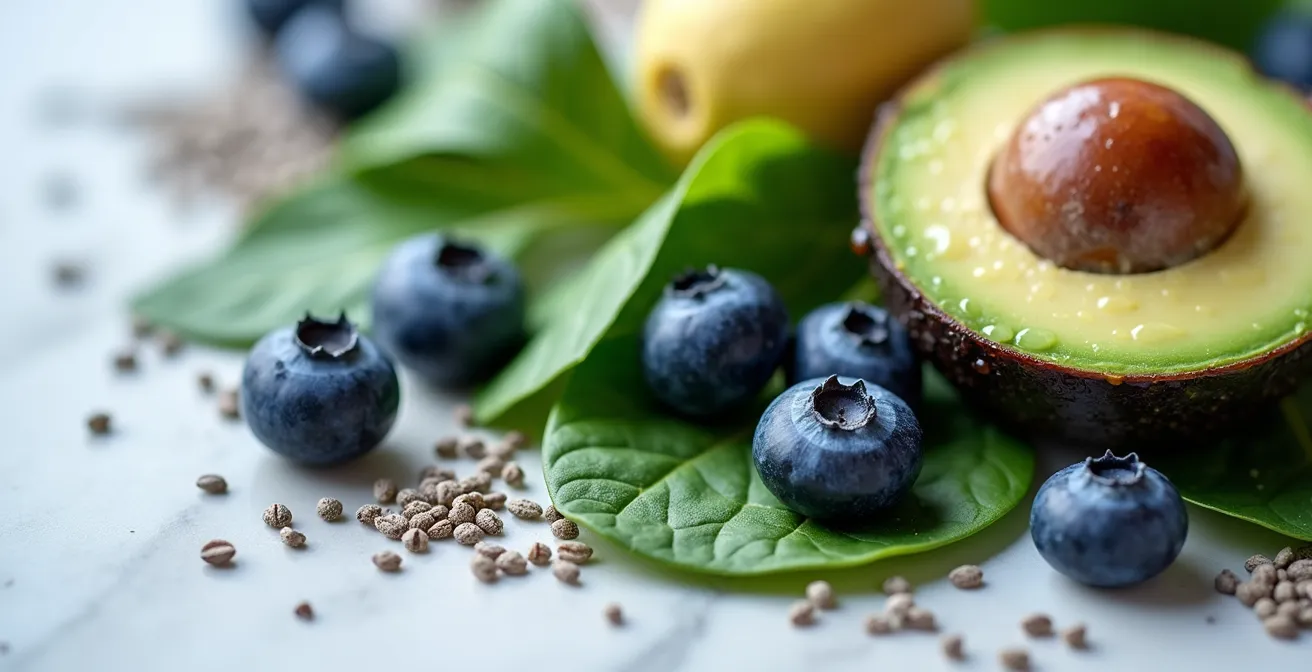
The secret to a truly beneficial senior-friendly smoothie lies in balancing macronutrients. A well-constructed smoothie must contain four key components: a source of protein, a source of healthy fat, a source of fiber, and a limited portion of low-glycemic fruit. This combination slows down the absorption of sugar, promotes stable energy levels, and provides the building blocks for muscle maintenance and cognitive health. Instead of a banana-orange-mango blend, think more strategically.
A superior formula would look something like this: a base of unsweetened almond milk or water, a scoop of unflavored whey or plant-based protein powder, a handful of spinach (its taste is undetectable), a quarter of an avocado or a tablespoon of almond butter for healthy fats, and a small handful of berries for fiber and antioxidants. The avocado and nut butter not only add crucial calories and healthy fats but also create a creamy, satisfying texture. This approach transforms the smoothie from a sugary drink into a complete, balanced micro-meal in a glass, perfectly designed to nourish a frail body without overwhelming its metabolic system.
Ensure vs Homemade Shakes: Which Offers Better Nutrition for the Price?
In the quest for convenient nutrition, commercial shakes like Ensure or Boost are a common sight in a senior’s refrigerator. They promise complete nutrition in an easy-to-drink format. As a dietitian, I see their value, particularly in specific clinical situations. As Aimee Henrikson, MPH, RD, states in the NCOA Senior Nutrition Guide:
Oral nutritional supplements can help fill nutritional gaps when food intake is reduced
– Aimee Henrikson, MPH, RD, NCOA Senior Nutrition Guide
These supplements are precisely formulated, shelf-stable, and require zero preparation, making them a reliable tool when a senior is recovering from illness or when a caregiver has limited time. They offer a standardized dose of vitamins and minerals that can be difficult to replicate at home without careful planning. However, this convenience comes at a cost, both financially and nutritionally. They often contain corn syrup and other additives, and the flavor variety is limited, which can lead to « flavor fatigue. »
Homemade shakes, on the other hand, offer infinite customizability. You control the quality of ingredients, the source of protein (whey, collagen, Greek yogurt), and the flavor profile. This allows you to tailor the shake to a senior’s specific preferences and health needs, while also using whole foods that provide a broader spectrum of phytonutrients. While they require preparation, the cost per serving is generally lower. The choice between them is not about which is « better » universally, but which is better for a specific situation.
The following table breaks down the key differences to help you make an informed decision based on your priorities—be it cost, convenience, or nutritional control.
| Factor | Commercial Shakes (Ensure/Boost) | Homemade Shakes |
|---|---|---|
| Cost per serving | $2-4 | $1-3 |
| Protein quality | Standardized whey/soy | Customizable sources |
| Vitamin fortification | 25+ vitamins/minerals | Limited without supplements |
| Preparation time | 0 minutes | 5-10 minutes |
| Shelf stability | Long-term storage | Immediate consumption |
| Medical conditions | Formulated for specific needs | Requires nutrition knowledge |
| Taste variety | Limited flavors | Unlimited customization |
The « Tea and Toast » Error That Leads to Rapid Muscle Loss
The « tea and toast » diet is a pattern I see with alarming frequency. It starts innocently. A senior doesn’t feel like cooking, so they opt for something simple: a piece of toast with butter and a cup of tea. It’s warm, comforting, and easy. But when this becomes a regular meal replacement, it becomes what I call a nutritional void. This simple meal is almost entirely composed of simple carbohydrates with negligible protein and minimal micronutrients. For an aging body, this is a recipe for disaster, specifically for sarcopenia—the progressive loss of muscle mass and strength.
A common misconception is that seniors need less protein. The opposite is true. As the body becomes less efficient at synthesizing protein, its requirements increase. While the standard RDA is 0.8 grams of protein per kilogram of body weight, research indicates older adults need almost double the protein RDA at 1.0-1.2 g/kg per day just for maintenance. A diet centered on tea and toast provides a fraction of this, forcing the body to break down its own muscle tissue for fuel. This leads to frailty, a higher risk of falls, and a weakened immune system.
The Real-World Impact: The Case of Patrick
A review of malnutrition prevention by the UK government highlighted the case of Patrick, a 79-year-old man whose physical impairments made preparing full meals difficult. He fell into a pattern of eating only cold foods, cakes, and biscuits—a classic example of the « tea and toast » trap. This habit, driven by convenience and fatigue, put him at high risk for severe malnutrition and associated health decline. His case underscores how easily a lack of proper meals can spiral into a serious health crisis, a situation successfully addressed by programs that implement nutritional screening and better agency communication.
The solution isn’t to banish toast, but to systematically upgrade it from an empty snack to a nutrient-dense micro-meal. This involves a ladder of simple, progressive additions that fortify this familiar comfort food with the protein and calories it so desperately lacks.
Your Action Plan: The Toast Upgrade Ladder for Progressive Nutrition
- Switch to a protein-enriched or 100% whole grain bread, which can offer 3-5 grams of protein per slice.
- Add a nutrient-dense topping like mashed avocado (healthy fats, fiber), full-fat ricotta cheese (protein, calcium), or almond butter (protein, fats, calories).
- Fortify the toppings by mixing unflavored protein powder into the ricotta or adding powdered peanut butter to spreads for a concentrated protein boost.
- Create « finishing drizzles » with a blend of tahini, lemon juice, and olive oil to add instant, healthy calories and a savory flavor kick.
- Always pair the upgraded toast with a protein-rich side, such as a hard-boiled egg or a small bowl of Greek yogurt, to create a complete meal.
How to Add 300 Healthy Calories to a Senior’s Diet Without Increasing Portion Size?
When faced with a diminished appetite, the command to « eat more » is both frustrating and counterproductive. The sight of a large plate of food can be overwhelming and immediately shut down any flicker of hunger. The strategic solution is to increase caloric density, not volume. This means making every spoonful more nutritionally potent through « invisible fortification »—adding high-calorie, high-nutrient ingredients that don’t significantly increase the portion size. The goal is to slip in an extra 300-500 healthy calories throughout the day without the senior even noticing.
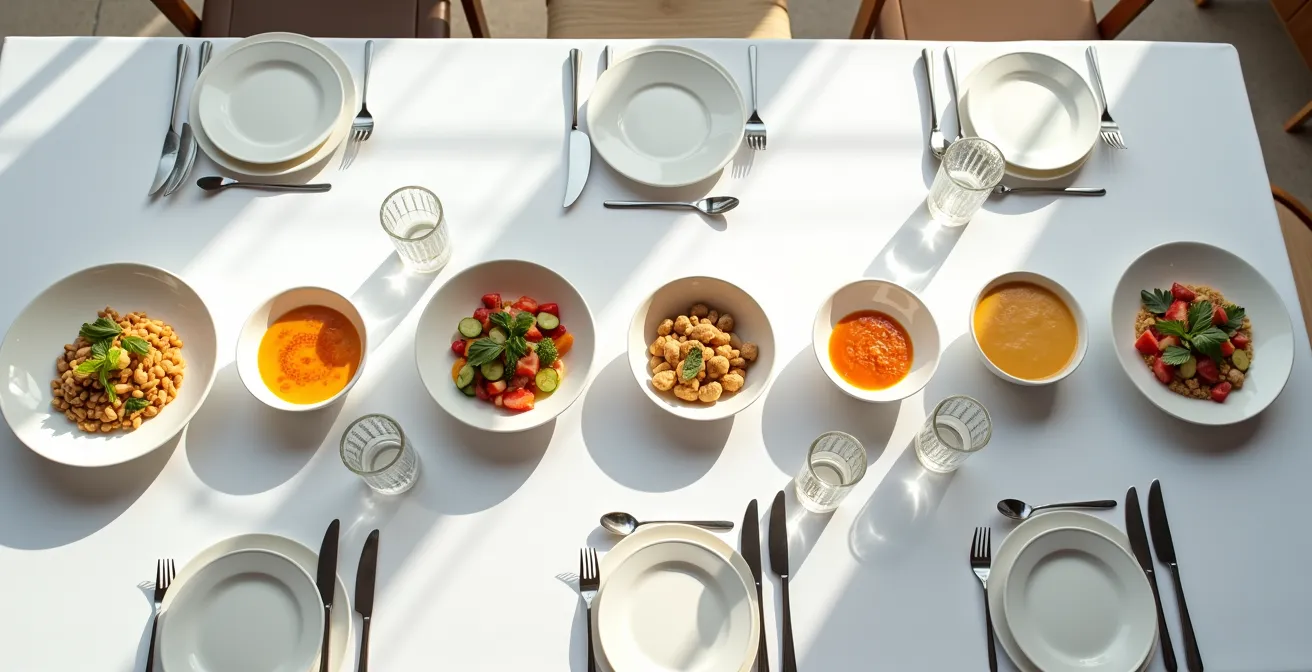
This approach is particularly crucial for the significant portion of seniors managing physical limitations. As census data reveals that at least one disability affects 38% of people over 65, the energy required for daily activities is high while the ability to prepare and eat large meals may be low. Invisible fortification bridges this gap. Think of healthy fats and powders as your secret weapons. A tablespoon of olive oil drizzled over vegetables or soup adds 120 calories. A quarter cup of whole milk powder mixed into a glass of regular milk or a bowl of oatmeal adds 80 calories and extra protein. Nut butters, mashed avocado, and full-fat Greek yogurt can be stirred into both sweet and savory dishes to the same effect.
Here are some powerful and practical techniques for invisible fortification:
- Powdered Milk: Add to regular milk, puddings, mashed potatoes, or creamy soups. (Adds ~80 calories & 8g protein per 1/4 cup)
- Healthy Oils: Drizzle olive oil, avocado oil, or flaxseed oil on vegetables, rice, pasta, and salads. (Adds ~120 calories per tablespoon)
- Nut Butters: Stir a tablespoon of almond, peanut, or cashew butter into oatmeal, yogurt, or smoothies. (Adds ~95 calories & 4g protein per tablespoon)
- Unflavored Protein Powders: Mix whey, casein, or collagen peptides into soups, sauces, mashed potatoes, or warm beverages. (Adds ~100 calories & 20g protein per scoop)
- Mashed Avocado: Blend into smoothies or stir into scrambled eggs or tuna salad for creamy texture and healthy fats. (Adds ~80 calories per 1/4 avocado)
Synthetic Multivitamins vs Whole Foods: Which Truly Spikes Senior Energy Levels?
It’s a tempting quick fix: if a senior isn’t eating enough, a daily multivitamin seems like a logical insurance policy. While certain vitamin deficiencies are common in older adults (like B12 and Vitamin D) and may require targeted supplementation under a doctor’s care, relying on a synthetic multivitamin to provide « energy » is a fundamental misunderstanding of nutrition. True, sustainable energy does not come from a vitamin pill; it comes from adequate calories, protein, and stable blood sugar. Vitamins are catalysts; they help the body unlock energy from food, but they are not the fuel itself.
The body is designed to absorb and utilize nutrients from whole foods far more effectively than from isolated, synthetic compounds. Whole foods provide a complex matrix of vitamins, minerals, fiber, and phytonutrients that work synergistically. An orange, for example, offers not just Vitamin C, but also fiber, potassium, and flavonoids, all of which contribute to its overall health benefit in a way a simple ascorbic acid pill cannot. Over-reliance on supplements can also create a false sense of security, leading to less effort in improving the actual diet. Furthermore, taking high doses of certain supplements can be harmful, interfering with medications or causing toxicity.
The Mayo Clinic’s « Food First » Philosophy
At the Mayo Clinic, registered dietitian Tara Schmidt champions a « food first » approach to senior nutrition. Their research and clinical practice emphasize that sustainable energy is a direct result of a well-balanced diet with sufficient calories, not a temporary « jolt » from a vitamin. The clinic’s official stance is that dietary changes should always be the primary strategy, with supplements used only to address specific, diagnosed deficiencies. They caution that taking too many supplements can carry health risks and that the broad benefits of eating whole foods—from fiber for digestive health to antioxidants for cellular protection—can never be fully replicated in a pill.
The takeaway is clear: prioritize a diet rich in nutrient-dense whole foods. Use supplements as a targeted tool, not a crutch. An « energy boost » is better found in a protein-and-fat-rich snack that stabilizes blood sugar than in a multivitamin bottle. Focus on fortifying their meals with real food to provide the quality fuel their body truly needs.
Why Loneliness Weakens the Immune System in Seniors Over 80?
Appetite is not just a physical mechanism; it is deeply intertwined with our emotional state. For seniors, especially those over 80, the psychological impact of loneliness can have a direct and devastating effect on their desire to eat. As we age, life changes such as the loss of a spouse, friends moving away, or decreased mobility can lead to profound social isolation. This feeling of loneliness often triggers or worsens depression, and one of the primary physical symptoms of depression is a loss of appetite and a general lack of interest in daily activities, including cooking and eating.
The act of eating is, for many cultures and individuals, an inherently social event. We celebrate, mourn, and connect over shared meals. When that social context is removed, food can lose its meaning. The effort of preparing a meal for one can feel pointless and overwhelming, further reinforcing the « tea and toast » cycle. The Medical Guardian Nutrition Team highlights this connection perfectly:
Eating alone can reduce appetite. In many cultures eating is a very social event so it’s important to encourage older adults to not eat alone
– Medical Guardian Nutrition Team
This psychological stress does more than just reduce appetite; it triggers a physiological response. Loneliness is a chronic stressor that increases cortisol levels in the body. Elevated cortisol can suppress immune function, disrupt digestion, and contribute to inflammation, creating a vicious cycle where poor nutrition weakens the body and a weakened body has less resilience to cope with emotional distress. Therefore, addressing malnutrition in an isolated senior requires a two-pronged approach: fortifying their diet with nutrients and, just as importantly, re-introducing a social component to meals whenever possible. This could mean sharing a meal with them a few times a week, arranging for them to eat at a senior center, or even setting up a video call with family during dinnertime. Breaking the cycle of loneliness is a powerful, non-negotiable part of any effective nutritional intervention.
Key Takeaways
- Sensory decline is a real, physiological issue. Combat blandness with herbs, spices, and textural variety, not just more salt.
- Protein is non-negotiable for preventing muscle loss. Systematically « upgrade » simple meals like toast with protein- and calorie-dense additions.
- Focus on caloric density, not volume. Use « invisible fortification » with healthy fats and powders to boost nutrition without overwhelming a small appetite.
How to Monitor Senior Diets for Salt and Sugar Without Causing Conflict?
As a caregiver, you walk a fine line. You know a diet high in salt and sugar is detrimental, yet you want to avoid becoming the « food police, » which can cause resentment and strain your relationship. The key to successful dietary monitoring is to abandon the language of restriction and adopt a collaborative and environmental approach. Instead of saying « You can’t have that, » you frame it as « Let’s try this new flavor. » Your role is to become a « Collaborative Chef, » working with your loved one to explore new tastes while subtly engineering a healthier food environment.
This starts with pantry management. Make the healthy choice the easy choice. Stock the kitchen with low-sodium broths, unsweetened sauces, and whole-grain options. Have fruit readily available and appealing, and keep high-sugar, high-salt processed snacks out of sight or out of the house entirely. When cooking, use umami-rich ingredients like mushroom powder, tomato paste, or nutritional yeast to provide a savory depth that mimics salt. For sweetness, lean on spices like cinnamon, cardamom, and vanilla, which can trick the brain into perceiving sweetness without adding sugar.
Involving the senior in the process is crucial for maintaining their autonomy. Frame it as a « flavor exploration project. » Take them to the store to pick out new herbs or spices. Have them participate in taste-testing new seasonings or low-sodium recipes. This shifts the dynamic from one of control to one of partnership. When they feel like they are part of the decision-making process, they are far more likely to embrace the changes.
StoryPoint’s Partnership Model for Nutrition
StoryPoint senior living communities have mastered this non-confrontational approach. Instead of imposing strict rules, their staff work collaboratively with residents to understand their needs and preferences. They suggest small, frequent meals and offer easier-to-eat foods, all while monitoring intake discreetly. This partnership model has proven highly effective, resulting in a 27% improvement in resident satisfaction with meals while successfully maintaining healthy sodium and sugar levels. It’s a powerful demonstration that collaboration achieves better results than confrontation.
To begin restoring your parent’s nutritional health and well-being, select just one « invisible fortification » technique or one flavor-enhancing strategy from this guide and apply it today. The journey back to health doesn’t start with a battle over a full plate, but with a single, powerful spoonful.