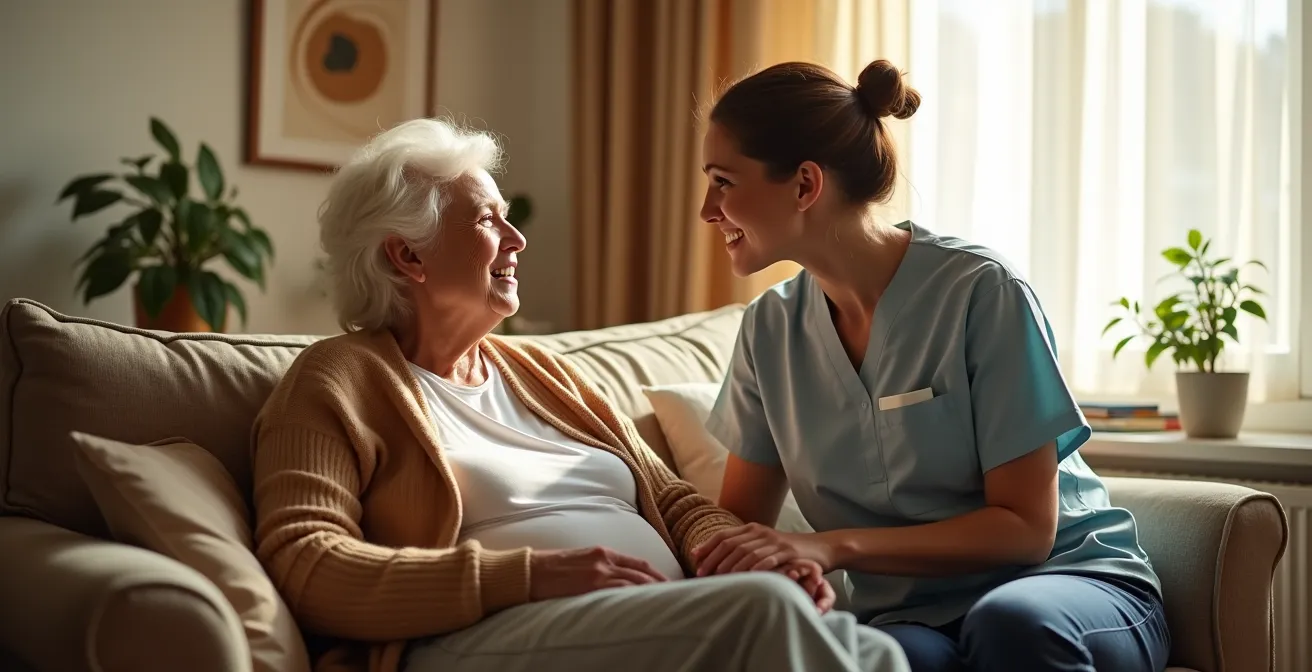
Hiring a caregiver for physical tasks like cleaning or cooking often fails to address a senior’s deepest need: the profound ache of loneliness. This article moves beyond the checklist of duties to reveal why emotional support is not a luxury, but a clinical necessity. We will explore the physiological damage caused by social isolation and provide compassionate, evidence-based strategies for caregivers to deliver a therapeutic presence that actively preserves a senior’s health, dignity, and will to live.
As a geriatric social worker, I often meet families who have done everything « right. » They’ve arranged for a caregiver to help their aging parent with meals, medication reminders, and keeping the house tidy. Yet, a quiet desperation lingers. The senior, though physically cared for, seems to be fading, retreating into a world of silence and apathy. The family is confused; they’re providing help, so why is their loved one still so deeply lonely? The answer lies in a common but critical misunderstanding of what « care » truly means in the golden years.
We’ve been conditioned to view elder care as a series of physical tasks to be completed. But this transactional approach misses the very essence of well-being. The true crisis for many seniors is not an unmade bed, but an unheard story. It’s the crushing weight of social isolation. While physical aid is undeniably important, it’s often the emotional connection—or lack thereof—that dictates a senior’s health trajectory. Loneliness is not just a feeling; it is a physiological state with devastating consequences.
But what if we reframed the role of a caregiver? What if, instead of just a helper, they became a source of genuine therapeutic presence? The key isn’t simply spending more time, but transforming the quality of that time. This article will dismantle the task-based model of care and rebuild it around the principles of emotional attunement and dignity preservation. We will explore the science connecting loneliness to physical decline and offer practical, compassionate tools to forge the meaningful connections that are as vital as any medication.
This guide provides a clear roadmap for families and caregivers to move beyond basic support and cultivate a truly life-sustaining relationship. You will learn to identify the hidden signs of emotional distress and master the communication techniques that make a senior feel seen, heard, and valued.
Summary: The Clinical Case for Emotional Care in Seniors
- Why Loneliness Weakens the Immune System in Seniors Over 80?
- How to Use Active Listening to Make Seniors Feel Truly Heard?
- The « Baby Talk » Mistake That Destroys Senior Dignity
- Companionship vs Medical Care: Where Is the Line for PSWs?
- How to Spot the Signs of Depression That Are Often Mistaken for « Aging »?
- Why « Getting Over It » Is Bad Advice for Senior Grief?
- The « Spouse Only » Error That Leaves Widows Completely Alone
- How to Maintain an Active Social Life When You Are Naturally Introverted?
Why Loneliness Weakens the Immune System in Seniors Over 80?
The feeling of loneliness is not just an emotional state; it is a biological alarm bell. For seniors, especially those over 80, this state of chronic social isolation triggers a cascade of physiological responses that directly compromise their physical health. The primary mechanism is chronic inflammation. When the body perceives a threat—and to our ancient biology, being alone is a profound threat—it activates a stress response. This leads to an overproduction of inflammatory proteins like cortisol and cytokines. While useful in short bursts to fight infection, their sustained elevation turns the body’s own defense system against itself.
Scientific evidence makes this connection terrifyingly clear. Research shows that loneliness is directly associated with the upregulation of pro-inflammatory genes, effectively programming the body for a state of constant inflammation. This isn’t a vague theory; it’s measurable at a cellular level. A 2019 study confirmed that lonely individuals exhibit an elevated interleukin-6 response of over 56% when faced with immune challenges, compared to their socially connected peers. Interleukin-6 is a key pro-inflammatory cytokine. This chronic inflammatory state becomes a precursor for a host of age-related diseases, from cardiovascular problems and arthritis to a diminished ability to fight off simple infections.
This is why a caregiver’s emotional support is a form of physiological regulation. A warm, consistent, and engaging presence can help down-regulate this chronic stress response. By fostering a sense of safety and belonging, a caregiver actively helps to lower cortisol levels and reduce the inflammatory markers that weaken the immune system. Emotional care is, therefore, not soft science; it is a direct intervention that helps protect the body from the tangible, physical damage of being alone.
How to Use Active Listening to Make Seniors Feel Truly Heard?
One of the most powerful tools in a caregiver’s emotional support toolkit is active listening. This goes far beyond simply staying quiet while a senior speaks; it is a focused and empathetic practice designed to make them feel profoundly seen and understood. For many seniors, especially those who feel they’ve become invisible, the experience of being truly heard can be transformative. It validates their existence and affirms that their life, memories, and feelings still matter. The key is to move beyond passive hearing to engaged listening.
The « Three Levels of Listening » framework is an excellent model for caregivers. It involves a conscious progression:
- Level 1: Internal Listening. This is the most common and least effective level, where we listen primarily to form our own response. We’re waiting for our turn to speak, to offer advice, or to share our own story. The first step is to consciously quiet this internal chatter.
- Level 2: Focused Listening. Here, the focus shifts entirely to the other person’s words. You are concentrating on the content, the facts, and the story being told. You’re not judging or planning, simply absorbing what is being said.
- Level 3: Global Listening. This is the deepest level. You are listening not just with your ears, but with all your senses. You notice their tone of voice, their body language, the flicker of emotion in their eyes, and what is not being said. This is where true connection happens.
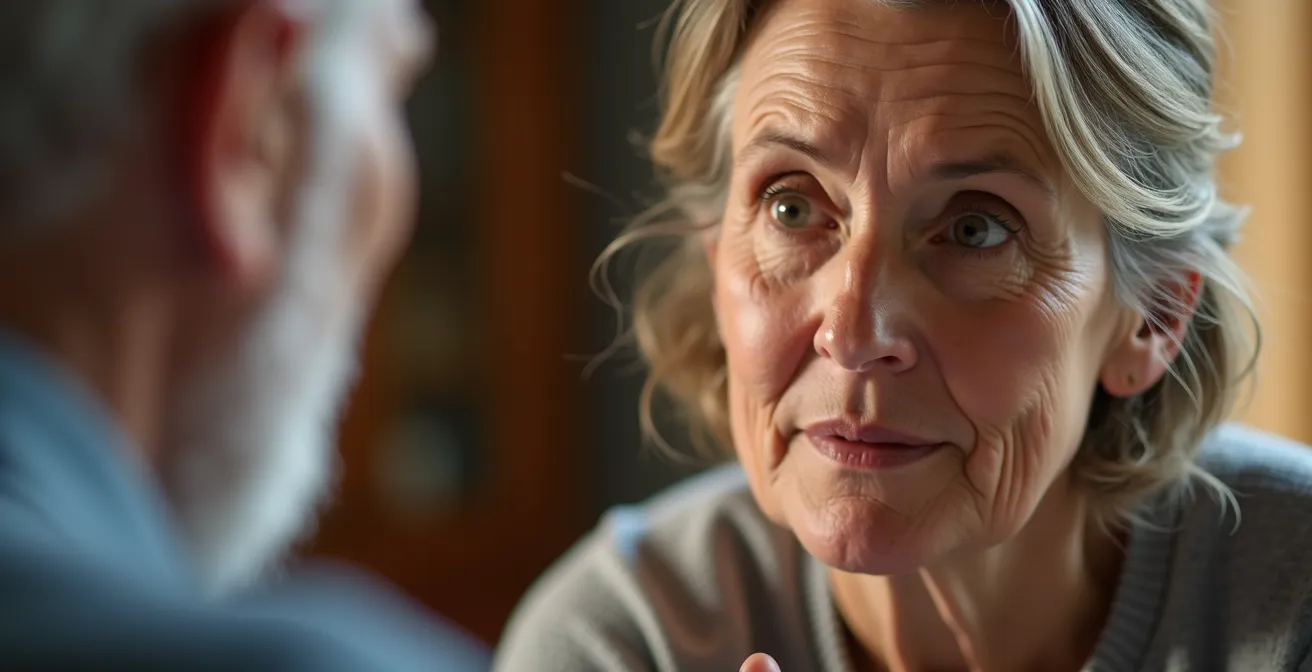
As this image suggests, global listening is about presence and engagement. A powerful technique to practice is the « Echo and Reframe » method. First, you reflect back the emotion you’re sensing (« It sounds like that situation made you feel very frustrated »). This shows you’re hearing the feeling behind the words. Then, you validate the value it represents (« …because being independent has always been so important to you »). When a senior repeats a story for the tenth time, recognize they aren’t just sharing facts; they are sharing a piece of their identity and values. Listening for that deeper meaning is the essence of this therapeutic presence.
The « Baby Talk » Mistake That Destroys Senior Dignity
In a well-intentioned but misguided attempt to show care, many people fall into the trap of « elderspeak. » This is a form of communication characterized by a high-pitched, sing-song tone, overly simple sentences, and the use of patronizing pet names like « sweetie » or « dear. » It’s essentially talking to a senior as if they were a small child. While it may seem harmless or even affectionate, elderspeak is deeply damaging. It infantilizes the individual, stripping them of their adult identity and undermining their sense of competence and dignity preservation.
The negative impact of this communication style is not just emotional; it’s behavioral. When seniors are spoken to in a condescending manner, they are more likely to become resistant to care, uncooperative, and withdrawn. They may feel that their intelligence is being insulted or their autonomy is being dismissed. Research powerfully confirms this: studies have shown that even a 10% reduction in elderspeak is associated with a 77% decrease in the likelihood of a senior exhibiting care-resistant behaviors. Speaking to an elder with respect is not just polite; it is a clinical tool for improving cooperation and well-being.
Avoiding elderspeak requires conscious effort to communicate with seniors as the competent, experienced adults they are. This means using a normal tone of voice, respectful forms of address, and engaging in conversation that acknowledges their intelligence and life experience. The following table breaks down common elderspeak habits and offers respectful, dignity-preserving alternatives.
| Elderspeak (Avoid) | Respectful Alternative | Impact |
|---|---|---|
| ‘Sweetie, let’s take our medicine’ | ‘Mr. Smith, it’s time for your medication’ | Preserves dignity and autonomy |
| High-pitched, sing-song tone | Normal, natural tone | Treats senior as competent adult |
| ‘Do we want to eat now?’ | ‘Would you like to have lunch?’ | Respects individual choice |
| Simplified, slow speech | Clear, normal-paced conversation | Maintains cognitive engagement |
Companionship vs Medical Care: Where Is the Line for PSWs?
A frequent point of confusion for families and Personal Support Workers (PSWs) is defining the boundary between emotional companionship and professional medical or psychological care. A caregiver’s role in providing emotional support is vital, but it is not that of a therapist or a doctor. Understanding this distinction is crucial for providing effective, ethical, and safe support. The caregiver should be viewed as an « emotional first responder »—someone who provides immediate comfort and de-escalation, much like applying a bandage to a physical wound, but knows when to call for professional medical help.
The primary function of a caregiver in this context is to provide a consistent, empathetic presence. They are there to listen without judgment, validate feelings, and offer comfort during moments of anxiety, sadness, or frustration. This support helps reduce caregiver stress for the family and dramatically improves the quality of life for the senior. However, their scope of practice has clear limits. They should never attempt to diagnose conditions like depression or anxiety, offer psychological counseling, or suggest changes to medication. Their role is to observe, support, and report.
Maintaining this warm professionalism is a skill. It involves building a genuine, caring relationship while upholding the boundaries that protect both the senior and the caregiver. The caregiver is a key member of the care team, and their detailed observations about a senior’s emotional state are invaluable pieces of information for the family and medical professionals to act upon. This checklist outlines the key professional boundaries for any caregiver providing emotional support.
Your Action Plan: Professional Boundaries for Emotional Support
- Define Scope of Practice: Clearly understand that your role is to provide presence and empathy, not to engage in therapy or make a psychological diagnosis. Your focus is on comfort, not treatment.
- Act as an ‘Emotional First Responder’: Learn techniques to de-escalate anxiety and provide immediate comfort in moments of distress, while recognizing this is a temporary measure.
- Know When to Escalate: Be trained to identify signs (e.g., talk of self-harm, severe withdrawal, persistent delusions) that require immediate intervention from the senior’s family or medical team.
- Maintain Warm Professionalism: Cultivate a genuine and caring relationship, but avoid sharing personal problems or creating a dynamic of dependency that blurs professional lines.
- Document and Report Observations: Keep clear, objective notes on significant emotional or behavioral changes and report them factually to the designated family member or care manager.
How to Spot the Signs of Depression That Are Often Mistaken for « Aging »?
One of the most dangerous assumptions in elder care is that sadness, apathy, and withdrawal are normal parts of aging. They are not. These are often classic signs of depression, a treatable medical condition that is frequently overlooked in seniors. Because its symptoms can manifest differently than in younger adults, families and even some clinicians may misattribute them to « just getting old. » A vigilant caregiver, however, is in a unique position to spot the subtle, non-verbal cues that something is wrong.
Depression in seniors doesn’t always present as overt sadness or crying. It often wears physical or behavioral masks. A caregiver should be trained to look beyond the obvious and watch for these key indicators:
- Anhedonia: This is a core symptom of depression and is defined as the loss of interest or pleasure in activities the person once enjoyed. Did they love gardening but now leave the tools untouched? Have they stopped watching their favorite TV show or reading the newspaper? This withdrawal from joy is a major red flag.
- Physical Masks: Depression can manifest physically as unexplained aches and pains, persistent fatigue that isn’t resolved by rest, or a significant loss of appetite. These somatic complaints are often the primary reason a senior seeks medical help, while the underlying depression goes undiagnosed.
- Irritability and Agitation: Instead of sadness, some seniors with depression become persistently irritable, critical, or easily agitated. This new, negative outlook can be mistaken for a personality change rather than a symptom of a mood disorder.
- Social Withdrawal: While some isolation may be due to mobility issues, a depressed senior may actively withdraw even when opportunities for connection are available. They may refuse visits, stop answering the phone, or spend increasing amounts of time alone in their room.
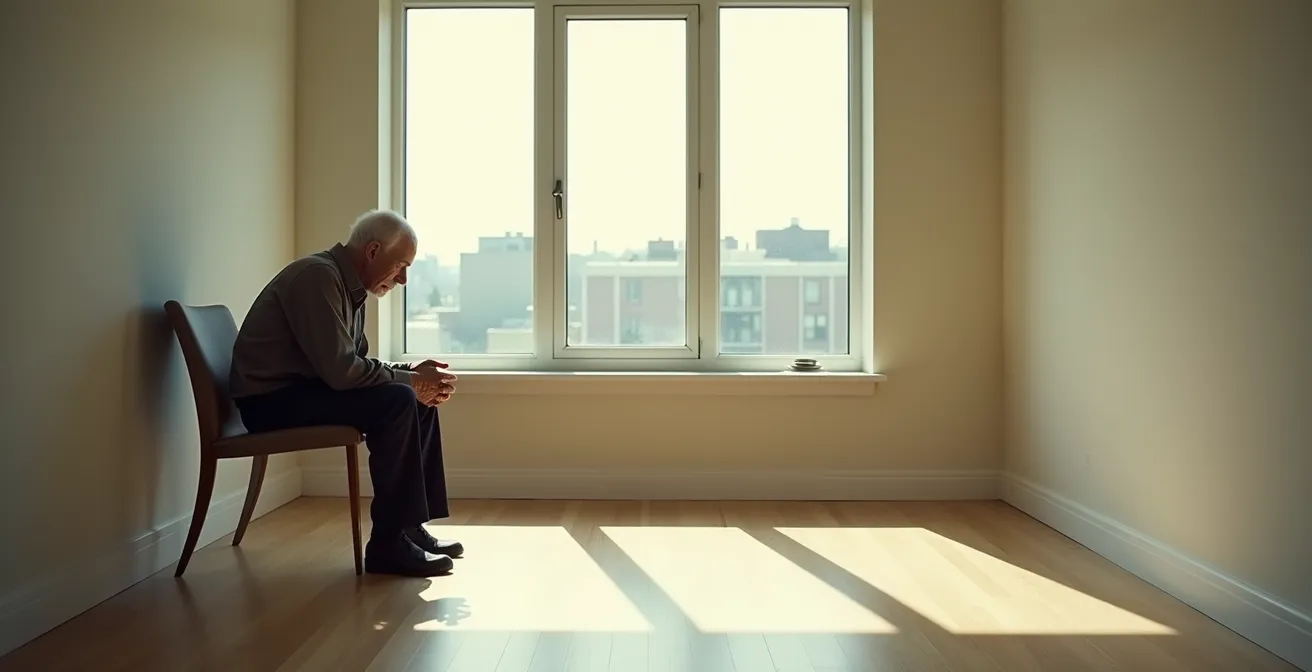
As this image conveys, the emptiness of depression is often reflected in a person’s environment and body language. A decline in self-care, such as neglecting personal hygiene or letting their living space become messy, is another critical sign. Recognizing these patterns is the first step toward getting the senior the professional help they need. The caregiver’s role is not to diagnose, but to observe these changes and report them clearly to the family and medical team.
Why « Getting Over It » Is Bad Advice for Senior Grief?
When a senior is grieving the loss of a spouse, friend, or even the loss of their former physical abilities, the most common and most damaging advice they receive is to « move on » or « get over it. » This well-intentioned push toward closure implies that grief is a problem to be solved or a phase with a finish line. This fundamentally misunderstands the nature of grief, especially in later life. Grief is not a linear process; it is a lifelong journey of integration. Forcing a senior to suppress their feelings or forget the past can lead to complicated grief and profound emotional isolation.
The role of a caregiver is not to « fix » the grief but to provide a safe harbor where the senior can experience it without judgment. This means validating their feelings, whether it’s sadness, anger, or even relief. It involves understanding that grief is cyclical and can be re-triggered by an anniversary, a song on the radio, or the smell of a favorite food. As Dr. Benjamin Marsh, a professor of psychological and brain science, explains, the caregiver’s true purpose lies in this consistent validation:
Grief is not a linear process. It’s cyclical and can be re-triggered by anniversaries, songs, or smells. The caregiver’s value is in providing consistent, non-judgmental support through these recurring waves, not in trying to ‘solve’ the grief.
– Dr. Benjamin Marsh, PBS Kentucky Edition
A more compassionate and psychologically healthy approach is to support the concept of « continuing bonds. » This theory suggests that the goal is not to sever ties with the deceased but to find new ways to maintain a connection while moving forward with life. A caregiver can facilitate this by encouraging the senior to share memories, helping them create a memory box with meaningful items, or simply sitting with them in silence as they navigate a wave of sadness. Acknowledging all losses, including disenfranchised grief over a pet or a lost home, is part of this vital supportive role.
The « Spouse Only » Error That Leaves Widows Completely Alone
For many older couples, their social life becomes completely intertwined. They attend events as a unit, their friends are « couple friends, » and their primary source of companionship is each other. When one spouse passes away, the surviving partner, often a widow, can experience a sudden and catastrophic social collapse. This is the « spouse only » error, where an individual’s entire social support system was dependent on their partner. They not only lose their life partner but also their primary social connector, leaving them utterly adrift and isolated.
The challenges are multi-faceted. The widow may no longer feel comfortable attending the couple-based activities they once enjoyed. They may experience an identity crisis, no longer knowing who they are outside of their role as a spouse. Friends may also feel awkward or unsure how to offer support, leading them to pull away and deepen the widow’s isolation. This is a critical time when a caregiver’s emotional support, focused on rebuilding a new social identity, becomes essential for long-term well-being.
The caregiver’s role is to act as a bridge back to the world. This doesn’t mean pushing the senior into large group activities they may find overwhelming. It’s about taking small, deliberate steps to foster new, individual connections. This might involve accompanying them to their first meeting at a senior center, helping them rediscover a dormant hobby, or teaching them how to use technology to connect with distant family. The goal is to rebuild a « social convoy » that is uniquely their own. The following table outlines practical interventions for these specific challenges.
| Challenge | Intervention | Outcome |
|---|---|---|
| Loss of couple-based activities | Connect to senior centers, support groups | New individual social connections |
| Identity crisis post-loss | Rediscover dormant interests/passions | Renewed sense of purpose |
| Dispersed social convoy | Bridge to technology for distant connections | Maintained relationships |
| Fear of new social situations | Accompany to first meetings/events | Increased confidence |
Key Takeaways
- Emotional support is a clinical necessity that directly impacts a senior’s physical health by regulating stress and inflammation.
- Respectful communication, especially avoiding « elderspeak, » is crucial for preserving dignity and improving cooperation with care.
- The caregiver’s role is that of an « emotional first responder »—providing comfort and support while knowing when to escalate to medical professionals.
How to Maintain an Active Social Life When You Are Naturally Introverted?
A common mistake in combating senior loneliness is assuming that the solution is always more activity, bigger groups, and a packed social calendar. This extrovert-centric model can be exhausting and deeply uncomfortable for a naturally introverted senior. For them, the cure can feel worse than the disease. True companionship isn’t about the quantity of interactions but the quality of connection. The goal is not to turn an introvert into an extrovert, but to honor their temperament and find social engagement strategies that energize rather than drain them.
For an introverted senior, a loud, crowded senior center can be overwhelming. They often thrive on deep, one-on-one connections rather than superficial small talk in a group. The caregiver-senior relationship can be the ideal model for this. It provides a consistent, trusted bond where meaningful conversation can flourish. A caregiver can also facilitate other forms of introvert-friendly engagement, such as « parallel activities. » This involves doing separate, quiet activities in the same room, like reading, working on a puzzle, or watching a documentary together. This creates a sense of shared presence and companionship without the pressure of constant conversation.
The caregiver can also function as a « social battery charger » for the senior. This means helping them set time limits for social events, planning for quiet recharge moments afterward, and choosing low-stimulation venues like a quiet museum, a library, or a walk in a garden. Scheduling buffer time before and after social outings allows the senior to participate without becoming completely depleted. By respecting their natural energy patterns, a caregiver can help an introverted senior maintain a rich and active social life on their own terms, proving that a fulfilling social life is not one-size-fits-all.
Ultimately, transforming elder care from a list of tasks into a therapeutic relationship begins with a shift in perspective. It requires recognizing that a senior’s emotional state is inextricably linked to their physical health. By equipping caregivers with the tools for active listening, respectful communication, and empathetic support, you are not just making your loved one happier—you are providing a non-pharmacological intervention that can genuinely extend and improve their quality of life. For families evaluating their care plans, the most important question should not be « Are the tasks done? » but rather, « Does my loved one feel seen, heard, and cherished? »