
The decision between a manual and power wheelchair is not about surrendering to weakness, but about making a strategic investment in your long-term functional independence.
- Choosing a power wheelchair conserves your finite daily energy, allowing you to participate in meaningful activities rather than exhausting yourself on basic mobility.
- Using a manual wheelchair for every task can lead to repetitive strain injuries in the shoulders and wrists, ultimately reducing your physical capabilities over time.
Recommendation: Evaluate your mobility needs through the lens of energy economics, prioritizing the tool that best preserves your capacity for daily life, not the one that demands the most physical effort.
For many seniors facing declining mobility, the choice between a manual and a power wheelchair feels like a monumental crossroads. It’s often framed as a battle between fighting to maintain physical strength and « giving up » on independence. This perspective is fueled by a common misconception: that pushing a manual wheelchair is always beneficial « exercise » and that opting for a power chair is a sign of surrender. This binary view is not only inaccurate but can be detrimental to your long-term health and quality of life.
As a rehabilitation engineer, I see this decision not as a question of effort, but as one of physiological strategy and energy economics. The most crucial factor isn’t how much strength you have today, but how you can best preserve your function, prevent secondary injuries, and maximize your ability to engage with the world for years to come. The goal is to allocate your finite daily energy budget to what matters most—whether that’s playing with grandchildren, engaging in a hobby, or simply performing activities of daily living (ADLs) without pain and exhaustion.
This article will deconstruct the common myths and practical errors surrounding this choice. We will move beyond the simplistic « strength vs. weakness » debate to provide a functional, evidence-based framework. We’ll explore the physiological impact of long-term manual propulsion, the real-world challenges of transport, and how to make an informed decision that truly supports, rather than limits, your freedom.
This guide offers a structured approach to navigating one of the most important decisions for your mobility. The following sections break down key physiological, financial, and practical considerations to help you choose the right tool for your life.
Contents: Manual vs. Power Wheelchair: A Functional Guide
- Why « Power Chairs Make You Lazy » Is a Myth That Limits Freedom?
- How to Document Medical Necessity to Get Insurance to Pay for Power Chairs?
- The Transport Weight Error That Leaves Seniors Stranded at Home
- Transport Chair vs Standard Wheelchair: What Is the Functional Difference?
- How to Charge Your Power Chair Battery to Extend Its Lifespan by Years?
- Why Your « Standard » Policy Fails to Cover Advanced Mobility Needs?
- How to Gain 2 Inches of Width Without Tearing Out the Door Frame?
- How to Choose and Install the Right Modular Ramp for Your Home Entrance?
Why « Power Chairs Make You Lazy » Is a Myth That Limits Freedom?
The most pervasive and damaging myth is that relying on a power wheelchair leads to physical deconditioning. This idea ignores a fundamental physiological principle: energy conservation. For individuals with mobility limitations, chronic pain, or systemic fatigue, daily energy is a finite resource. The « Spoon Theory, » a concept developed by Christine Miserandino, provides a powerful analogy. Imagine you start each day with a limited number of « spoons, » with each activity costing a certain amount. Propelling a manual wheelchair across the house might cost several spoons, leaving you with insufficient energy for essential tasks like showering, preparing a meal, or engaging in a social visit.
As Christine Miserandino explains in her foundational essay on the concept:
While most people begin each day with an unlimited amount of possibilities, people with chronic illness have to plan their actions in order to conserve their energy
– Christine Miserandino, The Spoon Theory essay, creator of the energy budget concept
A power wheelchair is not a tool of laziness; it is a tool of strategic energy management. By eliminating the high energy cost of propulsion, it frees up those « spoons » for higher-value activities. Instead of being too exhausted to leave the house after getting ready, you have the preserved energy to attend a grandchild’s school play or go grocery shopping. This isn’t weakness; it’s a calculated decision to trade the « exercise » of propulsion for the functional independence of participation.
Case Study: Spoon Theory in Action
Amy, who lives with Multiple Sclerosis, exemplifies this principle. Using a manual wheelchair for short distances would cost her precious energy ‘spoons.’ A shower might use three spoons and a short walk five, leaving her with a deficit for the rest of her day. By using a power chair for all mobility, she conserves that energy, allowing her to budget it for her part-time work and quality time with her family. The power chair doesn’t make her lazy; it makes her a present and active participant in her own life.
Furthermore, the « exercise » from manual propulsion is often inefficient and damaging. It places enormous repetitive strain on the small muscles of the shoulders, elbows, and wrists, leading to a high incidence of chronic pain and secondary injuries. True, beneficial exercise should be targeted and controlled, not a byproduct of every movement you make. Preserving your upper body joints is paramount for long-term function in tasks like dressing, eating, and transferring. Choosing a power chair is often a proactive step to protect your body from this cumulative damage.
How to Document Medical Necessity to Get Insurance to Pay for Power Chairs?
Securing insurance coverage for a power wheelchair requires a shift in thinking from « convenience » to « medical necessity. » Insurers need objective proof that a manual wheelchair is insufficient for performing Mobility-Related Activities of Daily Living (MRADLs) within the home. This means you cannot safely or effectively use a manual chair for tasks like getting to the bathroom, preparing a meal, or moving from room to room. Simply stating you are tired is not enough; you must provide documented evidence of functional failure.
The key is to create a detailed record that paints a clear picture of your limitations. This involves logging specific instances where manual propulsion failed you. For example, documenting that you were unable to propel yourself from the kitchen to the bedroom without experiencing severe shoulder pain, or that you avoided using the bathroom to conserve energy, provides concrete data. This documentation is most powerful when supported by a clinical assessment from a Physical Therapist (PT) or Occupational Therapist (OT).
A PT or OT can perform timed tests, monitor your heart rate and oxygen saturation during propulsion, and formally assess your posture and risk of repetitive strain injury. Their report can translate your subjective experience of fatigue and pain into the objective language that insurance companies require. They can definitively state that a power mobility device is necessary to prevent future falls, pressure sores, or debilitating shoulder injuries, framing the request as a cost-prevention measure.
Your Action Plan: Documenting MRADL Failure
- Create a Mobility Diary: Log specific failures with details, such as « Unable to propel from kitchen to bedroom without shoulder pain rated 7/10. »
- Request a Professional Assessment: Ask your PT/OT for a functional mobility assessment that includes timed tests and heart rate monitoring during manual propulsion.
- Document Foregone Activities: Record activities you could not do due to fatigue from mobility, like « Missed family dinner because I was too exhausted after a doctor’s appointment. »
- Frame as Prevention: Structure the request to show how a power chair prevents predictable and costly future complications like falls, pressure sores, and rotator cuff surgery.
- Use Specific Phrasing: In appeals, use functional language like « This denial prevents me from fulfilling my role as a caregiver/safely managing my own personal care. »
The goal is to prove that a power wheelchair is the « least costly alternative » that still meets your medical needs. By showing that a manual chair leads to functional decline and higher medical risks, you build an undeniable case for coverage.
The Transport Weight Error That Leaves Seniors Stranded at Home
One of the most significant practical mistakes families make is underestimating the real-world transport weight of a wheelchair. A specification sheet might list a « frame weight » of 30 pounds, but this number is dangerously misleading. The actual lifting weight includes heavy components that are often overlooked until the moment a caregiver attempts to load the chair into a car trunk. This single miscalculation can be the difference between community access and being stranded at home.
A power wheelchair’s total weight is a sum of its parts, and each part presents a lifting challenge. The batteries alone are a primary culprit; a pair of standard gel batteries can weigh 30 to 50 pounds. The seat, especially if it includes positioning cushions, can add another 10 to 20 pounds. Footrests, the frame, and the motor assembly add up quickly. The « real-world lift weight » of even a « transportable » power chair is often 60-110 pounds, far beyond the safe lifting capacity for many seniors or their caregivers.
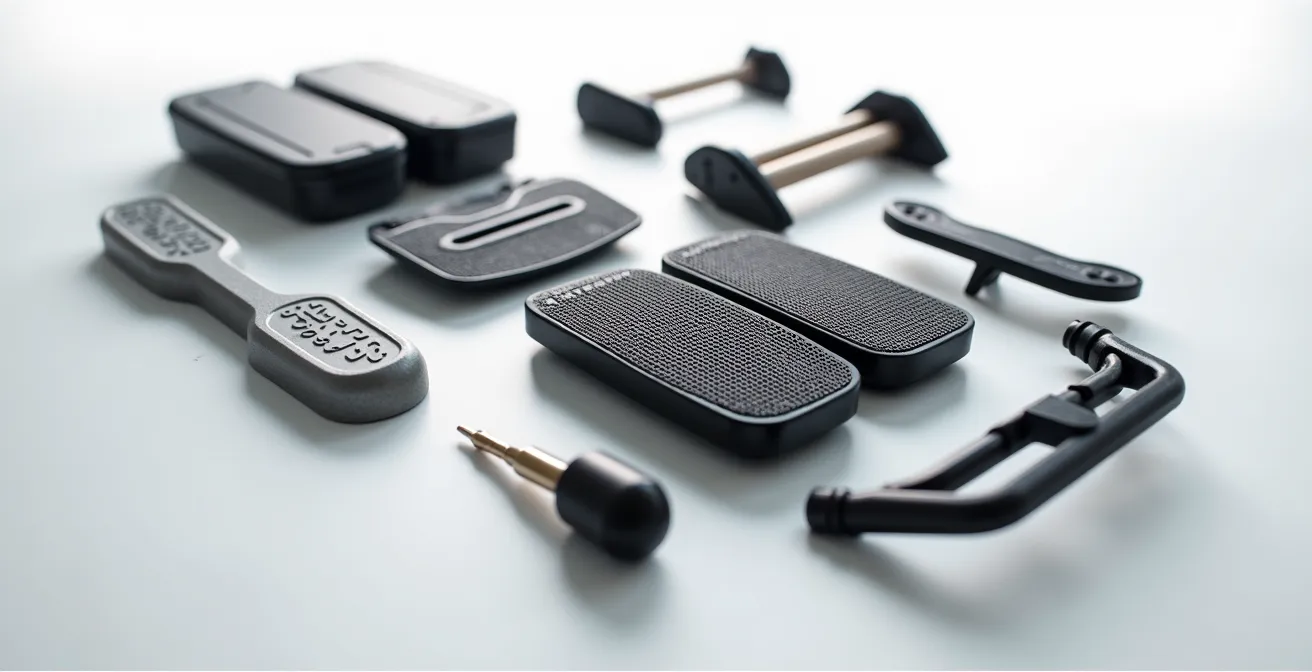
Furthermore, disassembly for transport is not a simple, one-step fold. It’s a multi-step process that can take 10-15 minutes and requires a degree of dexterity and strength. Typically, it involves removing footrests, detaching the joystick, lifting out the heavy batteries, folding the backrest, and sometimes separating the frame into two pieces. The heaviest single piece, often the base with the motors or the battery pack, frequently exceeds what an elderly spouse can safely lift into a high vehicle trunk.
Case Study: The Caregiver Capacity Factor
A real-world comparison highlights this issue. The ASTRA Aluminum Transport Wheelchair weighs only 19 pounds but requires a caregiver to push it. In contrast, the Invacare TDX SP2 Power Wheelchair provides complete user independence but weighs over 250 pounds and cannot be disassembled for car transport. An elderly spouse may be unable to safely lift even the 19-pound chair repeatedly. This illustrates the « Caregiver Capacity » factor, where a blended solution—a non-transportable power chair for home use combined with accessible paratransit services for outings—is often more practical than attempting to transport either chair.
This reality must be confronted before purchase. A power chair that cannot be realistically transported by its intended user or caregiver offers a false promise of freedom. It becomes a very expensive piece of equipment confined to the home, effectively trapping the user rather than liberating them.
Transport Chair vs Standard Wheelchair: What Is the Functional Difference?
In the world of manual mobility aids, the terms « transport chair » and « standard wheelchair » are often used interchangeably, but they describe two functionally distinct devices designed for completely different purposes. Understanding this difference is critical to selecting a tool that enhances, rather than hinders, independence. The primary distinction lies in the user’s role: in a transport chair, the user is a passive passenger, while in a standard wheelchair, the user is an active participant in their own mobility.
This functional difference stems directly from their design. A transport chair is characterized by its four small wheels, typically 8 to 12 inches in diameter. These small wheels cannot be reached by the user from a seated position, making self-propulsion impossible. It is purely a caregiver-operated device. While lightweight (15-25 lbs) and easy to fold, it offers minimal seating support and is only suitable for short-distance transport over smooth, flat surfaces. It is an appropriate choice for a quick trip from the car to a doctor’s office, but not for all-day use or any level of user autonomy.
A standard manual wheelchair, by contrast, is engineered for self-propulsion. Its defining feature is its large rear wheels, typically 20 to 26 inches in diameter, equipped with push-rims. These wheels allow the user to independently maneuver the chair, promoting upper body engagement and autonomy. While heavier than transport chairs (25-40 lbs), they offer far greater versatility, handling multiple surfaces both indoors and outdoors. They also provide options for customizable seating to ensure proper support and pressure distribution, which is vital for anyone spending significant time in the chair. In the United States alone, it’s estimated that 1.5 million people use manual wheelchairs, highlighting the importance of choosing a device that supports active use.
| Feature | Transport Chair | Standard Wheelchair | Use Case |
|---|---|---|---|
| User Role | Passive passenger | Active participant | Independence level needed |
| Wheel Size | 8-12 inch wheels | 20-26 inch wheels | Surface adaptability |
| Self-Propulsion | Not possible | Designed for self-use | User autonomy requirement |
| Weight | 15-25 lbs | 25-40 lbs | Caregiver lifting ability |
| Seating Support | Basic sling seat | Customizable positioning | Full-time vs occasional use |
| Terrain Handling | Smooth floors only | Multiple surfaces | Indoor vs outdoor use |
Choosing a transport chair when a standard wheelchair is needed effectively removes the user’s independence. It forces reliance on a caregiver for every movement, which can be disempowering and limit spontaneous activity.
How to Charge Your Power Chair Battery to Extend Its Lifespan by Years?
The batteries are the heart of a power wheelchair, and their lifespan is directly tied to your charging habits. Proper battery maintenance is not complex, but it does require discipline and an understanding of how modern batteries work. Following a few key protocols can extend the life of your batteries from a single year to three or even five years, saving you significant replacement costs and preventing you from being stranded by a dead chair. The most critical rule for Gel or AGM batteries—the most common types—is to avoid deep discharge.
Unlike old nickel-cadmium batteries that suffered from a « memory effect, » modern Gel and AGM batteries thrive on being kept near full charge. You should charge your power chair every single night, regardless of how much you used it during the day. Allowing these batteries to regularly drop below 50% capacity causes permanent damage (sulfation) that reduces their ability to hold a charge. A daily charging routine is the single most effective way to ensure longevity. This habit is more important than any other factor.

Temperature is another crucial variable. Batteries are chemical devices, and their performance is sensitive to extreme heat and cold. Never charge your batteries in temperatures below freezing (32°F/0°C) or above 90°F (32°C). If the chair has been outside in the cold or stored in a hot garage, bring it indoors and allow the batteries to return to room temperature for a few hours before plugging in the charger. Charging in extreme temperatures can cause permanent damage and is a major safety risk.
Finally, a consistent maintenance routine will maximize battery health. Here are the best practices for long-term battery care:
- Daily Practice: Charge the batteries every night for at least 8 hours. The smart charger will shut off automatically when they are full, so you cannot overcharge them.
- Monthly Conditioning: Once a month, perform an uninterrupted 10-12 hour charge cycle. This helps to balance the cells within the battery and ensures your battery gauge remains accurate.
- Storage Protocol: If you won’t be using the chair for an extended period, charge the batteries to about 80% and then disconnect them. Recharge them monthly to prevent them from self-discharging completely.
By treating your batteries with this level of care, you are protecting the investment you’ve made in your mobility and ensuring your chair is reliable when you need it most.
Why Your « Standard » Policy Fails to Cover Advanced Mobility Needs?
Many insurance policies, particularly basic Medicare, are built around the concept of the « Least Costly Alternative. » This means they will only cover the most basic equipment necessary to perform MRADLs *inside the home*. This narrow definition is why so many initial claims for advanced power wheelchair features—like power tilt, recline, or seat elevation—are denied. Insurers often classify these features as « luxury » or « convenience » items, failing to recognize their profound medical and functional necessity.
Power tilt and recline systems, for example, are not for comfort; they are essential medical tools for pressure relief. A person who cannot independently shift their own weight is at high risk for developing pressure sores. These wounds can progress to life-threatening Stage IV ulcers, requiring extensive wound care, hospitalization, and surgery that can cost hundreds of thousands of dollars. A power tilt feature allows the user to independently change their position every 15-20 minutes, offloading pressure from critical areas and preventing these catastrophic and costly complications.
Power Tilt is not a luxury; it is a medical necessity for pressure relief to prevent Stage IV pressure sores which cost insurers hundreds of thousands to treat.
– Mobility advocacy expert, Insurance appeal guidance documentation
Similarly, a power seat elevate feature is often denied as a convenience for reaching high shelves. However, its medical justification can be tied to safe transfers, reducing the risk of falls, or enabling function in a specific environment. The key to overturning these denials is to provide a detailed, function-based justification that links the feature directly to health, safety, and the prevention of more expensive future costs.
Case Study: Justifying the Power Elevate Feature
A teacher who uses a power wheelchair successfully appealed a denial for a power elevate feature. The appeal documentation, supported by her occupational therapist and employer, demonstrated that peer-level interaction with her students was an essential function of her job. The appeal argued that the « Least Costly Alternative » (a basic chair) would prevent her from fulfilling her occupational requirements, potentially leading to job loss and subsequent disability payments—a far greater cost to the system. By framing the feature as a tool for vocational and medical necessity, the appeal was successful.
To succeed, your appeal must meticulously explain *why* the standard, basic option is insufficient and how the advanced feature is the most cost-effective way to maintain your health and function.
How to Gain 2 Inches of Width Without Tearing Out the Door Frame?
One of the most common architectural barriers in a home is a narrow doorway. While accessibility standards suggest doorways should be 32-36 inches wide, many older homes have interior doorways as narrow as 28 or 30 inches. Before resorting to expensive and disruptive renovations, there are several simple, low-cost modifications that can reclaim precious inches and make a home navigable. The most effective of these is installing offset expansion hinges.
Standard door hinges place the door’s pivot point inside the door frame. When the door is open, the thickness of the door itself still sits within the opening, stealing 1.5 to 2 inches of clear space. Offset hinges, also known as swing-clear hinges, are Z-shaped and designed to move the pivot point outside of the frame. When the door is opened to 90 degrees, it swings completely clear of the doorway. This simple hardware swap, which typically costs $20-$40, can instantly add up to two inches of usable width to a doorway, often making the difference between a passable and an impassable opening.
Before making any changes, it’s crucial to conduct a thorough doorway audit. Don’t just measure the door opening itself; assess the approach. A 32-inch door at the end of a narrow hallway can be more difficult to navigate than a 30-inch door with a wide, straight approach. Sometimes, the solution isn’t widening the door but improving the angle of entry. This might involve reversing the direction the door swings (so it opens out of a small bathroom instead of into it) or simply removing the door entirely and replacing it with a curtain for privacy.
For a very small gain, you can also temporarily remove the thin strips of wood molding (door stops) that line the inside of the frame where the door rests when closed. This can add another quarter to half an inch of clearance in a pinch. The best strategy, however, is proactive: know the measurement of your narrowest passage *before* you select a wheelchair, as this can inform your choice of chair model and width.
Key Takeaways
- The choice between a manual and power wheelchair is a strategic decision about energy management, not a reflection of personal strength or weakness.
- Documenting functional failures and framing power mobility as a tool for injury prevention is crucial for securing insurance coverage.
- Real-world transport weight, including batteries and components, must be considered to avoid purchasing a chair that cannot be realistically transported by its caregiver.
How to Choose and Install the Right Modular Ramp for Your Home Entrance?
A ramp is often the bridge between being homebound and having access to the community, but choosing the right one involves more than just spanning the distance from the ground to your door. The most critical factor for safety and usability is the ramp’s slope. A ramp that is too steep is not only difficult and exhausting for a manual wheelchair user to ascend but is also incredibly dangerous to descend. The Americans with Disabilities Act (ADA) mandates a minimum slope of 1:12, meaning for every 1 inch of vertical rise, there must be at least 12 inches (1 foot) of ramp length. However, for many seniors, even this is too steep for comfortable, independent use.
A gentler slope is always better. A 1:16 or even 1:20 slope is highly recommended for manual wheelchair users or anyone wishing to conserve energy. This translates to 16 or 20 inches of ramp for every inch of rise. For an entrance with a 24-inch rise, an ADA-compliant ramp would be 24 feet long, while a more comfortable 1:20 ramp would need to be 40 feet long. Space is a major constraint, and the ramp may need to include turns and platforms to fit the property. A flat, level platform of at least 5’x5′ is non-negotiable at the top of the ramp to provide a safe space to stop and open the door.
| Slope Ratio | Rise per Foot | User Effort | Best For |
|---|---|---|---|
| 1:12 (ADA minimum) | 1 inch per 12 inches | Steep hill feeling for manual users | Power chairs, strong manual users |
| 1:16 | 1 inch per 16 inches | Moderate effort required | Most manual wheelchair users |
| 1:20 | 1 inch per 20 inches | Comfortable for daily use | Seniors, energy conservation |
| Platform Requirements | 5’x5′ minimum at top | Safe stopping/turning space | All users – non-negotiable |
The material of the ramp is another key consideration that should be tailored to your local climate. Aluminum is lightweight, durable, and maintenance-free, but it can become extremely slippery when wet and dangerously hot in direct sun. Wood is a cost-effective option that provides good natural traction, but it requires regular sealing and maintenance to prevent rot and UV damage. This is a critical decision that impacts both safety and long-term cost.
Case Study: Climate-Based Material Selection
A tale of two installations shows the impact of climate. An aluminum ramp installed in rainy Seattle required an additional $500 for a specialized anti-slip coating to be safe. Meanwhile, a wooden ramp in sunny Arizona needed a new coat of UV-resistant sealant every 18 months to prevent the wood from cracking and warping. The lesson is to match the ramp material to local weather conditions and factor long-term maintenance into the total cost of ownership, not just the initial purchase price.
The next logical step is to schedule a functional mobility assessment with a physical or occupational therapist to analyze your specific needs and home environment.
Frequently Asked Questions on Wheelchair Selection and Use
What’s the real weight difference between spec sheets and actual lifting weight?
Spec sheet weights often show the bare frame only (15-30 lbs). The real-world lifting weight includes the batteries (30-50 lbs), seating system (10-20 lbs), and footrests (5-10 lbs), often totaling 60-110 lbs or more for a « transportable » power chair.
How many disassembly steps are required for transport?
Transporting a power wheelchair typically requires 4-7 distinct steps: removing the footrests, detaching the joystick controller, lifting out one or two heavy batteries, folding the backrest, separating the seat from the base, and sometimes splitting the frame itself. This process can take 10-15 minutes.
What’s the heaviest single piece an elderly caregiver must lift?
The battery pack or the motor base is usually the heaviest single component. A battery pack alone can weigh between 30 and 50 pounds, which often exceeds the safe lifting limit for an older adult, especially when hoisting it up and into a vehicle’s trunk.