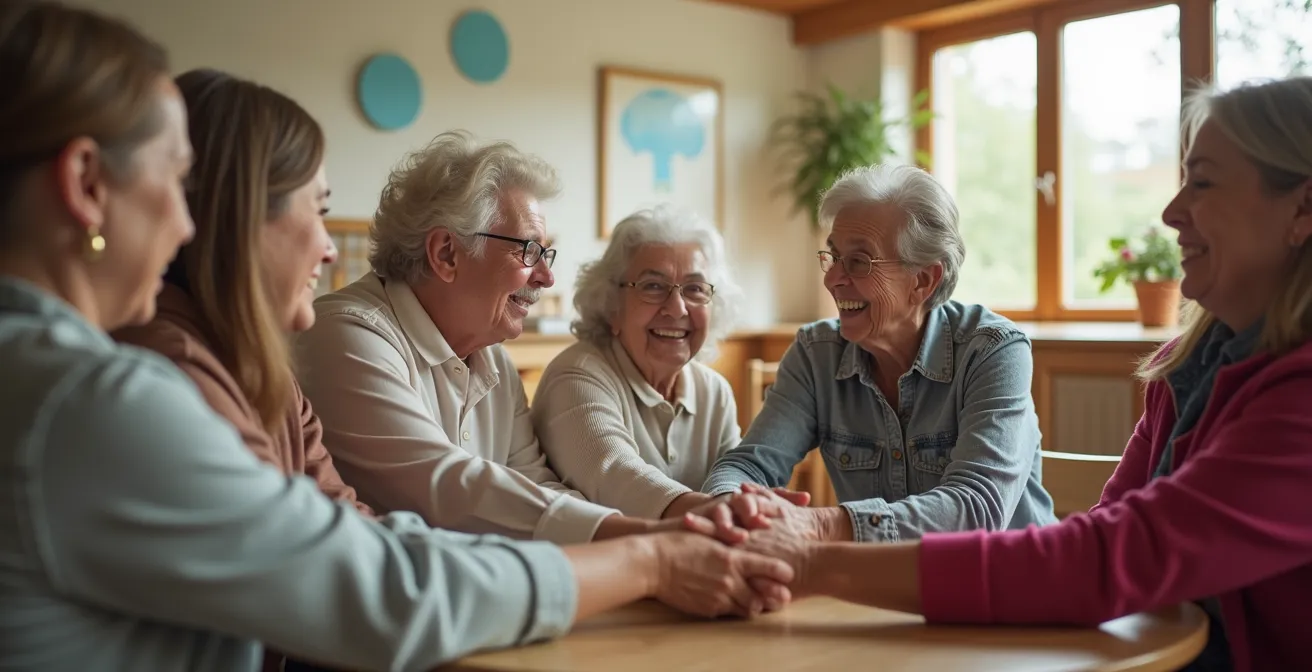
Preventing senior isolation is not about adding more social activities; it’s an act of structural engineering to build a resilient social safety net.
- Identify and neutralize single « points of failure » like relying only on a spouse or a single hobby.
- Build intentional « redundancy pacts » and automated check-in systems that function independently of mood or motivation.
Recommendation: Proactively audit your social ecosystem today to identify vulnerabilities and implement preventative measures, rather than reacting to a crisis of loneliness later.
The common advice for staving off loneliness in later life often feels like a checklist of activities: join a book club, learn a new skill, volunteer. While well-intentioned, this approach fundamentally misunderstands the nature of social isolation. It treats loneliness as a void to be filled, a problem to be solved once it has already taken root. But for proactive seniors and their families, waiting for loneliness to appear is like waiting for a leak to start before checking the roof. The risk of isolation doesn’t emerge from a lack of options, but from the slow, often invisible, erosion of our existing social structures. Life transitions, from retirement to the loss of a spouse, can dismantle a social life that once felt robust, revealing critical vulnerabilities too late.
The true antidote to isolation is not a frantic search for new connections but a strategic, preventative approach. This guide reframes the challenge entirely. We will not be listing hobbies. Instead, we will act as social safety planners, architecting a resilient « social scaffolding » designed to withstand life’s inevitable shocks. The key isn’t to simply add more social pillars, but to systematically identify and reinforce the weak points in our support system *before* they fail. It’s about building a system so robust that it functions even on days when motivation is low or mobility is limited. This is not about staying busy; it’s about staying connected through intentional design.
This article provides a strategic blueprint for engineering that safety net. We will dissect the common points of failure, from hobby abandonment to seasonal risks, and provide actionable frameworks to build a social support system that is both durable and deeply fulfilling. Follow along as we explore how to construct a future where connection is not a matter of chance, but a product of foresight.
Contents: A Strategic Blueprint for a Resilient Social Future
- Why Stopping Hobby Participation Is the First Red Flag of Isolation?
- How to Create a « Buddy System » Pact With Friends for Daily Check-Ins?
- The « Spouse Only » Error That Leaves Widows Completely Alone
- Senior Living vs Roommate Sharing: Which Solves Isolation Better?
- How to « Winter-Proof » Your Social Life Against Seasonal Isolation?
- How to Spot the Signs of Depression That Are Often Mistaken for « Aging »?
- The « Wait Until I Fall » Mistake That Ends Independent Living Instantly
- Why Emotional Support from Caregivers Is as Vital as Physical Aid for Lonely Seniors?
Why Stopping Hobby Participation Is the First Red Flag of Isolation?
When a senior suddenly stops participating in a long-loved hobby, it’s rarely due to a simple « loss of interest. » This change is often the first, most visible crack in their social scaffolding, a critical red flag that underlying issues are making engagement difficult or impossible. Ignoring this signal is a strategic error. It’s not the activity itself that matters most, but the routine, sense of purpose, and social interaction it provides. The feeling of being cut off is widespread; recent data shows that 34% of adults ages 50-80 reported feeling a lack of companionship, a void that hobbies often fill.
Instead of a generic « you should get out more, » a planner’s approach involves conducting an « abandoned hobby autopsy. » This means investigating the specific friction points that led to the change. As Michigan Medicine’s research shows, structured conversations that explore the timeline and specific barriers are far more effective. For example, they found that one senior who had abandoned painting was able to resume their passion simply by switching from a standing easel to seated watercolor work. The problem wasn’t a lack of desire, but a physical barrier that, once identified, was easily solved. This diagnostic approach turns a vague problem into a set of solvable challenges.
The goal is to dismantle these barriers before they solidify into complete withdrawal. By addressing the root causes—be they physical, financial, or social—we can repair that part of the safety net and restore a vital source of connection. This isn’t just about preserving a pastime; it’s about preventing the first domino of social isolation from falling.
How to Create a « Buddy System » Pact With Friends for Daily Check-Ins?
A « buddy system » is a foundational element of a social safety net, but its effectiveness depends on its design. An informal « I’ll call you sometime » agreement is fragile and often fails under the pressures of daily life. A truly resilient system is a « Redundancy Pact »: a conscious, structured agreement between two or more friends to conduct daily check-ins. This isn’t just a social call; it’s a functional safety check. The purpose is to create a predictable and reliable point of contact that exists independently of mood or circumstance, ensuring that no one goes a day without speaking to someone.
The structure of this pact can vary, from a simple morning phone call to using a dedicated app. The key is consistency. This daily touchpoint does more than just confirm safety; it provides a routine of social interaction that combats the slow creep of loneliness. For those who prefer a more automated or formal approach, professional services and apps offer an excellent alternative to a purely informal system, providing peace of mind for both the senior and their family.

Choosing the right method depends on the individual’s comfort with technology and their existing social network. The following table compares some of the available options to help design the most effective check-in system.
| Service Type | Cost | Features | Best For |
|---|---|---|---|
| Snug Safety App | Free | Daily app check-in, emergency contacts alerted if missed | Tech-comfortable seniors |
| Professional Services (Assuratel) | $0.27/day | Automated calls, personalized reminders | Those preferring phone contact |
| Informal Buddy System | Free | Friend-to-friend calls, flexible timing | Seniors with strong social networks |
Ultimately, the tool is less important than the commitment. Establishing a formal pact transforms a casual friendship into a vital piece of social infrastructure, creating a powerful buffer against sudden isolation.
The « Spouse Only » Error That Leaves Widows Completely Alone
One of the most common and catastrophic points of failure in a social safety net is over-reliance on a single person, typically a spouse. For decades, a couple’s social life can become so intertwined that their support system is effectively one entity. They attend events together, share the same friends, and manage their social calendar as a unit. While beautiful, this creates an extremely fragile structure. When one spouse passes away, the other doesn’t just lose their partner; they lose their entire social operating system. This is a primary driver behind why so many recently widowed individuals experience a rapid and profound descent into isolation.
This « Spouse Only » error leaves the surviving partner to navigate a social world that was built for two. Invitations may dwindle, as friends are unsure how to interact with the individual alone. The simple logistics of attending events—from driving at night to feeling comfortable entering a room solo—become significant hurdles. The result is a swift and often shocking withdrawal from social life, not out of a desire for solitude, but due to the collapse of the social infrastructure. This isn’t a personal failing; it’s a systemic one. The problem is so significant that National Academies research reveals that 24% of community-dwelling Americans aged 65 and older are considered socially isolated, a figure heavily influenced by life transitions like widowhood.
The preventative strategy is to build social redundancy long before it’s needed. This means actively cultivating and maintaining individual friendships and interests outside of the couple. It involves each partner having their own « buddy system » pacts, separate hobbies, and connections. This isn’t about creating distance within the marriage, but about building a more resilient, diversified social portfolio. A healthy social safety net, like a good financial portfolio, is diversified to mitigate risk. Ensuring that each partner has a robust and independent support system is one of the most powerful acts of love and foresight a couple can undertake.
Senior Living vs Roommate Sharing: Which Solves Isolation Better?
When an individual’s home becomes a place of isolation rather than comfort, a change in living situation is often considered. The two most prominent options, senior living communities and intergenerational homesharing, offer distinct approaches to solving the problem of loneliness. Senior living provides a high volume of social opportunities through scheduled activities and a community of peers. It offers an institutionalized support system, which is redundant and reliable, but can sometimes feel impersonal and comes at a significant financial cost.
Intergenerational homesharing, on the other hand, offers a different kind of solution. This model involves a senior sharing their home with a younger adult, often in exchange for reduced rent and light assistance with household tasks. This creates fewer, but potentially deeper and more organic, social connections. The Boston Intergenerational Homeshare Pilot provided a compelling case study. In this program, 89% of participants stated they would recommend it to others. The financial benefits were clear, with average rent around $700, and some guests saving an additional $100-150 by helping with errands. More importantly, participants reported that the arrangements grew into fulfilling, familial relationships, directly combating isolation while allowing the senior to maintain their independence at home.
The choice between these two models depends on an individual’s personality, finances, and desire for autonomy. Senior living offers a structured, « plug-and-play » social environment, while homesharing provides a personalized, relationship-based approach. The following table breaks down the key differences in their impact on social connection.
| Factor | Senior Living | Intergenerational Homesharing |
|---|---|---|
| Social Interactions | High quantity, scheduled activities | Fewer but deeper, organic connections |
| System Resilience | Institutionalized support, redundant but impersonal | Personal but fragile, depends on one person |
| Cost Impact | Higher monthly fees | Income generation potential ($600-700/month) |
| Autonomy Level | Structured environment | Maintains home independence |
Ultimately, both options recognize that our living environment is a core component of our social safety net. The best choice is the one that aligns with the individual’s need for both social interaction and personal independence, effectively redesigning their daily life to have connection built-in.
How to « Winter-Proof » Your Social Life Against Seasonal Isolation?
For many seniors, winter is a predictable point of failure for their social safety net. Shorter days, inclement weather, and fear of falling on ice can severely restrict mobility and spontaneous social outings. This seasonal isolation isn’t just a minor inconvenience; it’s a recurring stress test on a person’s entire support system. Relying on the hope of a mild winter is not a strategy. A proactive planner engages in « social winter-proofing, » creating a robust plan to maintain connections before the first snowflake falls. This means anticipating the barriers and putting systems in place to neutralize them.
Winter-proofing involves a multi-pronged approach. First, it means shifting the social calendar from reactive to proactive. Instead of waiting to see if a lunch outing is possible, pre-schedule weekly virtual events like online book clubs, remote cooking classes with friends, or family video calls. Second, it requires securing logistical support. This includes setting up reliable grocery and medication delivery services well before they are urgently needed, eliminating the need to venture out in hazardous conditions. Third, it’s about technological preparedness. Create a « virtual toolkit » with all necessary apps (like Zoom or FaceTime) installed and login credentials readily accessible, and practice using them in the fall.
Beyond logistics, winter-proofing also addresses the psychological impact of the season. Establishing a daily routine with a light therapy lamp (10,000 lux for 30 minutes each morning) can help combat Seasonal Affective Disorder (SAD). Another powerful strategy is to form a « Community Pod »—a small, pre-agreed-upon group of 3-4 local friends or neighbors who commit to regular, safe in-person contact throughout the winter, creating a micro-community that can support each other through the toughest months. By implementing these measures, winter changes from a period of isolation to a season of planned, intentional connection.
How to Spot the Signs of Depression That Are Often Mistaken for « Aging »?
A significant threat to a senior’s social safety net is the misinterpretation of depression symptoms as a normal part of aging. Dismissing persistent fatigue, loss of interest, or social withdrawal as « just getting older » can prevent a person from receiving critical mental health support. This is a dangerous oversight, as untreated depression actively dismantles a person’s will and ability to maintain social connections. The link between mental health and isolation is stark; research shows that 77% of older adults with poor mental health feel isolated, compared to just 29% of those with good mental health. Recognizing the difference is a crucial part of social safety planning.
Normal aging can involve slowing down, occasional sadness related to specific losses, and some forgetfulness. Depression, however, is characterized by its pervasiveness and severity. It is not just feeling tired after an activity, but a pervasive fatigue that is present from the moment the day begins. It’s not occasional sadness, but a persistent feeling of hopelessness without a clear trigger. The most telling sign is anhedonia—the complete loss of pleasure in activities that were once enjoyed. This is fundamentally different from having a reduced interest in some hobbies while maintaining it in others.
Understanding these distinctions allows family and friends to act as informed first responders. It’s about looking for patterns of change rather than isolated incidents. Is the change in energy levels global, affecting all activities? Is the sadness constant and untethered to a specific event? The following table provides a clear comparison to help differentiate between the normal processes of aging and the potential warning signs of depression.
| Normal Aging | Potential Depression |
|---|---|
| Feeling tired after activity | Pervasive fatigue before day starts |
| Occasional forgetfulness | Difficulty concentrating on any task |
| Slower movement due to arthritis | Psychomotor slowing affecting all activities |
| Sadness after specific loss | Persistent hopelessness without clear trigger |
| Maintained interest in some activities | Complete loss of pleasure (anhedonia) |
Spotting these signs is not about making a diagnosis, but about recognizing the need to facilitate a conversation with a healthcare professional. Addressing potential depression is a primary act of social network repair, as it restores the individual’s capacity and desire to engage with the world.
The « Wait Until I Fall » Mistake That Ends Independent Living Instantly
One of the most dangerous philosophies for aging in place is the « wait until I fall » approach. This reactive mindset treats a fall as an unfortunate but unpredictable accident, rather than as a preventable systemic failure. A serious fall is rarely just a physical event; it’s a catastrophic failure that can instantly dismantle a senior’s independence and social safety net. The recovery process often involves hospitalization, rehabilitation, and a long-term loss of confidence, leading to a fear of movement that accelerates social isolation. The cognitive impacts of this isolation are severe; CDC data confirms that social isolation leads to a 50% increased risk of dementia among older adults.
A proactive planner views fall prevention not as a discrete task, but as an integral part of maintaining social infrastructure. The home environment must be audited and engineered for safety with the same rigor used to build a financial plan. This involves moving beyond simply removing loose rugs. It requires a « Zoned Safety Audit, » a systematic review of the home to classify areas by risk. This creates a clear, actionable plan for making the environment as safe as possible, thereby protecting the resident’s ability to live independently and stay socially engaged.
Thinking in terms of return on investment (ROI) can be a powerful motivator. A simple grab bar installation might cost $500, but it can prevent a fall-related hospitalization that easily exceeds $30,000, not to mention the incalculable cost to one’s quality of life and social freedom. The following checklist provides a framework for conducting a strategic home safety audit.
Your Action Plan: Zoned Safety Audit for Fall Prevention
- Green Zone: Identify and confirm areas with grab bars, clear pathways, and good lighting that are safe for independent use.
- Yellow Zone: Note spaces requiring extra caution, such as stairs (even with railings) or bathrooms (which must have non-slip mats).
- Red Zone: Designate high-risk areas to be avoided when alone, like an unfinished basement, a steep attic ladder, or icy outdoor steps.
- Conduct Safety Drills: Practice using medical alert devices on a monthly basis to ensure they are functional and that you are comfortable with their operation.
- Calculate ROI: Compare the modest cost of proactive modifications (e.g., grab bars, improved lighting) against the immense financial and personal cost of a fall.
By treating fall prevention as a strategic imperative, we are not just protecting a person’s physical health; we are defending their entire world of independence, autonomy, and social connection.
Key Takeaways
- Preventing isolation is an act of engineering a « social safety net, » not just finding activities.
- Identify and reinforce systemic « points of failure » like spouse-only dependency or seasonal risks before they cause a crisis.
- Emotional support from caregivers has a measurable impact and is as crucial as physical assistance for combating loneliness.
Why Emotional Support from Caregivers Is as Vital as Physical Aid for Lonely Seniors?
In the architecture of a social safety net, caregivers—whether family, friends, or professionals—are often seen as providers of physical support: helping with meals, medications, and mobility. However, their role in providing emotional support is not a « soft skill » or a nice-to-have; it is a core function with a tangible, measurable impact on a senior’s health. The profound danger of loneliness is not just a feeling of sadness; it is a physiological stressor. This is starkly illustrated by a leading geriatric psychiatrist.
According to the U.S. surgeon general, chronic feelings of loneliness can be as damaging to our health as smoking 15 cigarettes a day or having six drinks a day.
– Lauren Gerlach, D.O., M.S., geriatric psychiatrist, Michigan Medicine
This reality reframes the caregiver’s role. Every interaction is an opportunity to strengthen the social safety net. The quality of these interactions often matters more than the quantity. A few minutes of genuine, focused connection can provide a more significant « emotional ROI » than hours of task-oriented, impersonal care. This requires a conscious, structured approach to emotional support, treating it with the same importance as administering medication.

Case Study: The « Five-Minute Connection » Implementation
Blue Moon Senior Counseling implemented a mandatory « connection time » protocol for its caregivers. The first five minutes of every visit are dedicated exclusively to sitting down, making eye contact, and engaging in active listening with the client. This simple, structured intervention, which treats emotional connection as a required task, resulted in a measurable increase in client satisfaction and a significant reduction in self-reported feelings of loneliness. It demonstrates that emotional support is not an abstract concept but a deliverable service with predictable outcomes.
This approach transforms caregiving from a series of physical tasks into a powerful tool for building social resilience. By intentionally scheduling moments of connection, caregivers do more than just provide aid; they actively repair and reinforce the most fundamental layer of a senior’s safety net, proving that a hand to hold can be as vital as a helping hand.
The next logical step is to proactively audit your own social safety net or that of a loved one. Start today by identifying potential points of failure and implementing just one preventative measure from this guide. This act of foresight is the most powerful tool you have to ensure a future rich with connection and well-being.