
The solution to caregiver burnout isn’t finding another ride; it’s building a multi-layered logistics system that makes transportation reliable and predictable.
- Proactively manage risk by layering different transport options, from volunteer drivers to professional NEMT services.
- Implement efficiency audits using checklists to prevent common errors like missed appointments or medication mix-ups.
Recommendation: Shift your role from a stressed, reactive driver to a calm, proactive logistics coordinator who manages the system, not just the crisis of the day.
The phone call often comes at the worst possible time—a frantic parent, a missed appointment, or a last-minute request for a ride to a specialist across town. For adult children juggling careers and their own families, managing a senior’s frequent medical visits can quickly become a second, unpaid job. The stress isn’t just about the drive; it’s the coordination, the waiting, the missed work, and the creeping feeling of burnout. Conventional advice often suggests creating a shared calendar or asking other family members for help, but these are tactical patches on a systemic problem.
These solutions fail to address the core issue: the lack of a resilient, predictable system. When you are the system, you become the single point of failure. The constant pressure to be available, to remember every detail, and to navigate traffic and waiting rooms is an unsustainable burden. But what if the goal wasn’t just to survive the next appointment, but to architect a logistical framework that runs smoothly, even when you’re not available to drive? What if you could shift your role from a burned-out driver to an efficient logistics coordinator?
This guide provides that framework. We will move beyond simple tips and show you how to build a robust, multi-layered transportation system for your parents. We’ll analyze the specific risks tied to each type of appointment, compare the reliability of different transport services, and provide actionable checklists to eliminate common errors. It’s time to stop managing crises and start managing a system.
This article provides a structured approach to transform the chaos of medical appointment logistics into a manageable process. The following sections break down each component of this system, from selecting the right service to planning for inevitable delays, empowering you to regain control and reduce stress.
Summary: Building a Resilient Senior Transport System
- How to Use Medical Transport Services When You Can’t Drive Mom Yourself?
- Why « I Can Drive Myself » Is a Risky Gamble for Seniors with Vision Issues?
- The Date Mix-Up Error That leads to Missed Vital Injections
- Volunteer Drivers vs Paid Services: Which Is More Reliable for Dialysis Trips?
- How to Plan Buffer Times to Avoid Stress in Waiting Rooms?
- Wheelchair Van vs Standard Car: Which Is Better for a 2-Hour Trip?
- How to Use Telehealth to Cut Consultation Costs by 40%?
- How PSWs Facilitate Safe Out-of-Home Travel for Seniors with Mobility Issues?
How to Use Medical Transport Services When You Can’t Drive Mom Yourself?
The first step in building your logistical system is recognizing you cannot be the sole provider of transportation. The sheer volume of medical visits for older adults makes this unsustainable; research shows that adults aged 65+ book 3.2 times more medical visits than younger cohorts. Instead of a single solution, an effective coordinator builds a layered system with multiple options, deploying the right one for the right situation. This approach provides resilience and flexibility, ensuring your parent gets to their appointment safely, even when your schedule is packed.
Think of these options as different tools in your logistical toolkit. Each serves a specific purpose, from routine check-ups to post-surgery transport. Your role is to know which tool to use and when.
- Family & Friend Transport: Best for non-urgent appointments and when schedules align easily. It offers the highest level of comfort and familiarity.
- Non-Emergency Medical Transportation (NEMT): The professional standard for individuals with mobility challenges. These services are often covered by Medicare/Medicaid and staffed by trained personnel.
- Medical Car & Wheelchair Van Services: Private-pay options ideal for seniors who use walkers, canes, or wheelchairs. They offer door-to-door assistance, a crucial element for safety.
- Volunteer Driver Programs: Community-based, low-cost options excellent for planned, non-critical visits. They often require booking well in advance.
- Rideshare Health Programs: Services like Uber Health and Lyft Healthcare allow providers or families to book and pay for rides, offering a modern, tech-enabled solution for ambulatory seniors.
- Other Resources: Don’t overlook shuttles offered by hospitals, local county senior services, or transport provided by a home health aide if agency policy allows.
A comprehensive model, like that offered by services such as Village Caregiving, goes beyond the ride itself. They handle scheduling, take notes during appointments, and communicate details back to the family. This is the essence of the caregiver-as-coordinator model: you delegate the tactical execution while retaining strategic oversight.
Why « I Can Drive Myself » Is a Risky Gamble for Seniors with Vision Issues?
One of the most sensitive but critical conversations in senior care is about driving cessation. A parent’s insistence that « I can drive myself » may stem from a desire for independence, but for those with vision issues, it represents a significant, unmitigated risk. Age-related vision changes, such as cataracts, glaucoma, or macular degeneration, drastically impair the abilities needed for safe driving. This includes reduced peripheral vision, difficulty with night or low-light conditions, and problems judging speed and distance. A routine drive to a doctor’s office can become a high-stakes gamble.
The core of your risk mitigation strategy is to separate the concepts of « independence » and « driving. » Your parent’s autonomy isn’t tied to their car keys; it’s tied to their ability to live a full life, which includes getting to vital medical appointments safely. Framing the conversation around safety and enabling continued access to healthcare, rather than taking something away, is key. Highlighting the availability of reliable alternatives (as outlined in your logistical system) can make this transition feel like an upgrade in safety and convenience, not a loss of freedom.

Ignoring this issue is not a viable option. An accident could be devastating, and even a near-miss can shatter a senior’s confidence, leading to social isolation. The goal is to proactively address the risk before an incident occurs. This conversation is the first line of defense in protecting not only your parent but also others on the road. It is a necessary and responsible act of a logistics coordinator prioritizing safety above all else.
The Date Mix-Up Error That leads to Missed Vital Injections
A sophisticated transport system is useless if the appointment details are wrong. Simple human errors—a misheard date, a forgotten time, a lost appointment card—are the most common points of failure in family-managed care. For a senior needing vital, time-sensitive treatments like chemotherapy or insulin injections, a missed appointment isn’t an inconvenience; it’s a critical medical event. Industry statistics show the widespread impact of these logistical breakdowns, revealing that 21% of U.S. adults went without needed medical care due to transportation barriers, a category that includes scheduling failures.
To combat this, the caregiver-as-coordinator must conduct a thorough efficiency audit of the information management process. The goal is to create a centralized, visible, and redundant system for tracking appointments. Relying on a senior’s memory or a single, easily misplaced piece of paper is a recipe for failure. Instead, you need a robust process that ensures accuracy from the moment an appointment is booked to the moment your parent arrives.
This requires moving from passive recipient of information to an active manager of medical data. The following checklist is your tool for implementing this audit and eliminating the friction points that lead to costly errors.
Your Appointment Organization Audit: 5 Steps to Eliminate Errors
- Centralize a Master Calendar: Create a single, large-print physical calendar in the senior’s home and sync it with a shared digital calendar (like Google Calendar) that you control. All appointments are entered in both places immediately.
- Automate Confirmations: The day before any appointment, personally call both the doctor’s office to confirm the time and your parent (or their transport service) to confirm the plan. Do not rely on automated text reminders alone.
- Create an Appointment « Go-File »: Use a simple folder to hold all relevant paperwork for the next visit: a pre-written list of questions, a list of current medications and dosages, and any required forms.
- Establish a Post-Visit Protocol: Immediately after an appointment, update the master calendar with any follow-up visits. Post a large-print summary of the doctor’s instructions in a highly visible location, like the refrigerator door.
- Access the Patient Portal: Gain delegate access to your parent’s online patient portal. This gives you a direct, official source for viewing upcoming appointments, test results, and visit summaries, bypassing potential miscommunication.
Volunteer Drivers vs Paid Services: Which Is More Reliable for Dialysis Trips?
Choosing the right transportation layer depends entirely on the nature of the appointment. For a non-urgent follow-up, a volunteer driver may be a perfectly suitable, low-cost option. However, for time-sensitive, life-sustaining treatments like dialysis or chemotherapy, reliability is non-negotiable. This is where a professional, paid Non-Emergency Medical Transportation (NEMT) service becomes an essential part of your logistical system. The difference isn’t just cost; it’s about service level agreements, insurance, and professional training.
Volunteer programs are an invaluable community resource, but they often rely on the availability of individuals and may have limitations on hours or service areas. A last-minute cancellation, while rare, can be catastrophic for a dialysis patient. Paid NEMT services, in contrast, operate as professional businesses with commercial insurance, trained drivers often certified in CPR and first aid, and a fleet of vehicles that can include specialized equipment like wheelchair vans. This is a critical distinction for your risk mitigation strategy. As a logistics coordinator, you must match the level of service to the level of medical need.
The following table breaks down the key differences, providing a clear framework for making an informed, pragmatic decision based on the specific requirements of the medical trip.
| Service Aspect | Volunteer Programs | Paid NEMT Services |
|---|---|---|
| Cost | Free or donation-based | Medicare/Medicaid may cover; private pay varies |
| Availability | Limited hours, advance booking required | More flexible scheduling, same-day possible |
| Reliability | Variable, depends on volunteer availability | Service Level Agreements ensure consistency |
| Insurance Coverage | Personal auto insurance may not cover livery use | Commercial insurance with full liability coverage |
| Driver Training | Basic volunteer orientation | Professional training, CPR/First Aid certified |
| Equipment | Standard vehicles, limited accessibility | Wheelchair vans, medical equipment available |
| Best For | Non-urgent appointments, flexible schedules | Time-sensitive treatments like dialysis |
How to Plan Buffer Times to Avoid Stress in Waiting Rooms?
There’s limited time with a doctor, maybe 20 or 30 minutes. You’ll need to be efficient and organized so you can pack as much as possible into the visit.
– Dr. Suzanne Salamon, Harvard-affiliated Beth Israel Deaconess Medical Center
Logistical efficiency doesn’t end when you arrive at the clinic. Rushing leads to stress, which is detrimental for both the caregiver and the senior. A core tenet of a resilient logistical system is building in generous buffer times. This isn’t just about avoiding traffic; it’s about accounting for the entire journey, from the front door to the examination room and back. For a senior with mobility issues, every transition—from the house to the car, from the car to the building—takes longer than anticipated. Failing to plan for this « last mile » is a common source of anxiety and increases the risk of falls.
A pragmatic caregiver-as-coordinator treats appointment day like a project with multiple phases. Each phase needs its own time allocation. This includes parking, navigating long hospital corridors, waiting for elevators, and checking in. A 30-minute buffer can transform a frantic, stressful experience into a calm, controlled one. Furthermore, it’s wise to call the doctor’s office an hour before leaving to check if they are running on schedule. This simple action can save you from an unnecessarily long and tiring wait.
To make the waiting time productive and comfortable, prepare a « waiting room go-bag. » This simple kit can make a huge difference in managing stress and boredom. Your kit should include:
- Snacks and a bottle of water
- A book, magazine, or tablet for entertainment
- A notepad and pen for taking notes during the appointment
- A sweater or blanket, as waiting rooms are often cold
- A portable charger for your phone
Planning should also extend to the end of the appointment. Build in time for checking out, using the restroom, scheduling follow-up visits, and making a potential stop at the pharmacy or lab. By systematically accounting for these small but cumulative delays, you remove the pressure of the ticking clock and create a safer, more positive experience for your parent.
Wheelchair Van vs Standard Car: Which Is Better for a 2-Hour Trip?
For a senior who is a full-time wheelchair user, a long trip to a medical facility presents a significant logistical challenge. A two-hour journey in a standard car involves multiple physically demanding transfers: from the wheelchair to the car seat, and back again upon arrival. These transfers pose a high risk of injury to both the caregiver (back strain) and the senior (falls or skin tears). This is a critical point where the risk mitigation component of your logistical system must be prioritized over perceived cost savings. For lengthy trips, a wheelchair-accessible van is unequivocally the superior choice.
The market has responded to this need, with data showing that wheelchair-enabled vans capture 43.71% of the NEMT market, underscoring their role as a standard of care. These vehicles eliminate physical transfers by allowing the senior to roll directly into the van and be safely secured in their own wheelchair. This preserves dignity, ensures comfort, and dramatically reduces the risk of injury. During a long trip, the ability to remain in a properly fitted wheelchair, which allows for small but important positional adjustments, is also crucial for preventing pressure sores.
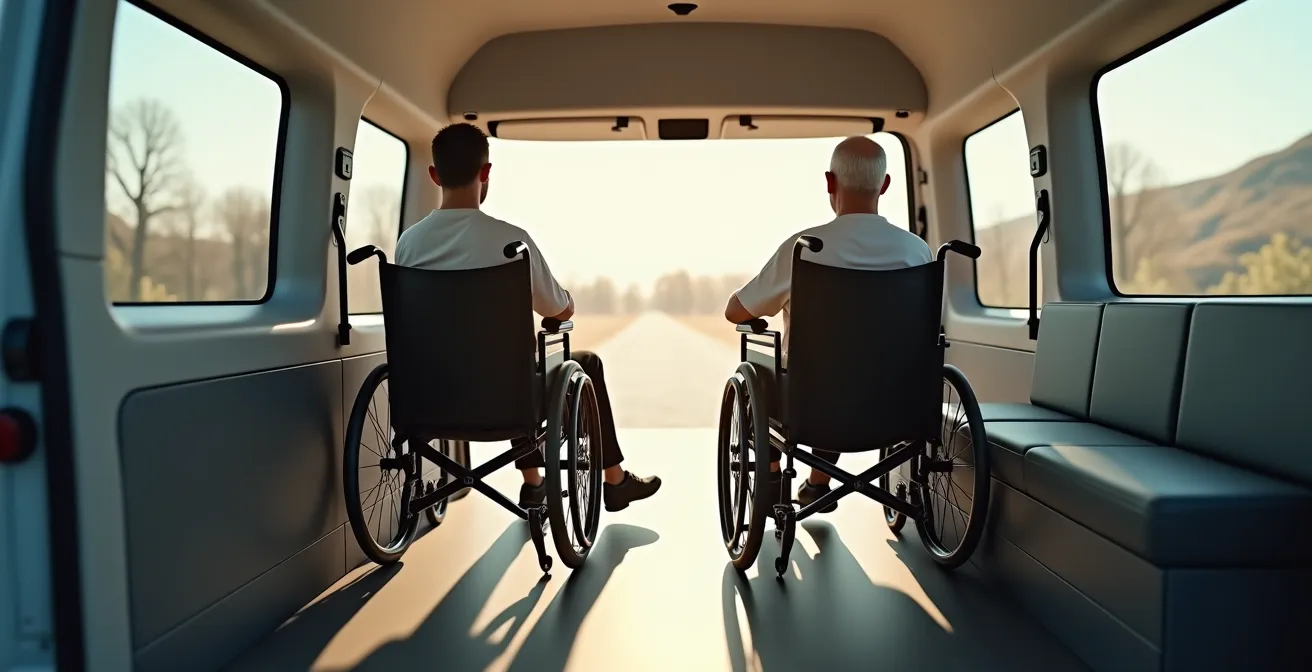
While the upfront cost of a wheelchair van service is higher than using a personal car, a true efficiency audit considers the hidden costs of the alternative: the risk of a caregiver back injury leading to lost work, or a patient fall resulting in a costly hospitalization. The choice becomes clear when viewed through a lens of total risk management.
| Factor | Wheelchair Van | Standard Car |
|---|---|---|
| Transfer Effort | Roll-on access, no lifting required | Multiple transfers, physical strain on caregiver |
| Comfort During Trip | Remain in wheelchair, easy repositioning | Fixed car seat position, limited adjustment |
| Medical Equipment Access | Easy access to oxygen, medications | Limited space and accessibility |
| Pressure Sore Prevention | Can reposition regularly | Difficult to adjust position |
| Caregiver Safety | No risk of back injury from lifting | High risk of strain during transfers |
| Emergency Access | Quick exit if medical issue arises | Complicated extraction process |
How to Use Telehealth to Cut Consultation Costs by 40%?
The most efficient trip is the one you don’t have to take. Telehealth represents the ultimate cost- and time-saving layer in your logistical system. For many types of appointments—such as routine follow-ups, medication management, and reviewing test results—a virtual visit can completely eliminate the need for transportation. This not only saves you from a day of lost work but also saves your parent the stress and physical strain of travel. The financial benefits are significant; analysis shows that NEMT alternatives like telehealth can reduce ride-related costs by 30% to 70%.
The key is to proactively ask the doctor’s office: « Can this appointment be done via telehealth? » Many providers now offer this option, and insurance plans, including Medicare, have expanded coverage for virtual visits. As the caregiver-as-coordinator, your role is to identify these opportunities and facilitate the technical setup. While some seniors may be hesitant about the technology, a little preparation can ensure a smooth experience. It’s also important to have a caregiver present during the call to assist with technology and take notes, just as they would in person.
To successfully integrate telehealth, follow this setup guide:
- Verify Insurance: Confirm coverage for the specific telehealth service before booking.
- Practice Run: Do a practice video call the day before to get your parent comfortable with the software (e.g., Zoom, Doxy.me).
- Tech Check: Log in 10 minutes early on appointment day. Ensure a stable internet connection, good lighting, and clear audio. Use a stand to position the tablet or computer at eye level.
- Prepare a « Virtual Go-Kit »: Have a list of questions, current medications, a thermometer, and a blood pressure monitor on hand.
- Have a Backup Plan: Keep a phone nearby in case the video connection fails, so you can switch to an audio-only call.
Platforms like Uber Health are further blurring the lines by allowing healthcare systems to directly book transport for patients when in-person visits are necessary, tackling the issue where many U.S. adults forgo care due to transport barriers. This integration of tech and transport is the future of efficient senior healthcare logistics.
Key takeaways
- Caregiver burnout stems from being the system’s single point of failure; the solution is to build a multi-layered logistical system.
- Shift your role from a stressed « driver » to an efficient « logistics coordinator » who manages resources and mitigates risks proactively.
- Layering transport options—from family to professional NEMT services—and leveraging telehealth are key to creating a resilient and flexible plan.
How PSWs Facilitate Safe Out-of-Home Travel for Seniors with Mobility Issues?
As the need for patient transport grows, driven by trends like the population aged 60+ in Europe grew to 198.2 million in 2023, a more sophisticated layer of support becomes necessary for seniors with significant mobility or cognitive challenges. This is where a Personal Support Worker (PSW) becomes an invaluable part of your logistical system. A PSW is more than just a driver; they are a trained professional who provides comprehensive, hands-on support throughout the entire appointment journey.
Hiring a PSW to accompany a parent transforms a simple transport booking into a full-service care package. Their role often includes:
- Pre-Trip Assessment: Evaluating routes for accessibility before leaving home.
- Safe Transfers: Providing physical assistance with entering and exiting vehicles, using proper techniques to prevent falls and injury.
- Companionship and Advocacy: Reducing patient anxiety during the trip and in the waiting room, and ensuring the senior’s concerns are clearly communicated to the medical staff.
- In-Appointment Support: Taking detailed notes on the doctor’s instructions, a task often difficult for an anxious patient or family member to manage effectively.
- Post-Appointment Follow-Through: Ensuring prescriptions are filled and follow-up appointments are scheduled correctly before returning home.
As the caregiver-as-coordinator, deploying a PSW is a strategic decision for high-stakes appointments. It provides a level of safety, expertise, and detailed feedback that is simply not possible when you are focused on driving and navigating a stressful medical environment. It ensures that even when you can’t be there, your parent has a dedicated, professional advocate by their side, ensuring medical instructions are accurately captured and relayed.
Your next step is to conduct a simple audit of your current appointment logistics. Use the checklist provided in this guide to identify your system’s weakest link and choose one new transportation layer to research and implement this month. By taking one proactive step today, you can begin the shift from managing a constant state of crisis to coordinating a calm, predictable, and resilient system.