
For many introverted seniors, the standard « cure » for loneliness—large social events—often feels worse than the disease.
- Social energy is a finite resource; the key is to focus on « parallel pursuits » where a shared activity is the focus, not forced conversation.
- A sustainable social life is built on a structured rhythm of low-key interactions, meaningful one-on-one connections, and dedicated solo recharge time.
Recommendation: Start by performing a simple « energy audit » of your current activities to identify which interactions truly energize you versus which ones leave you drained.
The advice often given to seniors feeling a pang of loneliness is well-meaning but fundamentally flawed for a quiet personality: « You just need to get out more! » You’re encouraged to join bustling community mixers, attend crowded dinner parties, or fill your calendar to the brim. For a natural introvert, this prescription can feel like being told to cure a headache with a rock concert. The fear of becoming isolated is real, but the thought of constant, superficial socialising is utterly exhausting.
This isn’t a personal failing; it’s a matter of wiring. The pressure to be perpetually « on » in high-stimulus environments quickly depletes what social experts call the introvert’s social battery. But what if the solution isn’t to force yourself into social situations that drain you, but to fundamentally redefine what a « social life » looks like? What if the key isn’t doing *more*, but choosing to do things *differently*?
This guide is built on that premise. We will move beyond the one-size-fits-all advice and explore a tactical approach tailored for the introverted senior. We’ll dismantle the myth that socialising must be loud and large. Instead, we’ll focus on building a fulfilling social life based on low-drain, high-yield activities, meaningful connections, and a deep respect for your own energy limits. It’s about finding your rhythm, not dancing to someone else’s.
This article provides a complete roadmap, from understanding your energy to finding the niche communities where you’ll truly feel at home. Explore the sections below to build a social life that energizes, rather than exhausts.
Summary: How to Maintain an Active Social Life When You Are Naturally Introverted?
- Why Large Senior Mixers Exhaust You and What to Do Instead?
- How to Turn Small Talk Into Meaningful Connection Without Stress?
- Dinner Party vs Book Club: Which Setting Suits Quiet Personalities?
- The « I’ll Go Next Time » Trap That leads to Chronic Seclusion
- How Often Should You Socialize to Stay Healthy Without Draining Your Battery?
- Solo Routine vs Group Classes: Which Works Best for Introverted Seniors?
- How to « Winter-Proof » Your Social Life Against Seasonal Isolation?
- How to Find and Join a Niche Club That Matches Your Specific Interests?
Why Large Senior Mixers Exhaust You and What to Do Instead?
The feeling of complete depletion after a seemingly pleasant social gathering is a hallmark of the introverted experience. It’s not that you’re anti-social; it’s that your brain is working overtime. Unlike extroverts who gain energy from social stimulation, introverts have a more sensitive response. In fact, research shows that introverts tend to process stimuli more deeply, which causes their social battery to drain much faster during prolonged or intense interactions. A large senior mixer, with its cacophony of conversations, constant introductions, and pressure to circulate, is a perfect storm for rapid energy depletion.
The need to track multiple conversations, read countless social cues, and engage in superficial small talk forces your brain into overdrive. You’re not just participating; you’re analyzing, processing, and filtering a constant flood of information. This is why you might feel more tired after a two-hour party than after a full day of focused, solitary work. The solution, therefore, isn’t to develop more « stamina » for these events, but to bypass them entirely in favor of a more sustainable model.
This is where « parallel pursuits » come in. These are activities where the main focus is on a shared task or interest, and social interaction is a pleasant, optional byproduct. Think of a community garden: you can chat with your neighbor about tomato blight or work quietly on your own plot, with the interaction dictated by the task, not social obligation. The pressure to « perform » is gone. The activity itself provides a natural conversation starter and a comfortable silence when needed. Other examples include bird-watching clubs, repair cafes, or photography walks, where the collective goal fosters a sense of quiet camaraderie.
By shifting your focus from events centered on open-ended talking to activities centered on a shared purpose, you transform the social dynamic. You replace a high-drain, low-yield experience with a low-drain, high-yield one, building genuine connections without the exhausting side effects.
How to Turn Small Talk Into Meaningful Connection Without Stress?
For many introverts, the most dreaded part of socializing isn’t the event itself, but the gauntlet of « small talk » required to get through it. Conversations about the weather or other pleasantries can feel like a hollow, energy-wasting exercise. The goal for a quiet person is rarely to have many conversations, but to have a few that matter. The good news is that you can strategically guide a conversation from superficial to significant without stress.
The key is to ask open-ended, « story-prompting » questions. Instead of asking, « Did you have a good week? » (which elicits a « yes » or « no »), try asking, « What was the most interesting thing that happened to you this week? » This invites a narrative. Similarly, instead of « Do you like to read? », ask « What’s a book that has stayed with you long after you finished it? » These questions bypass generic answers and tap into passions, memories, and opinions. They give the other person a platform to share something real, and they give you something substantive to listen to and engage with.
Another powerful technique is the « I noticed… » statement. Observing something specific and positive shows you are present and attentive. For example, « I noticed the incredible detail in your painting » or « I was really impressed by the question you asked the speaker. » This creates an immediate, genuine connection point that is far more effective than a generic compliment. It opens the door for the other person to talk about their process, their passion, or their perspective, leading you directly into a more meaningful exchange.
This approach allows you to connect one-on-one, even in a larger setting. You create a small, intimate bubble where a real conversation can unfold, making the surrounding noise fade away.

As you can see, the goal is to create moments of focused, genuine interaction. By equipping yourself with a few simple conversational tools, you can bypass the draining nature of small talk and build the kind of authentic connections that truly recharge an introvert’s spirit.
Dinner Party vs Book Club: Which Setting Suits Quiet Personalities?
Not all social events are created equal, especially when it comes to energy expenditure. An unstructured dinner party, for instance, can be an introvert’s nightmare. It often involves multiple, simultaneous conversations, a high level of background noise, and the social pressure to mingle. There’s no clear agenda, making it difficult to know where to direct your focus. In contrast, a book club is a highly structured environment. There’s a set topic, a natural turn-taking in conversation, and a defined start and end time. This structure dramatically reduces the cognitive load, allowing for deeper engagement with less stress.
Understanding the difference between structured and unstructured settings is your most powerful tool for protecting your social battery. Structured events provide a framework that guides interaction, while unstructured events demand you create that framework on the fly, which is incredibly draining. A walking group has a natural structure: you walk, and conversation flows side-by-side, which is less intense than face-to-face. A volunteer activity like packing food at a food bank centers the interaction on a tangible task.
To make a strategic choice, you must become an « energy accountant » for your social life. Before committing to an event, ask yourself: Is there a clear purpose or agenda? Is the interaction focused on an activity or just open-ended talk? How easy is it to take a quiet break or leave when my battery is low? The answers will help you predict the energy cost.
The following table provides a clear comparison of different social settings, helping you identify which ones are a better investment for your limited social energy. This analysis is based on a framework of common senior activities and their typical demands, as highlighted by guides on fostering community among older adults.
| Activity Type | Energy Level Required | Structure Level | Interaction Style | Exit Flexibility |
|---|---|---|---|---|
| Dinner Party | High | Low | Multiple simultaneous conversations | Difficult to leave early |
| Book Club | Moderate | High | Sequential, focused discussion | Natural ending time |
| Silent Book Club | Low | Very High | Optional 30-min chat at end | Very flexible |
| Walking Group | Low-Moderate | Moderate | Side-by-side, activity-focused | Can adjust distance/duration |
| Bird-watching Group | Low | High | Quiet observation, minimal talk | Easy to step away |
The « I’ll Go Next Time » Trap That leads to Chronic Seclusion
For an introvert, the temptation to postpone a social outing is immense. The comfort of home, a good book, and quiet solitude often feels far more appealing than the anticipated energy drain of a social event. The phrase « I’ll go next time » becomes a comforting mantra. While it seems harmless in the moment, this pattern of avoidance is a slippery slope that can lead to chronic seclusion. Each canceled plan makes the next invitation easier to decline, reinforcing the habit of isolation.
This isn’t just about missing out on a bit of fun; it has profound health implications. Social isolation is a significant risk factor for a host of physical and mental health issues in seniors. The stakes are incredibly high, as lonely seniors have a 68% greater risk of developing dementia. The « I’ll go next time » trap isn’t just a personality quirk; it’s a behavior that actively jeopardizes your long-term cognitive health. Breaking this cycle requires a conscious, tactical effort.
The key is to lower the barrier to entry so drastically that saying « yes » feels easier than saying « no. » Instead of committing to a three-hour party, commit to a 15-minute walk with a neighbor. Instead of a dinner out, suggest a brief coffee. This strategy, sometimes called « social snacking, » allows you to maintain connections with minimal energy expenditure. It keeps the social muscle from atrophying without requiring a full workout. As one care provider noted when helping a client overcome severe isolation:
One of our clients hadn’t been out of the house in 3 years. Just getting her into the backyard to watch birds after we got her a bird feeder—that was a huge win. It helped her reconnect with something she enjoyed and gave her a reason to step outside. These quiet victories matter.
– Caring Senior Service
This powerful testimony illustrates that the first step doesn’t have to be big. It can be as simple as stepping into the backyard. To escape the trap, schedule one small, non-negotiable social snack each week. By making the commitment small and the activity enjoyable, you can begin to reverse the pattern of avoidance and protect your health, one quiet victory at a time.
How Often Should You Socialize to Stay Healthy Without Draining Your Battery?
Finding the right frequency of social interaction is like tuning an instrument. Too little, and you risk the damaging effects of isolation. Too much, and you face chronic exhaustion and burnout. There is no universal « correct » amount; the goal is to find your personal rhythm—a sustainable cadence of connection and solitude that keeps you feeling both engaged and energized. The health benefits of getting this balance right are undeniable; research shows seniors with active social lives have a 50% lower risk of dying within a five-year period compared to their isolated peers.
The first step in finding your rhythm is to conduct a personal « energy audit. » For one week, pay close attention to how you feel after every social interaction, no matter how small. A quick chat with the mail carrier? A phone call with your daughter? A book club meeting? Rate your energy level on a scale of 1-10 before and after. You’ll quickly see patterns emerge. You might discover that one-on-one conversations energize you, while group settings of more than four people drain you, or that interactions are fine as long as they are under an hour.
This data is your personal user manual. It allows you to design a social week that works for you. A balanced week for an introvert might look like this: one « main » structured social event (like a walking group or volunteer shift), two or three smaller « social snacks » (like a phone call or a brief chat with a neighbor), and plenty of scheduled recharge time in between. Scheduling solitude is just as important as scheduling social events. It’s the time your social battery needs to recover, ensuring you have the energy for the next connection.
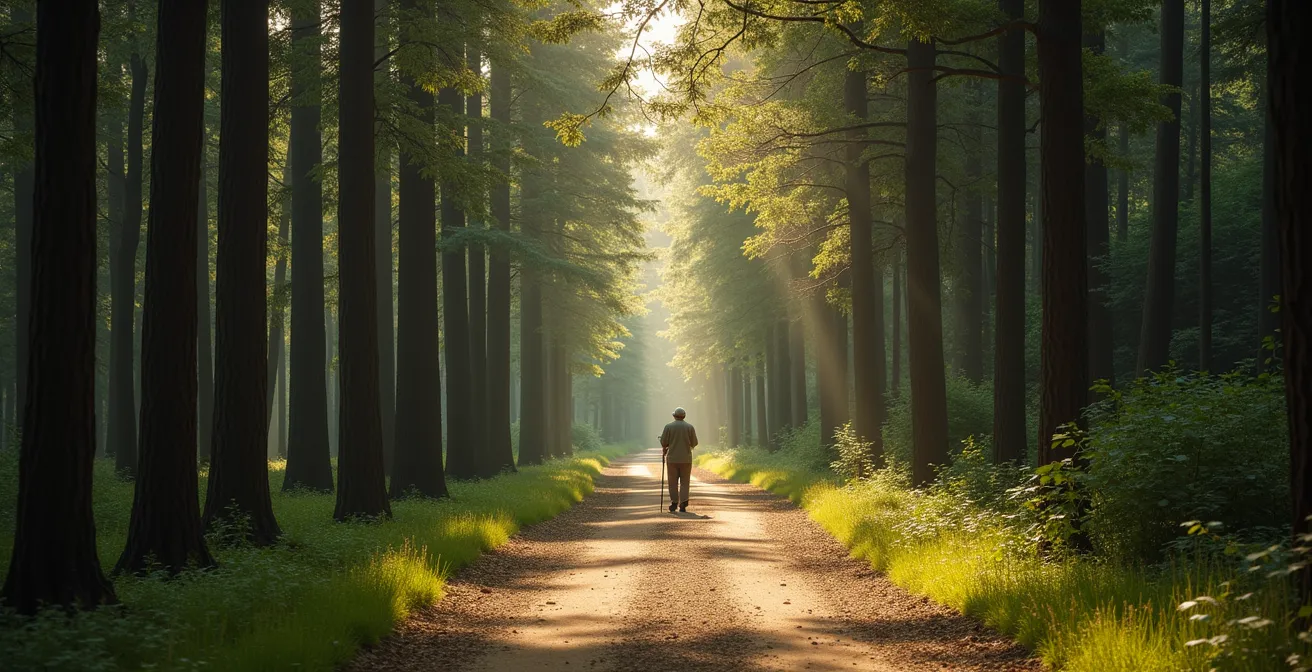
Protecting your energy isn’t selfish; it’s strategic. It’s the only way to ensure you can show up as your best self for the people and activities that matter most. The following checklist provides a framework for managing your social energy proactively.
Your Social Energy Management Plan
- Track your energy levels after different social activities on a 1-10 scale to identify what drains vs. what recharges you.
- Schedule 30-minute buffer times of quiet solitude before and after social events to prepare and recover.
- Plan « micro-recharges »—10-minute quiet breaks (e.g., stepping outside, listening to music) during longer social days.
- Intentionally alternate high-energy events (like a family gathering) with low-key parallel activities (like a gardening session).
- Build in at least one full « recharge day » with no social obligations after an intensive social weekend or event.
Solo Routine vs Group Classes: Which Works Best for Introverted Seniors?
Maintaining physical activity is crucial for healthy aging, but for an introvert, the idea of a high-energy, socially-demanding group fitness class can be a major deterrent. The choice between exercising alone or in a group isn’t just about motivation; it’s about energy management. While a solo routine offers complete control and zero social pressure, it can sometimes lack accountability and variety. A group class provides structure and a shared sense of purpose, but can be overstimulating.
The ideal solution for many introverts lies in a hybrid approach or in choosing specific types of group classes that are inherently introvert-friendly. Not all group activities are alike. Activities like outdoor yoga or Tai Chi are perfect examples. Participants are focused on their own movements and breath, following an instructor. The energy is calm and collective, not chaotic and competitive. Interaction is minimal and optional, creating a sense of shared experience without the need for constant conversation. The focus is internal, making it a comfortable space for quiet personalities.
Another excellent strategy is the « parallel workout. » This involves meeting a friend at a park, gym, or walking track, but performing your individual routines. You get the accountability and light connection of having someone there, but the freedom to focus on your own workout without pressure to talk. You can walk at your own pace, use different equipment, or simply enjoy the comfortable silence of a shared space. It’s the best of both worlds: the presence of a companion without the performance of conversation.
Ultimately, the « best » approach is the one you can stick with. For an introvert, sustainability is directly linked to energy cost. A routine that consistently drains your social battery is a routine you will eventually abandon. Therefore, consider alternating between solo days and low-interaction group days. A solo walk on Monday, a Tai Chi class on Wednesday, and a parallel workout with a friend on Friday creates a balanced, sustainable routine that nourishes both your body and your introverted spirit.
How to « Winter-Proof » Your Social Life Against Seasonal Isolation?
For many seniors, winter brings more than just cold weather. The shorter days, icy sidewalks, and reduced opportunities for outdoor activities can create a perfect storm for seasonal isolation. For an introvert, this forced confinement can be a double-edged sword. While the excuse to stay home is tempting, months of it can deepen feelings of loneliness and disconnect. « Winter-proofing » your social life requires a proactive, creative, and tech-friendly approach.
The first strategy is to shift your social rhythm from longer, less frequent outings to shorter, more frequent digital connections. A 15-minute video call with a grandchild can provide a significant mood boost with very little energy expenditure. Scheduling regular, brief phone calls with a rotating list of friends can create a steady stream of connection. These « social snacks » are lifelines during the winter months. You can also leverage technology for shared experiences, such as attending a virtual museum tour, an online lecture, or even a virtual religious service together with a friend.
Another powerful strategy is to leverage hyper-local, indoor communities. Your local library is a fantastic resource, often hosting quiet book clubs, craft circles, or history talks. These are structured, low-key events that provide a change of scenery and a point of connection. Even within your own building, you can initiate small-scale activities like a puzzle swap in the common room or a « corridor coffee » with your immediate neighbors.
Case Study: Germany’s « Culture Buddies » Program
In Germany, an innovative program called « KulturistenHoch2 » (KH2) tackled senior isolation by pairing elders with teenage volunteers to attend cultural events together. Organizers realized the biggest barrier for many wasn’t a lack of interest, but not having someone to go with. The program provides free tickets and a companion, removing the logistical and emotional hurdles of going out alone. This « buddy system » for shared experiences proves that a structured, one-on-one activity can be a powerful antidote to isolation, creating meaningful intergenerational bonds and transforming a daunting outing into a joyful, shared adventure. This model shows the power of having a dedicated partner for an activity.
The key to a socially healthy winter is planning. Create a weekly connection schedule that includes a mix of digital check-ins, at-home hobbies you can discuss with others, and at least one small, manageable out-of-house activity. By being intentional, you can keep the chill of isolation at bay and emerge into spring feeling connected and refreshed.
Key Takeaways
- An introvert’s social energy is a finite « social battery » that is drained by overstimulation, not just by being around people.
- Shift from unstructured social events (like mixers) to « parallel pursuits » (like gardening or a book club) where a shared activity is the focus.
- Use a hybrid approach of « social snacking » (brief, low-energy interactions) and scheduled solo « recharge days » to maintain balance.
How to Find and Join a Niche Club That Matches Your Specific Interests?
The most effective way for an introvert to build a fulfilling social life is to connect with people over a shared passion. A niche club—be it for macro photography, military history, heirloom gardening, or classic film—provides the perfect environment. The interest is the main event, and social connection is the natural, low-pressure outcome. But finding these specific groups can feel like a challenge, especially if you look beyond generic platforms.
Your search should start at the local level. Your public library is often the unsung hub of community life; check its bulletin boards and ask librarians about local groups. Similarly, community colleges and university continuing education departments frequently have clubs and programs geared towards seniors with specific academic or artistic interests. Don’t overlook specialized local resources like a historical society, an arboretum, or even a specialty hobby shop (e.g., a model train store or yarn shop), as they often sponsor or know of relevant clubs.
Once you’ve found a potential club, the next step is to assess its « introvert-friendliness » before you commit. You have the right to be an informed consumer of social energy. Reach out to the organizer and ask a few key questions: Is there a clear agenda for meetings? What’s the average group size? Is the format based on large group discussion or are there opportunities for smaller, one-on-one conversations? A club with a structured format and a smaller, focused group is likely to be a much better fit than a large, free-form social club.

Finally, adopt the « Three-Visit Rule » to take the pressure off. Give yourself permission to attend three times before deciding. The first visit is for observation only—your goal is just to listen and get a feel for the group’s dynamic. The second is for light participation—ask one question or make one comment. The third visit is for your final evaluation. This structured approach removes the pass/fail feeling of a single visit and allows you to make a calm, informed decision about whether the group is a good long-term investment for your precious social energy.
By shifting your perspective from « I need to be more social » to « I need to find the right social fit, » you can build a life rich with connection, engagement, and, most importantly, peace. It starts with understanding your energy, choosing your activities wisely, and giving yourself the grace to socialize on your own terms. Your ideal community is out there waiting for you.
Frequently Asked Questions About Socializing as an Introverted Senior
What if I join a club and it’s too overwhelming?
Apply the ‘Three-Visit Rule’: First visit for observation only, second for light participation, third for final evaluation. This removes pressure and gives you permission to assess fit without feeling you’ve failed if it’s not right.
Where can I find niche clubs beyond Facebook and Meetup?
Check local library bulletin boards, university continuing education departments (often have senior clubs), historical societies, specialized hobby magazines, community college programs, and senior center newsletters.
How can I tell if a club will suit my introverted nature before joining?
Ask key questions: Is there a clear agenda for meetings? What’s the average group size? Does the leader introduce newcomers? Is one-on-one conversation possible or is it all large-group discussion? Are activities structured or open-ended?