
The key to lasting independence isn’t gaining more energy, but strategically budgeting the energy you have like a finite resource.
- Your body operates on natural 90-minute energy cycles; working with them, not against them, prevents burnout.
- Designing your environment with « command centers » and an adaptive wardrobe saves dozens of « energy spoons » every day.
Recommendation: Start by identifying just one high-effort daily task and apply the principle of « Mise en Place »—gather everything you need before you begin to eliminate wasted movement.
That feeling of hitting an invisible wall by 2 PM is frustratingly common. You start the day with a full list of intentions, determined to maintain your independence, only to find your energy reserves depleted long before your to-do list is. The standard advice often misses the point; it suggests you should simply « do less » or « ask for help, » which can feel like a step backward when your goal is self-reliance. You might try to push through, but this only leads to deeper fatigue and a cycle of boom and bust.
The problem isn’t a lack of willpower; it’s the lack of a system. Most people treat their energy like an infinite well, drawing from it without a plan until it runs dry. But what if the true hack to maintaining autonomy wasn’t about finding more energy, but about becoming a master strategist of the energy you already have? What if you could treat your daily energy like a budget, making smart investments in activities that matter and cutting wasteful « spending » on inefficient movements and frustrating tasks?
This guide will reframe your approach to daily life. We won’t just tell you to « pace yourself. » Instead, we will equip you with a concrete framework based on occupational therapy principles. You will learn to budget your « spoons, » design your environment for maximum efficiency, and make strategic choices about your daily tasks to ensure you have the energy for what truly brings you joy and fulfillment.
Explore these clever, efficiency-focused strategies to take back control of your day. This guide provides a structured path to not only conserve your energy but to invest it wisely, ensuring your independence is sustainable for the long term.
Summary: Hacking Your Routine for Lasting Autonomy
- Why You Run Out of Energy by Noon and How to Budget Your « Spoons »?
- How to Curate an « Adaptive Wardrobe » That Requires No Buttons or Zippers?
- The « Pride » Mistake: Why Refusing a Reacher Tool Causes Back Injury
- Delivery Services vs Senior Hours: Which Saves More Physical Energy?
- When to Shower: Scheduling High-Effort Tasks for Peak Energy Windows
- Problème & Solution : How to Overcome the 2 PM Crash Without Caffeine
- How to Create « Command Centers » in Each Room to Reduce Walking Fatigue?
- How to Build a Sustainable Wellness Plan for Seniors with Limited Mobility?
Why You Run Out of Energy by Noon and How to Budget Your « Spoons »?
The « Spoon Theory » is a powerful metaphor for anyone with limited energy. Imagine you start each day with a set number of spoons, say 12. Every single action—from getting out of bed (1 spoon) to making breakfast (2 spoons)—costs you. If you spend them all by noon, you’re left with nothing for the rest of the day. This isn’t a personal failing; it’s a reality of a finite energy budget. The first step to hacking your routine is to stop blaming yourself and start budgeting like a pro.
The secret lies in understanding your body’s natural rhythms. We all operate on ultradian rhythms, which are 90- to 120-minute cycles of high-to-low energy that occur throughout the day. Working against these cycles is like swimming against the tide—it’s exhausting. The strategic approach is to align your high-effort tasks with your natural energy peaks and use the troughs for rest and recovery. This isn’t just theory; studies show that professionals who aligned their work with 90-minute cycles reported 40% higher productivity levels. For you, this translates to more accomplished with less fatigue.
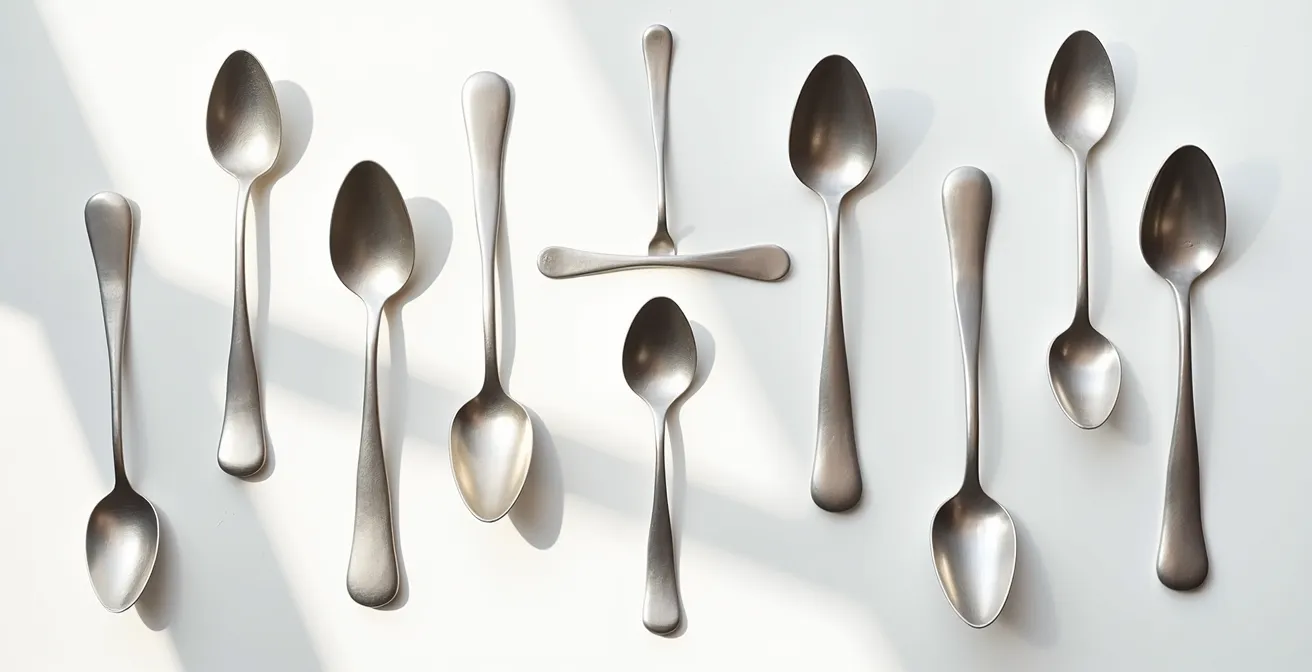
The image above visualizes this concept perfectly. Your morning energy is a full set of spoons, ready to be invested. The challenge is to spend them wisely so you aren’t left with an empty drawer by the afternoon. By identifying your personal energy peaks and scheduling demanding activities within those windows, you can dramatically increase your daily endurance. A 20-minute restorative break after each 90-minute « sprint » isn’t lazy; it’s a strategic « refill » that allows your next energy peak to return to full capacity.
How to Curate an « Adaptive Wardrobe » That Requires No Buttons or Zippers?
Getting dressed can be a surprisingly high-cost activity on your energy budget. Fiddling with tiny buttons, pulling on tight garments, and struggling with zippers can cost you several precious « spoons » before you’ve even had breakfast. An « adaptive wardrobe » is a cornerstone of environmental design for energy conservation. It’s not about sacrificing style; it’s about choosing smart, stylish clothing that works for you, not against you.
The goal is to eliminate the most energy-draining aspects of dressing. This means prioritizing features like magnetic closures, Velcro, elastic waists, and open-front designs. These small changes add up to significant energy savings over the course of a week. Real-world examples from brands like Joe & Bella show the profound impact this can have; customers report that family members can dress themselves independently again, with one father wearing magnetic-closure shirts every single day. Style is not compromised, proving functionality and fashion can coexist.
This comparative table, based on data from senior care resources, breaks down the energy savings. An analysis from experts at Caring.com highlights how swapping traditional closures for adaptive ones makes a measurable difference.
| Feature | Traditional | Adaptive Alternative | Energy Saved |
|---|---|---|---|
| Closures | Buttons, zippers | Magnetic snaps, Velcro | 2-3 spoons per garment |
| Pants | Front zipper, button | Side zippers, elastic waist | 1-2 spoons |
| Shoes | Laces | Velcro straps, side zippers | 2 spoons |
| Tops | Over-head pull | Front-opening, wrap style | 1-2 spoons |
Curating this wardrobe is an investment in your daily autonomy. Start by identifying the single most frustrating garment in your closet and seek an adaptive alternative. Even replacing one item, like trading laced shoes for a stylish slip-on pair with elastic laces, can save you energy and frustration every single day, preserving your spoons for more enjoyable activities.
The « Pride » Mistake: Why Refusing a Reacher Tool Causes Back Injury
One of the biggest, yet unspoken, barriers to using assistive tools is pride. Reaching for a grabber tool can feel like an admission of defeat. However, from an efficiency standpoint, this is a critical error in judgment. Refusing a simple tool and instead choosing to bend, stretch precariously, or climb on a stool is a poor investment of your energy. It not only costs more « spoons » but dramatically increases the risk of injury. The real « pride » should come from being clever enough to use the right tool for the job to preserve your body and your independence.
Think of a reacher-grabber not as a « crutch, » but as a strategic extension of your body that makes you more capable. As the StrongArm Health Research Team notes in their « Empowering Independence Study »:
Grabber reachers are invaluable tools for seniors and individuals with disabilities, offering a multitude of benefits that enhance daily living. From overcoming mobility challenges and promoting safety to maintaining independence and improving efficiency.
– StrongArm Health Research Team, Empowering Independence Study
The safety aspect cannot be overstated. Research consistently shows that reaching, bending, or climbing activities pose particular danger for falls. A reacher tool eliminates the need to overextend or step onto unstable surfaces to grab something from a high shelf or a low drawer, directly mitigating a primary fall risk. Using a tool to retrieve a fallen item is a smart, strategic decision that protects your most valuable asset: your health.
Your Toolkit for Effortless Living: Essential Assistive Tools
- Sock aids: Eliminate bending to put on socks, saving 2-3 energy spoons daily.
- Elastic shoelaces: Convert any favorite shoe to a slip-on style with a one-time setup.
- Automatic jar openers: Mount under a cabinet for effortless opening of stubborn lids, saving grip strength.
- Ergonomic pens with wide grips: Reduce hand strain and fatigue during writing or puzzle-solving.
- Button hooks: A simple tool to thread through buttonholes and pull the button through with minimal dexterity required.
Delivery Services vs Senior Hours: Which Saves More Physical Energy?
Managing errands like grocery shopping presents a classic strategic dilemma: is it better to use a delivery service or go in person during senior hours? To make the best decision for your energy budget, you need to analyze the « Return on Investment » (ROI) of each option. It’s not just about the financial cost, but the total energy expenditure—physical, cognitive, and emotional.
Going to the store during senior hours offers the benefit of social interaction and physical movement, which can be an energy booster for some. However, it still requires travel, walking long aisles, standing in line, and carrying groceries, all of which are significant physical costs. Delivery services, on the other hand, almost completely eliminate the physical energy cost but introduce cognitive costs like navigating an app and potential frustration with technology or out-of-stock items.
A recent energy cost analysis provides a clear framework for comparing these options. It allows you to assign a « spoon » cost to each factor to see which method is truly more efficient for you.
| Factor | Delivery Services | Senior Hours Shopping |
|---|---|---|
| Physical Energy | 1-2 spoons (answering door) | 6-8 spoons (travel, walking, carrying) |
| Cognitive Energy | 3-4 spoons (app navigation, selection) | 2-3 spoons (list management) |
| Emotional Energy | 1 spoon (tech frustration) | 2-3 spoons (crowd anxiety) |
| Social Benefit | None | +2 spoons (social interaction boost) |
| Financial Cost | $5-15 fees + tips | Gas/transport only |
The optimal solution is often a hybrid strategy. Use delivery services for heavy, bulky items like paper towels, pet food, and canned goods to avoid the biggest physical strain. Then, make smaller, quicker trips to the store for fresh produce and social interaction. This approach, highlighted in studies on senior wellness, optimizes both physical activity and energy conservation. You get the metabolic benefits of movement without the exhaustion of carrying heavy loads, achieving the best possible ROI for your energy.
When to Shower: Scheduling High-Effort Tasks for Peak Energy Windows
Showering is often underestimated as a major energy expense. The heat, the steam, and the physical effort of washing, reaching, and drying can consume a massive portion of your daily spoon budget. If you find yourself needing a nap after a morning shower, you’re experiencing this firsthand. The strategic solution isn’t to shower less, but to be smarter about *when* and *how* you do it. First, schedule this high-effort task during one of your natural peak energy windows, not when you’re already feeling sluggish.
Second, apply the principle of « micro-task breakdown » to deconstruct the process. By breaking down the single large task of « showering » into smaller components, you can identify where the energy drains are and implement simple environmental changes to mitigate them. This is a core tenant of occupational therapy: modify the environment, not the person. Installing a shower chair isn’t giving up; it’s a brilliant hack that eliminates the enormous energy cost of standing for 15 minutes.
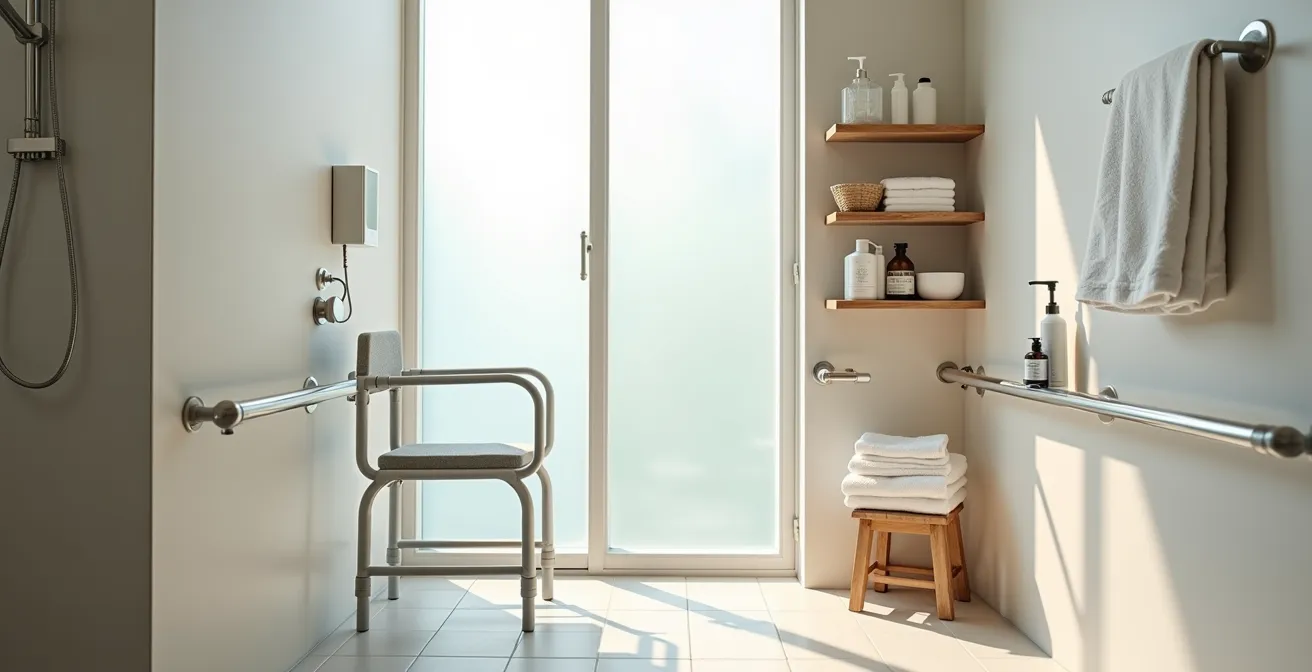
The bathroom shown above is a perfect example of an efficiency-designed space. A shower chair, a handheld showerhead, and well-placed pump dispensers all work together to drastically reduce the physical cost of showering. Every spoon saved here is a spoon you can invest later in a hobby, a phone call with family, or an evening stroll. Preparing your clothes and towel beforehand is another simple but powerful part of this system.
Your Showering Efficiency Checklist
- Install a shower chair: This is the single biggest energy saver, eliminating the cost of standing (saves 3+ spoons).
- Use a handheld showerhead: Reduces the need for reaching and twisting to rinse, saving your back and shoulders (saves 2 spoons).
- Place towels and robes within arm’s reach: Set them up before you get in so there’s no bending or stretching when you’re wet (saves 1 spoon).
- Switch to pump dispensers: Avoid the struggle of squeezing slippery bottles with wet hands (saves 1 spoon).
- Prep your post-shower station: Have your clothes, lotion, and any other items laid out and ready to go (saves 2 spoons).
Problème & Solution : How to Overcome the 2 PM Crash Without Caffeine
The dreaded 2 PM crash, or « post-lunch dip, » feels like an inevitable part of the day. For those with limited energy, it can completely derail the afternoon. While reaching for caffeine is a common reflex, it often leads to a jittery spike followed by an even deeper crash, and it can disrupt nighttime sleep. The key to overcoming this slump lies in understanding its biological roots: it’s an « ultradian trough, » a natural low point in your body’s 90-120 minute energy cycle.
Instead of fighting this trough with stimulants, the most effective strategy is to work with it. Research on productivity and well-being, particularly from resources like Blue Zones, shows that a strategic 20-minute break during this low point is transformative. When you take a proper break, your next performance peak returns to full capacity. If you try to push through it, subsequent energy peaks are significantly lower, reducing your overall functioning for the rest of the day. A short nap, quiet meditation, or simply sitting with your eyes closed can be the most productive thing you do all afternoon.
Beyond resting, you can also use quick, sensory-based hacks to gently stimulate your system without resorting to caffeine. These techniques work by engaging your nervous system in a way that promotes alertness and circulation. They are low-cost in terms of energy but provide a high return in renewed focus and vitality, helping you bridge the gap to your next natural energy peak.
Your 5-Minute Sensory Reset for the Afternoon Slump
- Bright Light Exposure: Sit near a window or use a light therapy lamp for 10 minutes to help reset your internal clock.
- Aromatherapy Boost: Inhale a stimulating essential oil like peppermint or citrus for an instant feeling of alertness.
- Temperature Contrast: Splash cold water on your face and wrists. The mild shock stimulates circulation and wakes you up.
- Rhythmic Music: Listen to a few songs with a tempo of 120-140 beats per minute (BPM), which can help elevate your heart rate and energy.
- Strategic Hydration: Drink a large glass of water, perhaps with a tiny pinch of sea salt for electrolytes, to combat dehydration-related fatigue.
How to Create « Command Centers » in Each Room to Reduce Walking Fatigue?
One of the biggest hidden energy costs in any home is « transitional walking »—the endless back-and-forth trips to find the remote, your reading glasses, or the phone charger. Each trip may seem small, but these dozens of unnecessary walks add up, draining your energy reserves for no productive reason. The solution is to adopt a principle from professional chefs: « Mise en Place, » which means « everything in its place. » You can apply this by creating a designated « Command Center » in each key room of your house.
A command center is a small, dedicated area where you group all the essential items you frequently use in that room. For the living room, this might be a caddy on the end table holding the TV remote, your glasses, a water bottle, and your phone charger. In the bedroom, a bedside organizer can hold medications, a book, a lamp switch, and a reacher tool. The goal is to eliminate redundant travel. By investing a little time to set up these stations, you save an enormous amount of physical energy every single day.
This isn’t just about being tidy; it’s a strategic environmental design to minimize energy expenditure. The Occupational Therapy Association champions this approach in their guides on adaptive living, framing it as a way to make your environment work for you. The following table provides a blueprint for setting up these high-efficiency zones.
| Room | Essential Items | Energy Saved Daily |
|---|---|---|
| Living Room | Reacher, remotes, water bottle, phone charger, reading glasses, medications | 5-7 spoons |
| Bedroom | Bedside caddy, touch lamp, medication organizer, water, reacher, phone | 4-6 spoons |
| Kitchen | Perching stool, frequently used utensils, timer, jar opener, non-slip mat | 6-8 spoons |
| Bathroom | Grab bars, shower chair, pump dispensers, raised toilet seat, reacher | 4-5 spoons |
Setting up these command centers is a one-time investment that pays daily dividends in saved energy. Start with the room where you spend the most time and identify the top five items you are always getting up to find. Grouping them in one accessible spot is one of the most powerful hacks for preserving your autonomy.
Key takeaways
- Treat your daily energy as a finite « spoon » budget, not an infinite well.
- Align high-effort tasks with your natural 90-minute energy peaks and use troughs for strategic rest.
- Design your environment (wardrobe, command centers, assistive tools) to reduce the energy cost of daily tasks.
How to Build a Sustainable Wellness Plan for Seniors with Limited Mobility?
Hacking individual tasks is powerful, but true, lasting independence comes from integrating these strategies into a single, sustainable wellness plan. A successful plan isn’t about pushing yourself to the limit every day. It’s about consistency, self-compassion, and building a framework that supports you on both high-energy and low-energy days. This is where the concept of a « Minimum Viable Day » comes in.
Instead of an all-or-nothing approach, define the absolute minimum you need to do to feel accomplished and healthy. This might be just three things: one small physical activity, one brief mental engagement, and one social connection. On days you feel great, you can do more. But on low-spoon days, achieving this minimum is a victory that prevents the guilt and inertia that often follows a day of total rest. As detailed in a self-pacing strategy developed at the Cleveland Clinic, this quota system allows individuals to economically spread their ‘spoons,’ sometimes even borrowing from tomorrow’s energy for a special event, but consciously planning a recovery day to compensate.
This sustainable approach requires a holistic view of wellness, balancing physical, mental, and social needs. A daily checklist can help structure this, making it easy to track your progress and ensure you’re nurturing all aspects of your well-being without overwhelming your energy budget. Remember to include a reward system for consistency and a clear protocol for planned recovery days, which are just as important as activity days.
Your Three Pillars Daily Wellness Checklist
- Physical Pillar: Aim for 5 minutes of chair stretching, adequate protein intake (e.g., 56g), and proper hydration (9-13 cups of fluids).
- Mental Pillar: Engage in 10 minutes of meditation or a puzzle, and consume one piece of new information (like a podcast or article).
- Social Pillar: Make one meaningful connection, whether through a call, text, or in-person chat.
- Reward System: Track your streaks with calendar stickers and unlock a non-food reward (like a new book or movie rental) after 7 consecutive days.
- Recovery Protocol: Schedule one full rest day per week with minimal obligations to allow your energy budget to fully replenish.
By building your plan around this sustainable, compassionate framework, you create a resilient routine that supports your independence for the long haul. It shifts the focus from what you *can’t* do to what you *can* consistently achieve.
To put these strategies into practice, the logical next step is to perform a simple audit of your own daily routine. Identify one « energy sink »—a task that consistently leaves you drained—and apply one of the hacks from this guide to it this week.