Contrary to the popular belief that brain health activities should be effortless fun, the most potent neuroprotection comes from the very moments of frustration and challenge. It’s not simply about keeping busy with puzzles; it’s about engaging in a process of ‘productive struggle’ where your brain is forced to build new, more efficient neural pathways. This article reframes difficulty not as a barrier, but as the essential ingredient for building a resilient mind and staving off cognitive decline.
The advice to « keep your brain active » as you age has become as common as the recommendation to eat your vegetables. For many, this translates into a familiar routine of crossword puzzles, sudoku, or reading. These are comforting, low-stakes activities often marketed as the go-to tools for maintaining mental sharpness. The underlying assumption is that any mental activity is a bulwark against the fog of cognitive decline, and the more you do, the better. But this view often misses the most critical part of the equation.
We are told to find a hobby, join a class, or engage socially. Yet, we rarely discuss the *quality* and *nature* of that engagement. Is passively listening to a lecture the same as actively debating its concepts? Is completing a puzzle you’ve mastered a dozen times as beneficial as grappling with the grammar of a new language? The conventional wisdom groups all these activities under the broad, vague umbrella of « brain training, » failing to distinguish between passive consumption and active, demanding creation.
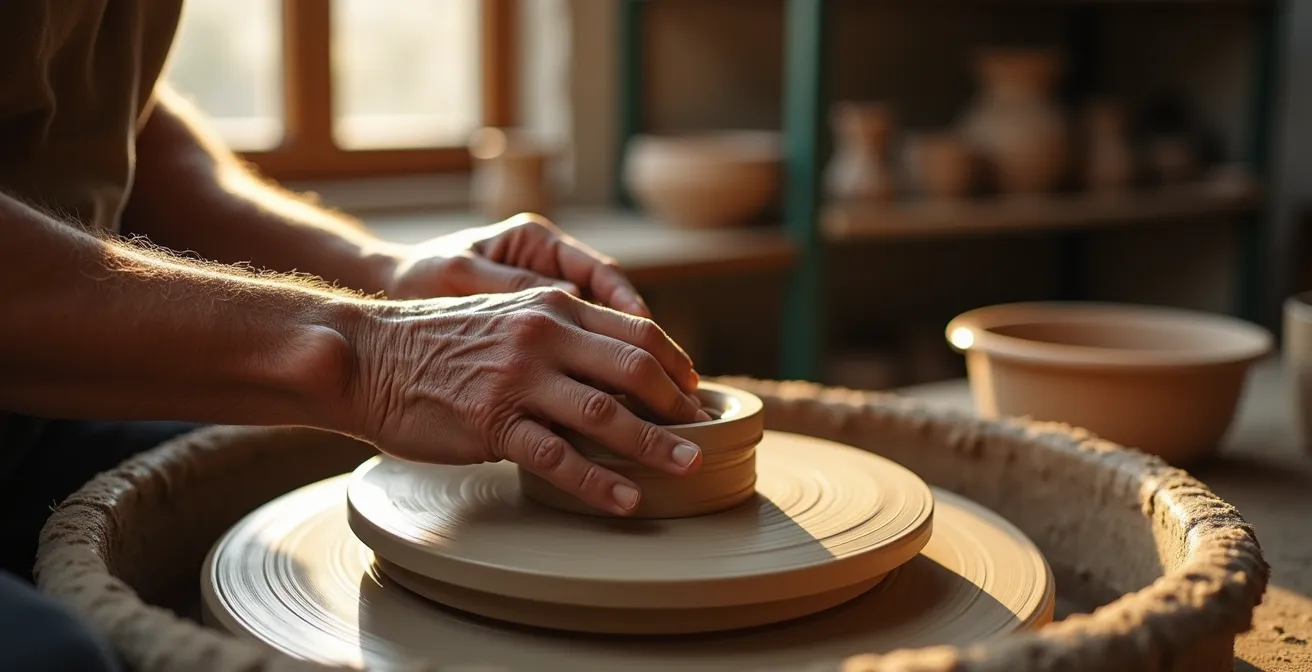
But what if the true key to neuroprotection isn’t the activity itself, but the deliberate and sometimes frustrating effort it requires? What if the moments you feel stuck, confused, or even slightly overwhelmed are not signs of failure, but proof that your brain is hard at work forging the very resilience it needs? This is the principle of productive struggle, a concept that shifts the focus from mindless activity to mindful, challenging engagement. This is where cultural workshops—from pottery to poetry—offer a unique and powerful advantage over simple brain games.
This article will deconstruct the science behind effective cognitive stimulation. We will explore why frustration is a signal of growth, how to select an activity that hits the sweet spot of difficulty, and why being an active participant, not a passive auditor, makes all the difference for your long-term brain health.
To navigate this deep dive into cognitive preservation, this article is structured to guide you from the foundational science to practical, everyday application. Explore the topics that matter most to you.
Summary: A Scientific Guide to Neuroprotection Through Learning
- Why Frustration While Learning Is Actually Good for Your Neurons?
- How to Choose a Workshop That Is Challenging but Not Overwhelming?
- The « Auditor » Mistake: Why Just Listening Isn’t Enough for Brain Health
- Painting vs Language Learning: Which Boosts Memory More?
- When to Practice Your New Skill: The Optimal Schedule for Senior Brains
- Why Some « Dementia » Symptoms Are Actually Reversible if Caught Early?
- Why Thinking You Are « Too Old to Start » Is Scientifically Incorrect?
- How to Stimulate Cognitive Health Daily Without Buying Expensive Brain Games?
Why Frustration While Learning Is Actually Good for Your Neurons?
The feeling of struggling to grasp a new concept or master a new physical skill is often seen as a negative signal—a sign that we should perhaps quit or try something easier. However, from a neurological perspective, this « desirable difficulty » is the very catalyst for brain growth. When your brain is challenged by a cognitively demanding task, it’s forced out of its well-worn neural pathways. It must work harder to process information, solve problems, and encode new memories. This effort is not wasted; it is an investment in building what is known as cognitive reserve.
Think of it like physical exercise. Lifting a weight that offers no resistance does little to build muscle. The muscle grows in response to the stress of lifting a heavier weight. Similarly, your brain builds resilience when it is pushed just beyond its comfort zone. Landmark research, known as the Synapse Project, provided powerful evidence for this. The study found an incredible 30% improvement in episodic memory in older adults who engaged in high-challenge activities for three months, a benefit not seen in groups performing low-challenge or purely social activities.
This process leads to a remarkable outcome: increased neural efficiency. As experts Ian McDonough & Michelle Voss highlight in The Conversation, this is a key benefit of tackling challenging activities. They note that through this process, your brain effectively rewires itself to become more streamlined. After a period of productive struggle, the same mental task that once required immense effort can be performed with less energy. Your brain doesn’t have to work as hard to solve problems or recall information, freeing up cognitive resources for other tasks. This efficiency is a tangible form of neuroprotection, making your brain more robust and adaptable in the face of age-related changes.
How to Choose a Workshop That Is Challenging but Not Overwhelming?
Understanding that challenge is beneficial is one thing; finding the right level of challenge is another. The goal is to operate within what educators call the « Zone of Proximal Development »—a sweet spot where a task is neither too easy (leading to boredom) nor too difficult (leading to burnout). A workshop that is too simple won’t trigger the necessary neural growth, while one that is excessively overwhelming can increase stress and demotivation, which is counterproductive. The ideal activity should build on your existing knowledge but require you to stretch your cognitive abilities in new ways.
When evaluating a potential workshop, look for a process-oriented approach rather than one fixated on a perfect final product. The cognitive benefits are derived from the act of learning, problem-solving, and adapting—not from creating a masterpiece on the first try. A good workshop environment encourages experimentation and views mistakes as learning opportunities. It should offer instruction in manageable, sequential chunks and provide opportunities for peer support, which can help moderate the cognitive load and provide encouragement during moments of frustration.

The visual above represents the ideal outcome of a well-chosen workshop: the activation and strengthening of diverse cognitive pathways. Your search should be for an activity that doesn’t just exercise one part of your brain, but engages multiple domains like memory, executive function, and processing speed. The key is to find an environment that allows for individual pacing and progression, recognizing that everyone’s learning journey is unique. This ensures the challenge remains productive and motivating over the long term.
Action Plan: Vet Your Next Cognitive Workshop
- Identify Your Interests: List hobbies you’ve always wanted to try (e.g., quilting, a new recipe, playing an instrument). This intrinsic motivation is a powerful starting point.
- Assess the Cognitive Stretch: Does the skill build upon something you know but require new thinking patterns? (e.g., if you’re a good cook, try a complex baking technique that demands precision).
- Check the Teaching Style: Inquire if the workshop is process-oriented (focused on learning) rather than product-focused (focused on a perfect outcome) and if instruction is delivered in manageable steps.
- Evaluate the Support System: Is there an instructor available for guidance? Are there opportunities for peer support and collaboration? A supportive social structure is crucial.
- Confirm Pacing Flexibility: Verify that the workshop allows you to progress at your own pace. The goal is a sustained challenge, not a stressful race.
The « Auditor » Mistake: Why Just Listening Isn’t Enough for Brain Health
In the pursuit of lifelong learning, it’s tempting to fall into the role of a passive « auditor »—attending lectures, watching documentaries, or listening to podcasts. While these activities can be informative and enjoyable, they often lack the critical ingredient for robust neuroprotection: active engagement. Just as watching sports from the couch doesn’t build your muscles, passively consuming information doesn’t build significant cognitive reserve. The brain benefits most when it is forced to actively retrieve information, manipulate concepts, and produce something new, whether it’s a sentence in a foreign language, a brushstroke on a canvas, or a solution to a problem.
The difference between passive observation and active participation is not just philosophical; it’s neurological. When you are actively engaged, your brain is firing on all cylinders. You are not just processing incoming data; you are organizing it, connecting it to existing knowledge, and planning your next action. This higher cognitive load is precisely what stimulates the brain to adapt and grow stronger.
The Synapse Project provided clear evidence for this distinction. Further analysis of the participants’ brain activity revealed a significant difference between the high-challenge group and those in less demanding groups. The research demonstrates that the high-challenge group showed increased modulation of brain activity in critical regions like the medial frontal, lateral temporal, and parietal cortex. These areas are deeply involved in executive function, memory, and attention. In simple terms, actively grappling with a difficult skill physically changes how these key brain networks operate, making them more flexible and efficient. Merely listening or watching simply does not produce this level of deep, structural change.
Painting vs Language Learning: Which Boosts Memory More?
A common question for seniors seeking to boost their brain health is which activity is « best. » While any challenging new skill is beneficial, different activities do stimulate distinct cognitive domains in unique ways. There is no single « magic bullet » for brain health; the ideal approach often involves engaging in a variety of activities that tax different parts of your brain. Comparing two popular workshop choices, painting and language learning, reveals how they offer complementary, rather than competing, benefits.
The following table, based on our analysis of cognitive stimulation research, breaks down how these two activities impact key mental functions. As this comparative analysis of cognitive stimulation shows, the choice is not about better or worse, but about which cognitive muscles you want to exercise most.
| Cognitive Domain | Painting/Visual Arts | Language Learning |
|---|---|---|
| Visuospatial Memory | High Enhancement | Moderate Enhancement |
| Verbal Memory | Low Enhancement | High Enhancement |
| Executive Function | Moderate Enhancement | High Enhancement |
| Processing Speed | Moderate Enhancement | Moderate Enhancement |
| Pattern Recognition | High Enhancement | Moderate Enhancement |
As the table illustrates, painting and other visual arts are exceptional for enhancing visuospatial skills—your ability to perceive, analyze, and remember visual information and spatial relationships. It requires you to translate a three-dimensional world onto a two-dimensional surface, a complex cognitive task. In contrast, language learning is a powerhouse for verbal memory and executive function. It demands that you hold new vocabulary in your mind, manipulate grammatical rules, and switch between different linguistic systems, providing a strenuous workout for the parts of the brain that manage planning, focus, and mental flexibility.
Ultimately, the « best » activity is one that you find motivating and that challenges a cognitive area you wish to strengthen. A balanced cognitive fitness plan might even include both: a painting class to work on visuospatial processing and a language app to sharpen verbal memory.
When to Practice Your New Skill: The Optimal Schedule for Senior Brains
Learning a new skill is not just about what you do in the workshop; it’s also about what you do between sessions. The frequency and timing of your practice can significantly impact how well your brain encodes and retains new information. The principle of « cramming » is just as ineffective for older adults as it is for college students. Instead, the science of learning points to a strategy called spaced repetition as the most effective method for long-term memory consolidation.
Spaced repetition involves practicing a skill in shorter sessions spread out over a longer period. This approach works because it forces your brain to repeatedly retrieve the information, with each retrieval strengthening the neural pathway associated with that memory. Rather than one marathon three-hour session, several shorter sessions of 20-30 minutes are far more effective. The research from the Synapse Project involved a significant time commitment, with participants spending around 15 hours per week over three months, but this time was distributed across classes and at-home practice, not done all at once.
Furthermore, the time of day you practice can also play a role. While individual chronotypes vary, some research suggests that practice in the late afternoon or early evening may be optimal for memory consolidation, as it precedes the crucial period of sleep where the brain works to file away the day’s learning. A simple, effective practice schedule could look like this:
- Day 1: 20-minute initial practice session after your workshop.
- Day 2: 5-minute review of the key concepts or techniques.
- Day 4: 5-minute quick practice to recall the skill.
- Day 7: 10-minute practice session, perhaps trying a slight variation.
This distributed practice schedule feels less daunting and is neurologically more powerful. It respects the brain’s natural learning rhythms and transforms practice from a chore into a sustainable, brain-building habit.
Why Some « Dementia » Symptoms Are Actually Reversible if Caught Early?
The word « dementia » often evokes a sense of irreversible decline. While it’s true that diseases like Alzheimer’s are progressive, it’s a critical and often-overlooked fact that not all dementia-like symptoms are permanent. Several underlying medical conditions, nutritional deficiencies, and environmental factors can mimic the cognitive symptoms of dementia, such as memory loss, confusion, and difficulty concentrating. When these root causes are identified and treated early, the cognitive decline can often be slowed, halted, or even reversed.
These conditions are sometimes referred to as « reversible dementias » and can include issues like thyroid problems, vitamin B12 deficiency, depression, or even side effects from medications. This is why a thorough medical evaluation is the absolute first step if you or a loved one is experiencing cognitive changes. Assuming it’s an untreatable condition without a full workup can lead to a tragic missed opportunity for recovery. It underscores a message of hope and agency: you are not helpless in the face of cognitive symptoms.
One of the most significant and treatable risk factors is social isolation. Participating in cultural workshops provides a powerful antidote to this. It’s not just a « nice-to-have » social outlet; it’s a direct intervention against a major neurological risk. A stunning meta-analysis of over 600,000 individuals reveals that loneliness increased the risk for all-cause dementia by 30.6%. This is not a small correlation. The chronic stress and lack of stimulation associated with isolation have a toxic effect on the brain. By joining a workshop, you are not only learning a new skill but also actively mitigating this substantial risk factor, making it one of the most effective lifestyle changes you can adopt for your brain health.
Why Thinking You Are « Too Old to Start » Is Scientifically Incorrect?
One of the most pervasive and damaging myths about aging is the belief that the brain becomes rigid and incapable of learning new, complex skills. The phrase « you can’t teach an old dog new tricks » is not only cliché but scientifically false. The human brain retains a remarkable capacity for change and growth throughout life, a property known as neuroplasticity. While the pace of learning might change, the ability to learn does not disappear. Believing you are « too old » can become a self-fulfilling prophecy, preventing you from engaging in the very activities that would keep your brain healthy.
The Synapse Project was designed specifically to challenge this ageist assumption. As lead researcher Dr. Denise C. Park and her colleagues explain, the study’s goal was fundamentally different from simple « brain training. » They state:
The Synapse Project differs from cognitive training in that subjects agree to make a lifestyle change and learn a new, real-world skill in a social environment that demands extended use of core cognitive abilities.
– Denise C. Park et al., The Impact of Sustained Engagement on Cognitive Function
This distinction is crucial. The project wasn’t about playing games on a screen; it was about the multifaceted challenge of learning a real-world skill like digital photography or quilting. This requires simultaneous use of memory, attention, motor skills, and social interaction—a rich, holistic cognitive workout.
The results were unequivocal. The study provided definitive proof that the brains of older adults respond robustly to this kind of challenge. As the project’s conclusions affirm, sustained engagement in cognitively demanding, novel activities enhances memory function in older adulthood. The science is clear: your age is not a barrier to learning and improving your cognitive function. The only true barrier is the belief that it is.
Key Takeaways
- True neuroprotection comes from ‘productive struggle,’ not from easy or passive activities. Frustration is a sign of brain growth.
- Active participation in a skill is neurologically superior to passively auditing or observing.
- The belief that you are ‘too old to learn’ is scientifically false; the brain retains its ability to change and grow throughout life.
How to Stimulate Cognitive Health Daily Without Buying Expensive Brain Games?
Building a resilient brain does not require expensive software subscriptions or trendy « brain training » gadgets. The most effective cognitive stimulation can be integrated into your daily life through small, intentional changes in your routines. The goal is to break free from autopilot and introduce novelty and challenge in everyday moments. By turning mundane tasks into micro-doses of cognitive exercise, you can create a constant stream of stimulation that supports your brain health without costing a cent.
The principle is simple: engage your brain in ways it doesn’t expect. When you perform a routine task, your brain operates on well-established, efficient pathways. By introducing a small twist, you force it to pay attention, create new connections, and work a little harder. This could be as simple as changing the hand you use for a task or trying to navigate a familiar room with your eyes closed to engage your spatial memory. It’s about being an active participant in your own life, rather than a passenger.
You can turn your day into a cognitive adventure playground. The key is to be playful and curious, transforming ordinary moments into opportunities for growth. An « adventure jar » with pre-written micro-challenges can be a fun way to ensure you’re consistently introducing novelty.
Your Daily Cognitive Adventure Plan
- Engage the Other Side: Use your non-dominant hand for routine tasks like brushing your teeth or stirring your coffee to activate different motor pathways.
- Navigate by Mind’s Eye: Briefly try to navigate a safe and familiar space, like your living room, with your eyes closed to enhance your internal spatial map.
- Sensory Storytelling: At mealtime, try to describe your food using only sensory adjectives (e.g., « crisp, » « aromatic, » « velvety ») to engage language and sensory centers.
- Memory Palace for Objects: When you put an object down (like your keys), create an absurd, vivid story about why you’re placing it there. This enhances location memory through association.
- Practice Active Retrieval: Instead of looking it up, try to recall information from memory, such as the capitals of ten states, the ingredients of a favorite recipe, or the plot of a book you recently read.
Embarking on this journey of cognitive enhancement is the most profound investment you can make in your future quality of life. The next logical step is to move from understanding to action by finding a workshop or activity that sparks your curiosity and provides the right level of challenge.