While families focus on fall-proofing, the most catastrophic risks for seniors often hide in ‘passive systems’ like water heaters and electrical outlets.
- Seconds of exposure to overly hot tap water can cause third-degree burns, a risk far more acute than many falls.
- Common electrical mistakes, like using the wrong extension cord, create simultaneous fire and tripping hazards.
Recommendation: Shift your safety mindset from just preventing falls to conducting a ‘forensic audit’ of the home’s core systems—heat, water, and electricity—to neutralize these silent but severe threats.
For families caring for an older loved one, home safety is a top priority. The conversation almost invariably revolves around preventing falls: installing grab bars, removing rugs, and improving lighting. While these measures are undeniably crucial, this hyper-focus on falls creates a dangerous blind spot. It overlooks a category of « passive » household risks that can lead to far more severe, and often faster, injuries: burns, fires, poisonings, and medication errors.
These dangers don’t stem from a sudden loss of balance but from the silent failure or misuse of systems we interact with every day. A water heater set just a few degrees too high, an extension cord powering a space heater, or a simple mix-up of medications can have catastrophic consequences. As a comprehensive home safety auditor, the goal is to shift the perspective from merely reacting to the risk of falling to proactively neutralizing the hidden threats embedded in the home’s environment.
This guide serves as a forensic safety audit, moving beyond the obvious to dissect the specific, often-overlooked hazards in a senior’s home. We will examine the mechanics of these risks—from the physics of scald burns to the chemistry of cleaning supplies—and provide system-level solutions that build a truly resilient and safe living space, protecting your loved ones from dangers they may not even see.
To help you navigate these critical safety checks, this article is structured to address each hidden hazard methodically. The following summary outlines the key areas we will audit to transform a home from simply « fall-proof » to fundamentally safe.
Summary: A Forensic Audit of Hidden Home Hazards
- Why Induction Cooktops Are the Only Safe Choice for Forgetful Seniors?
- How to Set Your Water Heater to Prevent Third-Degree Burns in Seconds?
- The « Extension Cord » Error That Causes Fires and Trips Simultaneously
- Ionization vs Photoelectric: Which Alarm Wakes Deep Sleepers Better?
- How to reorganize Cleaning Supplies to Prevent Accidental Poisoning or Mixing?
- The Double-Dose Danger: How to Prevent It With Visual Cues?
- How to Install Anti-Scald Valves to Protect Thin Senior Skin?
- How to Identify and Eliminate Hidden Fall Risks in a Senior’s Living Room?
Why Induction Cooktops Are the Only Safe Choice for Forgetful Seniors?
The kitchen is a primary site of home fires, and for seniors, the risk is amplified by potential memory lapses or a diminished sense of smell. A forgotten pot on a gas or electric coil stove can quickly lead to disaster. Induction cooktops represent a fundamental shift in kitchen safety because they eliminate the root cause of most cooking fires: the open flame or persistently hot surface. Unlike traditional stoves, an induction cooktop uses magnetic fields to heat the cookware directly. The surface itself does not get hot, and the heat disappears the instant the pot is removed.
This technology is not just a minor improvement; it’s a system-level solution. It removes the need for constant vigilance. If a senior becomes distracted or forgets they were cooking, the worst-case scenario is a burnt meal, not a house fire. Many models include additional safety features designed to prevent accidents before they happen, such as automatic pan detection, which ensures the element won’t even turn on unless a proper pot is in place. This makes it impossible to accidentally turn on a burner or leave it running after removing the cookware.
For families looking to make the single most impactful safety upgrade in a senior’s kitchen, switching to induction is the answer. It addresses the intersecting risks of cognitive decline and fire hazard with a solution that is passive, effective, and provides unparalleled peace of mind.
Your Checklist: Essential Induction Cooktop Safety Features
- Auto-shutoff function: Verify it automatically turns off after a predetermined period of inactivity.
- Pan detection sensors: Confirm the unit will not heat without proper cookware present.
- Child safety locks: Ensure there’s a feature to prevent accidental activation.
- Temperature indicators: Look for clear visual or auditory feedback for heat levels.
- Overflow detection: Check for a sensor that shuts off the unit if liquid boils over.
How to Set Your Water Heater to Prevent Third-Degree Burns in Seconds?
While a fall might result in a fracture, a scald burn can cause catastrophic tissue damage in mere seconds. Seniors are especially vulnerable due to thinner skin and potentially slower reaction times. The danger lies in the « passive system » of the home’s water heater, which is often set to a dangerously high temperature by default. Manufacturers typically set thermostats to 140°F (60°C), a temperature that can cause a third-degree burn in just three seconds.
The solution is simple and immediate: adjust the water heater thermostat. The U.S. Consumer Product Safety Commission recommends a maximum setting of 120°F (49°C). At this temperature, it takes approximately 10 minutes of exposure to cause a serious burn, providing more than enough time for a person to react and move away from the hot water. This one-time adjustment dramatically reduces the risk of accidental scalding in both the shower and at the sink. It’s a critical step in any home safety audit that prioritizes preventing severe injury.
This following image shows the kind of precision-engineered valve that can offer an additional layer of protection right at the source.
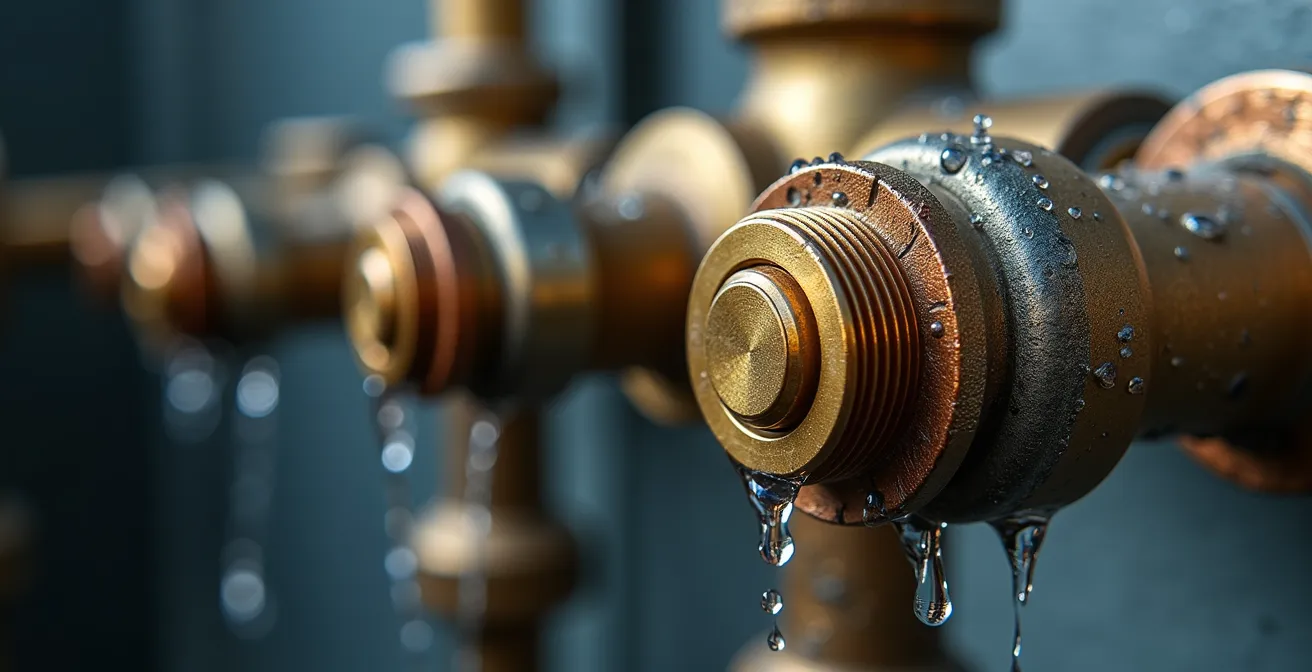
The « seconds matter » principle is crucial here. According to Johns Hopkins research, water at 140°F causes serious burns in 3 seconds, whereas at the recommended 120°F, it takes up to 10 minutes. This difference provides a critical safety buffer that can prevent a life-altering injury. Reducing the temperature is a free, immediate, and highly effective safety measure.
The « Extension Cord » Error That Causes Fires and Trips Simultaneously
Extension cords are a common feature in many homes, but they represent a significant « hazard duality » for seniors: they are a leading cause of both trips and electrical fires. The primary error is using a basic, light-duty extension cord as a permanent solution for high-wattage appliances like space heaters, microwaves, or medical equipment. These cords are not designed to handle a continuous high electrical load, causing them to overheat and ignite surrounding materials like carpets or curtains. This risk is so significant that it contributes to the hundreds of thousands of annual emergency room visits by seniors for home-related injuries.
Furthermore, the cord itself creates a dangerous tripping hazard, especially if it runs across a walkway. For a senior with shuffling gait or vision impairment, a thin cord on the floor is an invitation for a fall. The solution is twofold: eliminate the need for extension cords wherever possible by having an electrician install additional outlets, and when a cord is unavoidable, use the correct type for the job. Never use a basic extension cord for anything other than a lamp or a phone charger. For computers, televisions, or medical devices, a UL-rated surge protector is the minimum standard.
The following table, based on guidance from leading health systems, breaks down which device to use for which appliance to minimize risk.
| Device Type | Safe For | Never Use For | Fire Risk Level |
|---|---|---|---|
| Basic Extension Cord | Lamps, phone chargers | Space heaters, medical equipment | High if overloaded |
| Power Strip | TV, computer, low-draw devices | Daisy-chaining, high-amperage appliances | Medium |
| UL-Rated Surge Protector | Medical equipment, adjustable beds | Refrigerators, microwaves | Low with proper use |
Ionization vs Photoelectric: Which Alarm Wakes Deep Sleepers Better?
Simply having a smoke alarm is not enough; having the *right kind* of smoke alarm is critical, especially for seniors who may be heavy sleepers or have hearing loss. There are two primary types of smoke alarms—ionization and photoelectric—and they detect different kinds of fires. Understanding this difference is key to a robust fire safety plan. As the Consumer Product Safety Commission notes, the risks of fires and falls are paramount for this age group.
Falls are the leading cause of both deaths and injuries in this age group. Fires are another top cause of deaths among seniors.
– Consumer Product Safety Commission, CPSC Older Adult Safety Report
Ionization alarms are best at detecting fast-flaming fires with small smoke particles, like a grease fire. Photoelectric alarms, however, are significantly better at detecting slow, smoldering fires, which are far more common in residential settings. These fires, often originating from a cigarette on upholstery or an electrical fault in a wall, produce large amounts of smoke long before flames erupt. For a senior, early warning during a smoldering fire is crucial, as it provides more time to escape before being overcome by smoke.
For this reason, fire safety experts recommend installing photoelectric alarms or dual-sensor alarms (which contain both technologies) in all sleeping areas and hallways. For seniors with hearing impairment, specialized alarms are available that include bright, flashing strobe lights or a bed-shaking device to ensure they are alerted, even while asleep. The goal is to create a warning system tailored not just to the home, but to the specific sensory needs of its occupant.
How to reorganize Cleaning Supplies to Prevent Accidental Poisoning or Mixing?
The cabinet under the sink can be a hidden chemical hazard. For seniors with vision impairment or cognitive decline, the risk of accidentally ingesting a toxic substance or mixing incompatible chemicals is very real. Many cleaning products look similar, and relying on small-print labels is an inadequate safety measure. The most dangerous mistake is mixing bleach and ammonia-based cleaners, which creates deadly chloramine gas, a severe respiratory irritant that can be fatal in an enclosed space like a bathroom.
A forensic safety audit of cleaning supplies involves organization, separation, and simplification. The first step is to store all products in their original, clearly labeled containers. If labels are hard to read, create large-print versions and tape them to the bottles. A simple but effective tactic is to use tactile markers; for example, wrap a thick rubber band around all bleach-based products and textured tape around all ammonia-based products. This allows a person to identify a chemical type by touch, reducing the risk of a dangerous mix-up.
This image demonstrates how a well-organized cabinet, with clear separation and non-toxic alternatives, creates an inherently safer environment.

Ultimately, the safest approach is to simplify. Switching to single-ingredient cleaners like vinegar and baking soda for most tasks can eliminate the most toxic chemicals from the home altogether. For any hazardous substances that must be kept, storing them in a high, locked cabinet is the gold standard for preventing accidental access or confusion.
The Double-Dose Danger: How to Prevent It With Visual Cues?
Medication management is a complex daily task for many seniors, and the risk of a « double-dose » is a serious concern. Taking an extra dose of certain medications, such as blood thinners or blood pressure pills, can lead to a medical emergency. This error often happens not from carelessness, but from a simple memory lapse: « Did I already take my morning pill? » A standard pillbox helps with organization but does not inherently prevent this mistake.
The solution lies in creating unambiguous visual confirmation systems. This can be as simple as a two-sided card placed next to the pillbox that says « Take Morning Meds » on one side and « Morning Meds Taken » on the other. The act of flipping the card after taking the medication provides a clear, external memory aid. For topical medications like patches, a chart of the body can be used to track application sites, preventing reapplication to the same area which can affect absorption rates.
For more complex medication schedules, technology offers a robust, system-level solution. Automated pill dispensers can be a game-changer in preventing medication errors and ensuring adherence.
Case Study: The Impact of Automated Pill Dispensers
Senior living communities that have implemented automatic pill dispensers with audio-visual alerts report a significant reduction in medication errors. These devices not only dispense the correct pills at the correct time but also provide a clear digital record of when doses were taken. Critically, they feature timed locks that physically prevent access to the next dose until the scheduled time, completely eliminating the possibility of accidental double-dosing and offering a powerful layer of safety for residents.
These strategies move the burden of memory from the individual to the system, creating a reliable safety net that protects against common and potentially dangerous mistakes.
How to Install Anti-Scald Valves to Protect Thin Senior Skin?
While lowering the temperature on a water heater is the first line of defense against scalds, it may not be sufficient in all cases, particularly in larger homes or buildings with complex plumbing. A more robust, localized solution is the installation of anti-scald valves, also known as thermostatic mixing valves. These devices are installed directly at the point of use—such as the shower or a specific faucet—and provide an exceptional layer of protection.
An anti-scald valve works by automatically mixing hot and cold water to deliver water at a pre-set, safe temperature. Even if the water heater is sending dangerously hot water, the valve will temper it before it ever reaches the skin. Its most critical function is its ability to react to pressure changes. If someone flushes a toilet elsewhere in the house (causing a drop in cold water pressure), the valve instantly reduces the hot water flow to prevent a sudden surge of scalding water in the shower. This is a level of protection that a water heater setting alone cannot provide.
As leading public health experts advocate, these devices are a priority strategy for burn prevention.
Given the limitations of reducing tap water temperature through current thermostat technology alone, other existing strategies should be prioritized. One potential solution is to equip faucets with anti scald devices, such as thermostatic mixer valves.
– Wendy Shields, MPH, Johns Hopkins Center for Injury Research and Policy
The installation is a relatively minor plumbing job. While it requires a professional, the cost is modest compared to the protection it affords. In fact, a thermostatic mixing valve costs only about $30 plus installation, making it a highly cost-effective investment in preventing a devastating and painful injury.
Key Takeaways
- Shift your focus from solely fall-proofing to auditing the home’s ‘passive systems’: heat, water, and electricity.
- Set the water heater to a maximum of 120°F (49°C) and install anti-scald valves for localized protection.
- Replace outdated stoves with induction cooktops and use UL-rated surge protectors instead of basic extension cords for high-wattage appliances.
How to Identify and Eliminate Hidden Fall Risks in a Senior’s Living Room?
Even when focusing on non-fall risks, the living room—the center of daily life—requires a forensic audit that goes beyond the obvious. While we know to remove loose rugs and clear pathways, other, less apparent hazards can compromise a senior’s health and safety. A holistic view considers everything from air quality to furniture ergonomics, recognizing that a senior’s well-being is an interconnected system.
For instance, poor air quality can be a significant hidden risk. Dust, allergens, or even low levels of carbon monoxide (CO) from a faulty furnace can cause confusion, dizziness, or lethargy, which can indirectly lead to a fall. Electrical systems behind entertainment centers are another common blind spot. Overloaded power strips can overheat, posing a fire risk, while dust-clogged vents on electronics can do the same. Even the favorite armchair needs scrutiny: if it’s too low or lacks adequate support, it can make standing up difficult and treacherous.
Conducting a deeper safety assessment of this central space involves checking for these often-ignored factors:
- Ventilation and Air Quality: Ensure proper airflow, consider a HEPA filter to reduce allergens, and test CO levels in a room where the senior spends most of their time.
- Furniture Ergonomics: Assess the favorite chair for proper seat height (knees should be at a 90-degree angle) and firm armrests that can be used for support when standing.
- Electrical Safety: Inspect power strips behind the TV to ensure they are not overloaded or daisy-chained, and clean any dust-clogged vents on electronics.
- Lighting and Fire Safety: Position high-wattage lamps, which can get very hot, away from flammable materials like curtains or blankets.
This expanded view of « risk » creates a truly safe harbor, addressing not just the immediate danger of a trip but also the environmental factors that contribute to overall health and stability.
True home safety is an active, ongoing process. Begin your own forensic safety audit today by implementing these system-level changes, transforming your loved one’s home into a space that is not just protected from falls, but is fundamentally secure from all hidden dangers.
Frequently Asked Questions on Senior Home Safety
How can I remember if I’ve already taken my morning medication?
Use a flippable sign system next to your pillbox showing ‘Morning Meds Taken’ on one side and ‘Take Morning Meds’ on the other. It’s also helpful to link taking medication to a daily routine, such as right after breakfast.
What about topical medications like patches or creams?
Create a simple body diagram chart to track application sites and times. After removing a patch, you can mark the site with a washable marker to avoid re-applying to the same area too soon, which can cause skin irritation.
Should I get my pharmacist involved?
Absolutely. Ask your pharmacist to provide medication bottles with large-print labels for better readability. It is also wise to bring all medications, including over-the-counter products, to your appointments for a pharmacist to review. They can identify potential interactions and help you create a safe timing strategy.